
Nutritional Needs

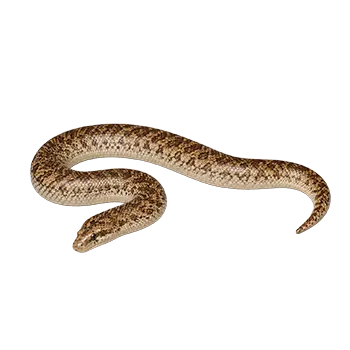
Arabian Sand Boas are obligate carnivores with modest caloric demands that reflect their small body size and sedentary, fossorial lifestyle. In the wild, Eryx jayakari inhabits the sandy deserts of the Arabian Peninsula, where it lies buried just beneath the surface and ambushes small lizards, geckos, and occasionally nestling rodents that pass overhead. Captive diets should mirror this whole-prey approach, providing complete nutrition through intact feeder animals that supply protein, fat, calcium, organ-derived vitamins, and trace minerals in naturally balanced proportions.

Because Arabian Sand Boas rarely exceed sixteen inches in total length, their prey items remain small throughout their entire lives. This is an important distinction from larger boa species that graduate to rats or rabbits. An adult Arabian Sand Boa typically tops out at pinky mice or small fuzzy mice as its largest appropriate prey item. Overestimating prey size is one of the most common husbandry errors with this species, as their slender build and relatively narrow head limit what they can safely ingest and digest.

Metabolic rate in this species is comparatively low. Arabian Sand Boas spend the vast majority of their time buried in substrate with minimal movement, which means they burn far fewer calories than an active, arboreal, or semi-aquatic snake of similar length. This low energy expenditure translates directly into lower feeding frequency. Keepers accustomed to more active species should resist the urge to feed on the same schedule they use for colubrids or other boids, as overfeeding leads to obesity and hepatic lipidosis in fossorial species faster than in more active ones.

Hydration is another nutritional consideration that is easy to overlook in a desert-adapted species. While Arabian Sand Boas tolerate arid conditions far better than tropical species, they still require access to clean drinking water at all times. Dehydration impairs digestion and nutrient absorption, and a snake that is even mildly dehydrated may refuse food or regurgitate after eating. A shallow, tip-resistant water dish should always be available, even though the snake may not be observed drinking frequently.

Choosing the Right Prey

Prey selection for the Arabian Sand Boa revolves around one central principle: keep it small. The standard guideline of offering prey no wider than the widest point of the snake's body applies here with particular importance, because this species has a narrow skull and relatively modest jaw flexibility compared to many other boids. For neonates, pinky mice — ideally day-old pinkies — are the correct starting prey. Adults generally do well on fuzzy mice or very small hoppers, depending on the individual's build.

Frozen-thawed prey is the strongly preferred feeding method for Arabian Sand Boas. Live prey poses an outsized risk to this small, slow-moving species. Even a pinky mouse's mother, if accidentally included, could inflict serious harm on a snake this size. Frozen feeders eliminate the risk of bites and scratches, remove the possibility of parasite transmission from live rodents, and are far more convenient to store and portion. Most Arabian Sand Boas accept frozen-thawed readily, especially when the prey is warmed to approximate body temperature.

Presentation technique matters for a species that hunts by detecting vibrations and heat signatures through sand. Simply placing a thawed pinky on the substrate surface may not trigger a feeding response, because the snake is accustomed to detecting prey movement from below. Using feeding tongs to create gentle movement near the snake's hiding spot — or even burying the prey item just barely beneath the surface substrate — often produces a much stronger strike response than static placement.

Some keepers of Arabian Sand Boas report success with occasional feedings of small gecko-scented prey items, which can be achieved by rubbing a thawed pinky mouse against a shed skin from a gecko or using commercially available reptile-scent products. This technique can be useful for encouraging reluctant feeders, particularly wild-caught individuals that are transitioning to a captive rodent-based diet. However, the vast majority of captive-bred Arabian Sand Boas feed well on unscented rodents without any special preparation.

Frozen Prey Options

The frozen feeder market caters well to keepers of small snakes, and Arabian Sand Boa owners will primarily shop in the smallest size categories. Pinky mice, which are newborn mice typically ranging from one to three grams, are the foundational prey item for this species. Fuzzy mice, weighing roughly three to six grams and just beginning to develop fur, serve as the next size up for growing juveniles and some adults. Keepers rarely need to purchase anything larger than small hopper mice for even the largest Arabian Sand Boas.

Quality differences between frozen prey suppliers are significant and worth investigating before committing to bulk purchases. The best suppliers humanely euthanize feeder animals and flash-freeze them immediately, which preserves cellular integrity and nutritional content. Prey that has been slowly frozen, stored at inconsistent temperatures, or allowed to partially thaw during shipping will have degraded nutritional value and may carry higher bacterial loads. When evaluating a new supplier, order a small test batch first and inspect the animals upon arrival for signs of freezer burn, discoloration, or ammonia-like odors.

Bulk purchasing is the most economical approach, but Arabian Sand Boa keepers should be realistic about their consumption rate. A single adult Arabian Sand Boa eating one fuzzy mouse every ten to fourteen days will go through roughly twenty-six to thirty-six prey items per year. Frozen rodents stored at zero degrees Fahrenheit or below maintain quality for approximately six months, so ordering more than a six-month supply at once risks waste from freezer degradation. Sharing bulk orders with other reptile keepers in a local herp society is a practical way to access bulk pricing without overbuying.

Beyond standard domestic mice, some specialty suppliers offer frozen house geckos and small anoles, which can serve as occasional dietary variety or as scenting agents for stubborn feeders. These specialty items carry a premium price and are not necessary for routine feeding, but they can be valuable tools in the keeper's arsenal for dealing with hunger strikes or transitioning wild-caught animals to captive diets.

Supplements and Vitamins

Whole-prey feeding provides an inherently complete nutritional package, and healthy Arabian Sand Boas on a consistent diet of quality frozen rodents generally do not require any supplementation. The bones of a pinky or fuzzy mouse supply calcium and phosphorus, the liver and kidneys provide fat-soluble vitamins, and the muscle tissue delivers protein and essential amino acids in bioavailable form. This nutritional completeness is one of the primary advantages of feeding whole prey rather than processed or partial food items.

There are limited circumstances in which supplementation may be appropriate. A snake recovering from a prolonged illness, a parasitic infection confirmed by fecal examination, or a difficult period of acclimation may benefit from a brief course of reptile-specific multivitamins lightly dusted onto prey items. Breeding females that are developing follicles may also benefit from occasional calcium supplementation to prevent depletion of their own skeletal reserves during the reproductive process.

When supplementation is genuinely needed, select products formulated specifically for reptiles. Calcium carbonate powder without added phosphorus is the most commonly recommended supplement for snakes, as it addresses the most likely deficiency without introducing excess of other minerals. Reptile multivitamin powders should be used sparingly and only under veterinary guidance, as fat-soluble vitamins — particularly vitamins A and D — accumulate in tissue and can reach toxic levels with repeated unnecessary dosing.

The most important nutritional intervention for most Arabian Sand Boa keepers is not supplementation but rather prey quality. Ensuring that frozen feeders come from reputable sources, are stored correctly, and are thawed properly does far more for the snake's long-term nutritional health than any supplement regimen. A well-fed Arabian Sand Boa on quality prey will display bright, clean scales, maintain consistent body weight between sheds, and produce well-formed urates — all indicators that its nutritional needs are being met without external additives.

Foods to Avoid

Several categories of food items are inappropriate or outright dangerous for Arabian Sand Boas and should never be offered. Wild-caught prey tops this list. Insects, lizards, or rodents captured outdoors may carry parasitic worms, mites, protozoan infections, or residues from pesticides and herbicides. Even in rural areas where chemical exposure seems unlikely, wild prey animals serve as intermediate hosts for numerous parasites that can devastate a captive snake with no natural resistance.

Processed human foods have no place in a snake's diet. Raw chicken, ground beef, egg, fish fillets, and similar grocery items lack the complete nutritional profile that whole prey provides — they are missing the bones, organs, fur, and gut contents that make whole prey nutritionally complete. Additionally, raw poultry carries a high risk of Salmonella and Campylobacter contamination, and fish contains thiaminase enzymes that destroy vitamin B1 and can cause neurological damage with repeated exposure.

Prey that is too large represents a serious and sometimes fatal risk. Because Arabian Sand Boas are small-bodied snakes with limited jaw and body capacity, offering even a slightly oversized prey item can lead to regurgitation, esophageal damage, or internal organ compression. Regurgitation is especially dangerous because the digestive acids and the physical act of reversing a meal strip the esophageal lining, leaving the snake vulnerable to secondary bacterial infection. After any regurgitation event, the snake should be left completely undisturbed for a minimum of two weeks before the next feeding attempt, and that attempt should use prey at least one size smaller than the item that was rejected.

Live prey is strongly discouraged for this species. Arabian Sand Boas are small, slow-moving ambush predators that lack the explosive constriction power of larger boids. Even an adult mouse can inflict bites and scratches that cause abscesses, scarring, or eye injuries on a snake this size. If a snake absolutely refuses frozen-thawed prey despite warming, scenting, and presentation adjustments, freshly pre-killed prey is a much safer compromise than offering a live, mobile rodent in the enclosure.

Feeding Tools and Accessories

The right feeding tools improve safety and efficiency for both the keeper and the snake. Feeding tongs are the single most important accessory for Arabian Sand Boa keepers. Stainless steel or bamboo tongs in the eight- to twelve-inch range provide adequate reach for this species, which does not have the striking distance of larger snakes. Tongs allow the keeper to present prey with gentle, lifelike movement while keeping fingers safely away from the snake's strike zone.

Rubber-tipped or silicone-coated tongs are preferable to bare metal hemostats for Arabian Sand Boas. A missed strike that connects with a hard metal tip can chip or crack the snake's small, delicate teeth and cause mouth injuries that may develop into infectious stomatitis. Soft-tipped tongs absorb the impact of a misdirected strike without causing oral trauma. Some keepers fashion their own cushioned tips by applying small sections of silicone tubing over standard tong ends.

A dedicated prey-thawing container is a practical and hygienic addition to the feeding routine. A small, clearly labeled plastic container reserved exclusively for thawing frozen mice in warm water prevents cross-contamination with food-preparation items in the kitchen. The water temperature should be warm but not hot — roughly 100 to 110 degrees Fahrenheit — and the prey should be allowed to thaw and warm through completely before offering. A partially frozen prey item can cause digestive distress and should never be fed.

Maintaining a feeding log is an invaluable habit that pays dividends over the life of the snake. A simple record of each feeding date, prey type and size, whether the meal was accepted or refused, and any notes on the snake's behavior or body condition creates a longitudinal health record that is extremely useful during veterinary consultations, breeding planning, and troubleshooting hunger strikes. A basic spreadsheet, a dedicated notebook, or one of the reptile-keeping apps available for smartphones all serve this purpose effectively.

Feeding Schedule

Arabian Sand Boa feeding schedules are driven by the snake's age, size, body condition, and metabolic rate. Neonates and young juveniles up to approximately six months of age should be offered appropriately sized pinky mice every five to seven days. This relatively frequent schedule supports the rapid proportional growth that occurs during the first months of life and helps establish a reliable feeding response that will carry through adulthood.

Juveniles between six months and roughly eighteen months of age can be transitioned to feeding every seven to ten days, with prey size gradually increasing from day-old pinkies to larger pinkies and then to fuzzy mice as the snake's girth allows. The transition to larger prey should always be governed by the snake's body diameter rather than its length. A long, slender juvenile that has not yet filled out should remain on smaller prey at regular intervals rather than being jumped up to a prey size its body cannot comfortably accommodate.

Adult Arabian Sand Boas, typically those over eighteen months of age, thrive on a feeding schedule of once every ten to fourteen days. Some keepers of well-established adults extend this interval to every two to three weeks, particularly for individuals that show signs of weight gain. The ideal body condition for an adult Arabian Sand Boa is a smoothly rounded cross-section without visible fat pads along the spine or prominent lateral bulging. These small snakes are prone to obesity in captivity because their caloric expenditure is so low, and a conservative feeding schedule is almost always healthier than an aggressive one.

Seasonal appetite fluctuations are normal and expected in Arabian Sand Boas. Many individuals reduce or entirely cease feeding during cooler months, even when enclosure temperatures are maintained within normal range. Males frequently stop eating during breeding season as their metabolic priorities shift. A healthy, well-conditioned Arabian Sand Boa can safely go four to six weeks without food during these voluntary fasts. If a hunger strike persists beyond eight weeks or is accompanied by visible weight loss, changes in skin condition, or unusual lethargy, a veterinary evaluation is warranted to rule out underlying illness or parasitic infection.

Consistency in feeding routine helps minimize stress and promotes reliable acceptance of prey. Offering food at the same time of day — ideally in the evening or after lights-out, when these crepuscular-to-nocturnal snakes are naturally most active — tends to produce the best feeding responses. Avoid handling the snake for at least forty-eight hours after a successful feeding to allow undisturbed digestion and reduce the risk of stress-related regurgitation.

Always consult a qualified professional before making any health-related decisions. This content is provided for informational reference only and should not replace professional guidance specific to your animal.