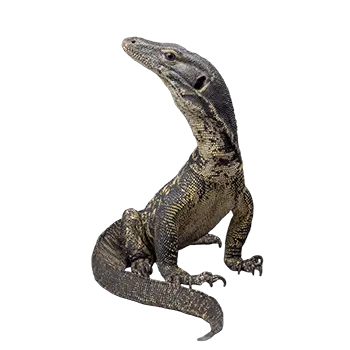

Asian Water Monitors are among the largest lizards commonly kept in private collections, and their enclosure demands reflect that scale. An adult Varanus salvator measuring six feet or more requires a minimum enclosure footprint of eight feet long by four feet deep by six feet tall, though larger is always preferable. These are not sedentary animals that spend their days basking motionless on a branch. They patrol, climb, dig, and swim, and an enclosure that restricts those behaviors produces a stressed, unhealthy animal regardless of how well the temperature and humidity are controlled.
Juvenile housing can start smaller, but the keeper should plan the adult enclosure from the outset rather than investing in a series of temporary setups that are outgrown within months. A hatchling water monitor can be housed in a four-foot enclosure for the first several months, but growth is rapid enough that by the end of the first year the animal will likely need at least a six-foot enclosure. Many experienced keepers build the permanent adult enclosure first and use partitions or visual barriers to reduce the usable space for a young animal, expanding the accessible area as the monitor grows.
Height is as important as floor space for this species. Wild water monitors are competent climbers that ascend trees to bask, forage, and escape ground-level threats. An enclosure that offers only ground-level living eliminates an entire category of natural behavior and forces the animal to thermoregulate using only horizontal distance from the heat source, which is a poor substitute for the vertical thermal gradients available in a tall enclosure. Elevated basking platforms, sturdy climbing branches, and multi-level shelving all contribute to usable vertical space.
Room dedication is the most practical approach for adult water monitors. Keepers who convert a spare bedroom, walk-in closet, or section of a basement into a fully climate-controlled habitat gain the flexibility to provide genuinely adequate space without the structural limitations of a freestanding cage. This approach also simplifies plumbing for the large water feature that the species requires and makes cleaning and maintenance far more manageable than working inside a traditional enclosure.