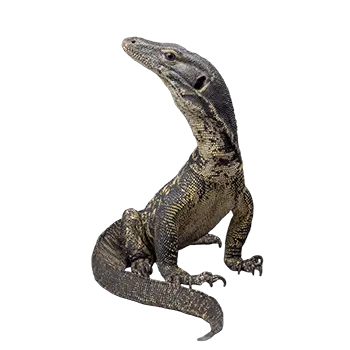

Feeding a large varanid safely requires equipment that keeps the keeper's hands well away from an animal capable of delivering a powerful bite with serrated teeth and a strong feeding response. Long stainless steel feeding tongs, at least eighteen to twenty-four inches in length, are the primary tool for offering whole prey items directly. Shorter tongs designed for smaller reptiles are inadequate because they bring the hand too close to the strike zone, and monitors in feeding mode do not discriminate between prey and the hand holding it. Stainless steel construction is essential because it withstands the bite force that can snap or bend aluminum tongs and can be sterilized after each use.
Heavy ceramic or stainless steel food dishes are preferable to lightweight plastic options for any prey items offered in a bowl. A monitor that tips its dish during a feeding frenzy sends insects, supplements, and water across the substrate, creating a mess that attracts pests and complicates cleaning. Weighted crocks designed for large dogs or the ceramic dishes marketed for tortoises are sturdy enough to resist tipping by a strong lizard. For water monitors, dishes should also be easy to remove from the enclosure for sanitization, which favors simple shapes without decorative rims that trap debris.
Dedicated prey storage requires a separate small freezer or clearly labeled section of a household freezer. Whole prey items should be stored in sealed, labeled bags organized by type and size, with older stock rotated to the front to ensure it is used first. A standalone chest freezer in a garage or utility room is the preferred solution for keepers feeding multiple large reptiles, as it keeps prey separate from human food and provides ample space for bulk purchases that reduce per-item costs.
Gut-loading stations deserve their own dedicated setup. A small plastic bin with ventilation holes, stocked with a calcium-rich dry gut-load formula and fresh vegetables, provides a holding area where feeder insects are conditioned for 24 to 48 hours before being offered. This station should be kept in a warm area to maintain insect activity and feeding behavior, and it should be cleaned and restocked between batches to prevent mold and bacterial buildup that can sicken the feeders before they reach the monitor.