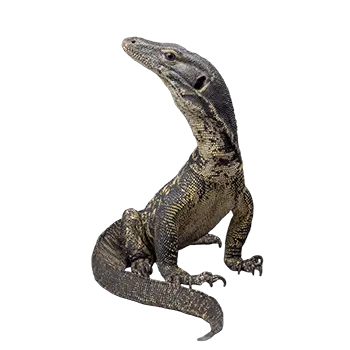

Asian Water Monitors (Varanus salvator) are large, powerful carnivores with metabolic demands that dwarf those of most commonly kept reptiles. In the wild, they exploit an extraordinarily broad prey base that spans fish, crustaceans, birds, rodents, amphibians, eggs, and carrion, consuming whatever is available along the tropical waterways and forests of Southeast Asia. Replicating this dietary breadth in captivity is the central challenge of feeding this species, and the keeper who treats it as a simple matter of tossing in a few rats each week will eventually face nutritional deficits that manifest as metabolic bone disease, organ failure, or chronic obesity.
Calcium and phosphorus balance remains the foundational concern, just as it is for smaller varanids, but the scale is different. A growing juvenile Asian Water Monitor can gain several inches per month during its first two years, and that skeletal growth requires consistent calcium intake supported by adequate vitamin D3. Without proper supplementation and UVB exposure working in tandem, bones remain soft and pliable, leading to fractures, jaw deformities, and spinal kinking that cannot be reversed once the animal matures.
Protein requirements are high but must be met with lean, varied sources rather than a single fatty prey item offered repeatedly. Monitors fed exclusively on rodents or poultry parts develop fatty liver disease at alarming rates. The liver of a captive water monitor is one of the first organs to show the effects of a monotonous, high-fat diet, and by the time external symptoms appear, the damage is often advanced. Balancing protein sources across fish, invertebrates, and lean whole prey prevents this cascade.
Hydration is rarely discussed in the context of nutrition, but for a semi-aquatic species it is inseparable from digestive health. Asian Water Monitors drink frequently and absorb water through soaking, and their prey items contribute meaningfully to overall fluid intake. Fish and amphibians deliver moisture that dry rodent prey does not, making prey variety a hydration strategy as much as a nutritional one. Chronic low-grade dehydration slows gut motility, reduces appetite, and compounds the effects of any existing dietary imbalance.