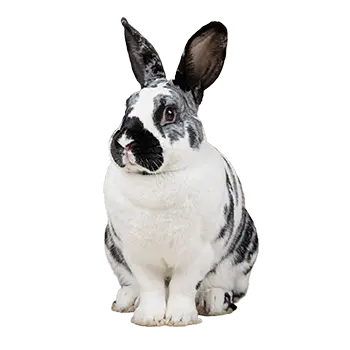

Play Style & Behavior

Understanding how Checkered Giants play is the first step toward choosing toys that will actually get used rather than ignored. This breed is notably more active and athletic than many other large rabbit breeds. Checkered Giants tend to be runners and explorers rather than sedentary loungers, and their play behavior reflects that energy. They enjoy tossing objects, racing through open spaces, investigating new items, and rearranging their environment. A Checkered Giant that flips its food bowl, nudges a ball across the room, or systematically shreds a cardboard box is engaging in healthy, species-appropriate play.

Their curiosity is a defining trait that directly influences enrichment needs. A Checkered Giant left in a bare enclosure with nothing to investigate will often develop destructive or repetitive behaviors out of boredom. Bar chewing, excessive digging at flooring, over-grooming, and territorial aggression can all stem from insufficient mental stimulation. Providing a rotating selection of toys and enrichment activities is not a luxury for this breed but a genuine welfare requirement.

Checkered Giants are also social players. Bonded pairs will engage in mutual grooming, chase games, and shared investigation of new objects. Even single rabbits often direct their play behavior toward their human companions, nudging hands for attention, circling feet, and bringing toys to their owners. Recognizing and responding to these social play invitations strengthens the bond between rabbit and owner and contributes to the rabbit's overall wellbeing.

Activity levels can vary by individual and by time of day. Most Checkered Giants are most playful during their crepuscular active periods at dawn and dusk. Scheduling interactive play sessions during these windows maximizes engagement and provides the most satisfying experience for both rabbit and owner.

Interactive & Puzzle Toys

Puzzle toys that require the rabbit to solve a problem to access a food reward are among the most effective enrichment tools for Checkered Giants. Their inquisitive nature makes them surprisingly persistent problem-solvers, and many individuals will work at a puzzle toy for extended periods before losing interest. Simple stacking cups with treats hidden beneath, treat balls that dispense pellets when rolled, and wooden puzzle boards with sliding covers over compartments all provide appropriate cognitive challenges.

When selecting puzzle toys, durability is a primary concern for a breed this size. Products designed for small rabbits or hamsters will be destroyed almost immediately by a Checkered Giant's powerful jaws and large paws. Look for puzzle toys made from solid hardwood, thick food-grade plastic, or heavy-duty natural materials. The puzzle should be challenging enough to hold the rabbit's interest for several minutes but not so difficult that it causes frustration and disengagement.

Foraging mats and snuffle mats offer another form of interactive enrichment that taps into the rabbit's natural instinct to search for food. Hiding small pieces of herb or vegetable in the folds and pockets of a fabric foraging mat encourages extended investigation and slower eating. These mats should be made from untreated, non-fraying fabrics and should be inspected regularly for loose threads that could be ingested.

Interactive play between the rabbit and its owner is a form of enrichment that no commercial toy can fully replace. Teaching a Checkered Giant to come when called, follow a target stick, or navigate a simple obstacle course provides mental stimulation, physical exercise, and social bonding simultaneously. These training activities work best with small food rewards and short, positive sessions of five to ten minutes.

Chew Toys & Durability

Chewing is not a behavioral problem in rabbits; it is a biological necessity. Rabbit teeth grow continuously throughout their lives, and regular chewing on fibrous materials is essential for maintaining proper dental wear. For the Checkered Giant, with its powerful jaw muscles, chew toys need to be robust enough to withstand significant force while remaining safe for consumption, since rabbits inevitably ingest fragments of whatever they chew.

Apple wood, willow, and pear wood branches are among the most popular and safest natural chew options. These hardwoods are dense enough to provide satisfying resistance while being non-toxic when ingested. Branches should be sourced from trees that have not been treated with pesticides or herbicides, and should be dried before offering to reduce the risk of mold. Many owners collect and dry their own branches, but commercially prepared bundles of rabbit-safe wood are widely available for those without access to untreated trees.

Woven hay and grass toys serve a dual purpose as both chew items and foraging enrichment. Hay balls, braided grass mats, and woven tunnels encourage the rabbit to pull, tug, and shred, which provides both dental wear and mental engagement. These items are fully consumable and need to be replaced regularly as they are destroyed, but their relatively low cost makes them practical for frequent rotation.

Avoid chew toys made from softwood, painted or varnished wood, or materials held together with glue or staples. Pine and cedar contain aromatic oils that are harmful when ingested in quantity. Compressed mineral blocks marketed for rabbits are generally unnecessary if the diet is well-balanced, and some contain additives that are better avoided. When in doubt about a material's safety, check whether it appears on established rabbit-safe wood and plant lists maintained by rabbit welfare organizations.

Tunnels & Obstacle Toys

Tunnels tap into a rabbit's ancestral instinct to navigate underground warrens and are consistently among the most popular enrichment items for Checkered Giants. However, standard small-animal tunnels are often too narrow for this breed. Look for tunnels with a diameter of at least ten to twelve inches to allow a Checkered Giant to pass through comfortably without compressing its body. Collapsible fabric tunnels designed for cats are often a better fit than rigid plastic tubes marketed for rabbits.

Cardboard tunnels and boxes offer an inexpensive alternative that also satisfies the chewing instinct. Large shipping boxes with entry and exit holes cut into the sides create instant tunnel systems that most Checkered Giants will enthusiastically explore and demolish. Connecting multiple boxes with short cardboard tube segments creates a modular warren that can be reconfigured whenever the rabbit loses interest. The fact that these structures are temporary and destructible is actually a feature rather than a flaw, since the process of remodeling and destroying the structure is itself a form of enrichment.

Obstacle courses and agility setups provide physical exercise that is particularly valuable for a large, active breed prone to weight gain when under-stimulated. Simple hurdles made from PVC pipe, weave poles, and platform jumps can be assembled inexpensively and arranged in the rabbit's exercise area. Rabbit agility is a growing hobby with organized clubs and competitions, but even casual home setups provide excellent enrichment. Start with very low obstacles and use treat rewards to guide the rabbit through the course, gradually increasing complexity as the rabbit gains confidence.

Ramps and elevated platforms add vertical dimension to the rabbit's environment, which increases usable space and provides exercise through climbing. Platforms should have non-slip surfaces and be low enough that a fall would not cause injury. A simple wooden platform twelve to eighteen inches high with a gentle ramp gives a Checkered Giant a vantage point to survey its territory, which many individuals find deeply satisfying.

Comfort & Companion Items

Not all enrichment needs to be active. Checkered Giants, despite their energetic reputation, also need comfortable resting options and items that provide a sense of security. Soft fleece blankets, plush mats, and padded beds give the rabbit comfortable surfaces for the extended resting periods that occur between active bouts. Some rabbits develop strong attachments to specific comfort items and will groom, chin, and sleep alongside a favorite blanket or stuffed toy.

Stuffed animals marketed as companion toys for rabbits can provide comfort for single rabbits, though they are not a substitute for a bonded living companion. Choose stuffed toys without plastic eyes, noses, or buttons that could be chewed off and ingested. Fabric toys should be made from natural fibers when possible and should be monitored for wear. If a rabbit begins consuming fabric rather than just grooming the toy, the item should be removed to prevent gastrointestinal blockage.

Hiding houses and enclosed shelters serve as security items that reduce stress and give the rabbit a sense of control over its environment. Every Checkered Giant should have at least one enclosed space within its living area where it can retreat when feeling anxious or simply wanting solitude. Wooden hidey houses, covered grass huts, and even simple cardboard boxes turned upside down with a door cut into one side all fulfill this need. For bonded pairs, providing two hiding options prevents competition for the preferred retreat.

Digging boxes filled with shredded paper, untreated soil, or child-safe play sand satisfy the natural digging instinct that many Checkered Giants exhibit strongly. A shallow storage bin filled with shredded newspaper or packing paper provides a contained digging station that limits mess while allowing the rabbit to express a deeply ingrained behavior. Refreshing the digging material periodically renews the rabbit's interest.

DIY & Budget Options

Some of the most effective rabbit toys cost nothing at all. Cardboard tubes from paper towel and toilet paper rolls, stuffed with hay and a few herb leaves at each end, create simple foraging puzzles that most Checkered Giants find irresistible. Paper grocery bags with the handles removed make excellent crinkle tunnels and shredding toys. Phone books with the glossy cover removed provide hours of satisfying page-tearing activity, though the ink should be soy-based, which is standard for modern newsprint.

Empty cardboard boxes are perhaps the single most versatile rabbit toy available. A large box with multiple doorways cut into the sides becomes a castle to explore and defend. Stacking smaller boxes inside a larger one creates a multi-level playhouse. Filling a box with crumpled newspaper and hiding treats throughout turns it into a foraging bin. The key advantage of cardboard toys is that they are meant to be destroyed, so there is no need to worry about durability or longevity. When the rabbit finishes demolishing one setup, simply build another from the next delivery box.

Woven grass mats available from craft stores or dollar shops make excellent disposable chew surfaces that also protect flooring in exercise areas. Untreated wicker baskets filled with hay become combination chew toys and foraging stations. Small terra cotta plant pots turned on their sides serve as tunnels for treats to roll through. The goal with DIY enrichment is not to create elaborate constructions but to provide novel objects and experiences that stimulate the rabbit's curiosity.

Rotation is the most important principle in rabbit enrichment, whether using commercial or homemade toys. Even the most engaging toy becomes boring after constant exposure. Maintaining a collection of toys and swapping three or four into the rabbit's space every few days keeps the environment fresh and stimulating without requiring constant new purchases. A toy that was ignored for weeks may become a favorite again after a period of absence.

Always consult a qualified professional before making any health-related decisions. This content is provided for informational reference only and should not replace professional guidance specific to your animal.