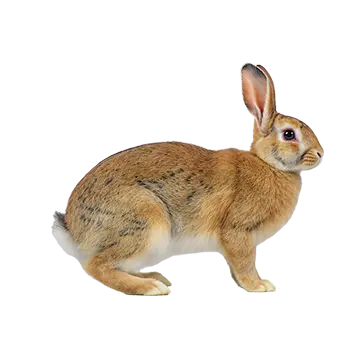

Space Requirements

The Belgian Hare is among the most active and athletic rabbit breeds, and its housing must reflect that reality. The absolute minimum enclosure size for a single Belgian Hare is roughly four times the rabbit's full body length in each direction — for this breed, that translates to an enclosure of at least 12 square feet of floor space, though larger is always better. Many experienced owners of Belgian Hares consider an entire rabbit-proofed room or a large exercise pen setup to be far more appropriate than any traditional cage.

Beyond floor space, vertical clearance matters significantly. Belgian Hares are known for their powerful hind legs and their tendency to stand fully upright on their hind feet when alert or curious. The enclosure should be tall enough for the rabbit to stand at full extension without its ears touching the ceiling — at least 24 inches of vertical clearance, though 30 or more is preferable. An enclosure that forces a Belgian Hare to crouch constantly will cause stress and may contribute to spinal problems over time.

Exercise space outside the primary enclosure is essential, not optional. Belgian Hares need a minimum of three to four hours of supervised free-roaming time daily in a rabbit-proofed area. Many owners find that a combination approach works best — a spacious home base enclosure for unsupervised hours, connected to or opening into a larger exercise area that the rabbit can access during active periods. This mimics the natural pattern of a safe burrow connected to open foraging ground.

Wire-bottom cages are completely unsuitable for Belgian Hares. This breed has relatively fine, narrow feet compared to stockier rabbit breeds, making them exceptionally prone to sore hocks when housed on wire flooring. All flooring should be solid — untreated wood, smooth tile, or thick rubber matting — with soft bedding material on top for comfort and traction.

Hutches & Enclosures

Indoor exercise pens — often called X-pens — are one of the most popular and practical housing solutions for Belgian Hares. These modular metal panel systems create a large, open floor area without a restrictive top, and they can be configured into various shapes to fit available room space. Choose panels at least 36 inches tall, as Belgian Hares are capable jumpers and shorter panels may not contain them reliably, especially when startled.

Traditional wooden hutches can work for Belgian Hares if they are generously sized, but most commercially available hutches are designed for smaller, less active breeds and fall short of this breed's space needs. If you choose a hutch-style enclosure, look for models with a minimum footprint of four feet by two feet as the enclosed resting area, attached to a substantially larger run. All wood should be untreated and free of toxic stains or sealants, as rabbits will inevitably chew on their housing.

Multi-level enclosures with ramps can increase usable space in a smaller footprint, and Belgian Hares generally enjoy elevated platforms for observation. However, ramps must be wide, gently sloped, and surfaced with a non-slip material. A steep or narrow ramp is a fall risk for any rabbit, and the Belgian Hare's lean build offers less cushioning against impact injuries than heavier breeds. Ensure each level has enough headroom for the rabbit to sit upright comfortably.

For outdoor hutches, construction must be substantially more robust. The enclosure needs heavy-gauge wire mesh — not chicken wire, which predators can tear through — on all exposed sides including the bottom if the hutch sits on the ground. Belgian Hares are particularly nervous around predator threats, and even the scent or sound of a predator near an insufficiently secured hutch can cause fatal stress reactions in this high-strung breed.

Bedding & Resting Areas

Bedding choices directly affect a Belgian Hare's foot health, respiratory health, and overall comfort. Paper-based bedding products are widely considered the safest option — they are highly absorbent, virtually dust-free, and soft enough to protect the breed's delicate feet from sore hocks. Kiln-dried pine shavings are also acceptable, but avoid cedar shavings entirely, as the aromatic oils in cedar are toxic to rabbits and cause respiratory damage over time.

Belgian Hares benefit from having a designated resting area within their enclosure — a partially enclosed space where they can retreat and feel secure. A wooden hideout box, a fabric-covered tunnel, or even a simple cardboard box with an entrance hole cut in the side serves this purpose well. This breed's nervous temperament means that having a bolt-hole available at all times significantly reduces stress levels, especially in households with other pets or young children.

Soft fleece liners are an alternative to loose bedding that many indoor rabbit owners prefer for ease of cleaning. If you use fleece, layer it over an absorbent underlayer such as a puppy pad or towel, and wash it frequently — at minimum every two to three days. Belgian Hares can be litter-trained reliably, which makes fleece-lined enclosures practical since most urine will go into the litter box rather than onto the fleece.

Regardless of bedding type, spot-clean the enclosure daily and perform a full bedding change at least once a week. Belgian Hares are sensitive to ammonia fumes from accumulated urine, and a dirty enclosure will cause respiratory irritation and increase the rabbit's baseline stress level. Pay particular attention to corners and resting spots where moisture tends to concentrate.

Outdoor Enclosures

Outdoor enclosures give Belgian Hares access to fresh air, natural sunlight, and grazing opportunities that are difficult to replicate indoors. A well-designed outdoor run should be fully enclosed on all sides — top, bottom, and walls — using welded wire mesh with openings no larger than one inch by two inches. The bottom can be open to allow grazing on grass, but only if the run sits on level ground and the mesh extends outward at the base in an apron to prevent digging predators from tunneling underneath.

Shade is absolutely critical in any outdoor setup. Belgian Hares are highly susceptible to heat stress, and their lean build provides less thermal insulation than heavier breeds. At least half of the outdoor enclosure should be covered to provide shade at all times of day, and the rabbit must always have the option to move into a shaded area. During summer months, outdoor time should be limited to cooler morning and evening hours, with temperatures above 80°F posing genuine heatstroke risk.

The outdoor enclosure should include a weatherproof shelter area where the rabbit can retreat from rain, wind, or sudden temperature drops. This shelter needs to be insulated against drafts but ventilated enough to prevent moisture buildup inside. Straw — not hay, which molds quickly when damp — makes excellent insulating bedding in outdoor shelters during cooler months, providing warmth without the respiratory hazards of damp fabric.

Predator security cannot be overemphasized for outdoor Belgian Hare housing. This breed's extreme flight response means that even a perceived predator threat — a neighborhood cat walking past, a hawk shadow overhead — can trigger panic reactions that cause injury as the rabbit bolts into walls or wire. Double-check all latches, reinforce any gaps, and consider positioning the enclosure in a sheltered area of the yard away from fence lines where predators might patrol.

Climate Considerations

Belgian Hares are best suited to moderate indoor temperatures between 60°F and 70°F. Their lean, athletic build and relatively thin coat provide less natural insulation than compact, heavy-furred breeds, making them more sensitive to temperature extremes in both directions. Air conditioning is essentially mandatory in warmer climates, and any room housing a Belgian Hare should maintain stable temperatures without large daily swings.

Cold weather management requires attention to drafts rather than ambient temperature alone. A Belgian Hare in a dry, draft-free environment at 55°F will generally cope well, but the same temperature with air movement across the enclosure can chill the rabbit rapidly. Position enclosures away from exterior doors, single-pane windows, and air vents. In winter, a ceramic heat emitter mounted safely above the enclosure can provide supplemental warmth without the fire risk of heat lamps or heating pads.

Humidity is an often-overlooked environmental factor. Rabbits in general do poorly in humid conditions, and Belgian Hares are no exception. High humidity promotes bacterial growth in bedding, increases respiratory stress, and makes temperature regulation more difficult for the rabbit. If you live in a humid climate, a dehumidifier in the rabbit's room can make a meaningful difference in comfort and health. Target relative humidity between 40 and 60 percent.

Direct sunlight through windows can create dangerous hot spots in an enclosure even when the room's ambient temperature is comfortable. Glass amplifies solar heat, and a rabbit trapped in a sunbeam without the ability to move away can overheat surprisingly fast. If the enclosure is near windows, use curtains or blinds to control sun exposure, or position the enclosure so that the rabbit always has a shaded retreat available within its space.

Multi-Rabbit Households

Belgian Hares can live with other rabbits, but introductions and shared housing require careful planning. This breed's nervous temperament and high energy can overwhelm calmer, more sedentary companions, and mismatched pairings often result in stress for one or both rabbits. The most successful pairings tend to be a spayed female with a neutered male, introduced gradually on neutral territory that neither rabbit has claimed.

Each rabbit in a multi-rabbit household needs its own retreat space within the shared enclosure — a hideout box, tunnel, or partitioned resting area where the rabbit can be alone. Even bonded pairs need the option to separate temporarily, and Belgian Hares in particular will become stressed if they feel cornered or unable to escape a persistent companion. Provide at least two of every key resource: two hay stations, two water sources, and two litter boxes.

The enclosure size must scale up substantially for multiple rabbits. A minimum of eight additional square feet per rabbit beyond the first is a reasonable guideline, but more is strongly preferred. Belgian Hares are territorial during adolescence and will establish dominance hierarchies that sometimes involve chasing — if the space is too small, these normal social behaviors can escalate into genuine aggression or injurious panic.

Never house unspayed or unneutered Belgian Hares together, as they will breed prolifically and the resulting territorial aggression between intact animals can be severe. Spaying and neutering also significantly reduce hormonal behaviors like urine spraying, mounting, and aggressive lunging that make cohabitation difficult. Allow a full two to four weeks after surgery for hormones to dissipate before attempting introductions with other rabbits.

Always consult a qualified professional before making any health-related decisions. This content is provided for informational reference only and should not replace professional guidance specific to your animal.