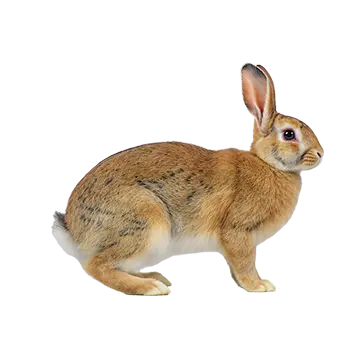

Taking a Belgian Hare outdoors on a harness is possible but requires significant patience, careful equipment selection, and realistic expectations about this breed's temperament. Belgian Hares are flightier and more reactive than many companion rabbit breeds, which means outdoor excursions carry a higher baseline stress risk. If your rabbit freezes, thumps repeatedly, or attempts to bolt when outside, harness outings may not be a good fit regardless of equipment quality.
H-style harnesses designed specifically for rabbits are the safest option. These feature one strap around the neck and another around the torso behind the front legs, connected by a bridge along the spine. Avoid figure-eight or single-loop harnesses, which can tighten dangerously around the neck if the rabbit panics and pulls. The fit should be snug enough that the rabbit cannot back out of it — you should be able to slide one finger under each strap, but no more.
Leash attachment should always be to the back bridge of the harness, never to a collar. Rabbits have delicate cervical spines, and any sudden pull against a collar can cause serious neck injury or death. Use a lightweight leash no longer than four to five feet, and never pull the rabbit — let the Belgian Hare set the pace and direction while you follow with gentle guidance. The leash is a safety tether, not a steering mechanism.
Harness training should begin indoors over several weeks before any outdoor attempt. Start by letting the rabbit sniff and investigate the harness, then drape it over the body without fastening, then fasten it for brief periods while offering treats. Only once the Belgian Hare moves normally and comfortably in the harness indoors should you consider taking the next step outside. Rushing this process with a nervous breed virtually guarantees a negative experience that makes future attempts harder.