
Play Style & Behavior

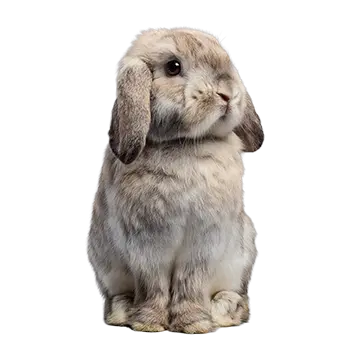
The American Fuzzy Lop is a notably playful and inquisitive breed that engages with its environment more actively than many rabbit owners anticipate. These rabbits enjoy tossing lightweight objects, nosing items around their enclosure, and investigating anything new that appears in their space. Understanding your individual rabbit's play preferences is the first step toward selecting toys that will actually get used rather than ignored.

Rabbits express playfulness differently than dogs or cats. Instead of fetching or pouncing, rabbits tend to nudge, fling, chew, dig, and rearrange. An American Fuzzy Lop may pick up a small toy in its teeth and throw it sideways, push a ball around with its nose, or spend extended time rearranging bedding and towels into preferred configurations. These behaviors are signs of a mentally engaged rabbit and should be encouraged through appropriate toy selection.

Activity levels in American Fuzzy Lops tend to peak during the early morning and late evening hours, following the crepuscular pattern typical of rabbits. Providing fresh enrichment items or rotating toys before these active periods ensures that the rabbit has something to engage with during its most energetic times. A bored rabbit with nothing to do during peak activity hours may turn to destructive behaviors like chewing baseboards, digging at carpet, or bar-biting on cage walls.

It is worth noting that the wool coat of the American Fuzzy Lop creates some unique toy considerations. Toys with loose threads, strings, frayed rope, or fibrous materials that can entangle in wool should be avoided. Items that shed small fibers are also problematic, as those fibers will become embedded in the coat and increase grooming difficulty. Choose toys with smooth, clean surfaces or tightly woven natural materials that will not snag.

Interactive & Puzzle Toys

Puzzle toys and interactive feeders tap into a rabbit's natural foraging instincts and provide valuable mental stimulation. The simplest versions involve hiding small pieces of hay, herbs, or a treat inside a container that the rabbit must manipulate to access the reward. Cardboard tubes stuffed with hay, paper bags with a few pellets inside, or stacking cups that the rabbit can knock over all serve as effective beginner-level puzzle toys.

More complex puzzle feeders designed for small animals feature sliding doors, lift-up compartments, or rolling mechanisms that dispense food as the rabbit interacts with them. These toys are excellent for American Fuzzy Lops because the breed's social intelligence makes them quick learners who can master simple puzzles within a few sessions. Once a puzzle becomes too easy, the rabbit may lose interest, so having a rotation of different difficulty levels keeps the challenge fresh.

Foraging mats and snuffle mats designed for small pets encourage the rabbit to use its nose and paws to find hidden food items within fabric folds or fleece strips. These are particularly well-suited to indoor rabbits that do not have access to natural foraging environments. When selecting a foraging mat for an American Fuzzy Lop, choose one with short, tight fleece strips rather than long, loose ones that could tangle in the wool coat.

Interactive play between owner and rabbit is another important form of enrichment. Many American Fuzzy Lops enjoy games where the owner rolls a small ball toward them, hides treats under cups for the rabbit to overturn, or sets up simple obstacle courses with low jumps and tunnels. These shared activities strengthen the bond between rabbit and owner while providing physical and mental exercise that solo toys cannot fully replicate.

Chew Toys & Dental Health

Chewing is not optional recreation for rabbits — it is a biological necessity. Rabbit teeth grow continuously throughout their lives at a rate of roughly two to three millimeters per week, and the only way to keep them worn to a healthy length is through constant grinding on fibrous materials. While hay provides the bulk of dental wear, chew toys offer supplemental grinding surfaces and satisfy the rabbit's instinctive need to gnaw on a variety of textures.

Apple wood, willow, and pear wood sticks and branches are among the most popular natural chew options. These untreated hardwoods are safe for rabbits and provide a satisfying texture that most American Fuzzy Lops find appealing. Avoid cherry, peach, plum, and other stone fruit woods, as they contain compounds that are potentially harmful to rabbits. Any wood offered should be pesticide-free, untreated, and thoroughly dried before use.

Compressed hay and timothy hay-based chew toys serve a dual purpose by providing both dental wear and additional fiber intake. These products come in various shapes — balls, logs, cubes, and rings — and can be hung from the enclosure or placed on the floor for the rabbit to manipulate. Loofa-based chews and seagrass toys are additional safe options that many rabbits enjoy, and their woven textures provide a different chewing experience than solid wood.

Avoid chew toys made from soft plastic, rubber, or materials that can break into small pieces and be swallowed. Ingested plastic or rubber fragments can cause intestinal blockages, which are veterinary emergencies. Similarly, painted or dyed wooden toys should be avoided unless the coloring is specifically labeled as food-safe and non-toxic. When in doubt, natural and untreated is always the safer choice for any item your rabbit will put in its mouth.

Tunnels & Hiding Spots

Tunnels are consistently among the most popular enrichment items for rabbits, and American Fuzzy Lops are no exception. In the wild, rabbits live in complex burrow systems, and the instinct to run through enclosed passages remains strong in domestic breeds. A tunnel placed in the exercise area will see heavy use during active play periods, with the rabbit zooming through at full speed, pausing inside to rest, and using it as a launch point for binkies and zoomies.

Fabric tunnels designed for cats or small animals work well for indoor use and can be collapsed for storage when not needed. Look for tunnels with a smooth interior lining rather than a fuzzy or carpeted one, as rough textures will catch and pull at American Fuzzy Lop wool. Rigid cardboard tunnels and concrete form tubes offer affordable alternatives and provide a chewable surface as an added bonus, though they will need to be replaced as the rabbit destroys them.

Hiding spots satisfy a rabbit's need for security and are essential components of any well-designed enclosure. Enclosed wooden houses, arched bridges, and even large cardboard boxes with entry holes cut into the sides all serve as effective hides. Each rabbit should have access to at least one hiding spot where it can retreat when it feels startled or simply wants to rest undisturbed. For bonded pairs, provide at least two hides to prevent territorial disputes.

The placement of tunnels and hiding spots can be rotated periodically to create a sense of novelty. Rabbits are territorial animals that mentally map their environment, so rearranging the furniture of their living space every week or two provides low-effort enrichment that stimulates exploration and investigation. Moving a tunnel to a new corner or adding a box with a different entry point encourages the rabbit to re-explore and re-map its territory.

Digging & Foraging Toys

Digging is a deeply ingrained natural behavior for rabbits, and providing appropriate outlets for this instinct prevents destructive digging at carpets, furniture, and enclosure floors. A dedicated digging box — a shallow storage container filled with shredded paper, hay, or child-safe play sand — gives your American Fuzzy Lop a designated place to scratch and burrow to its heart's content. Scatter a few pellets or dried herb leaves at the bottom of the box to reward the digging behavior and encourage extended engagement.

For American Fuzzy Lops, substrate choice for the digging box requires extra thought. Loose substrates like play sand or soil will embed in the wool coat and require additional grooming afterward. Shredded paper or crinkle paper provides the satisfying texture of digging without the cleanup challenges that come with particulate substrates. Some owners dedicate a specific grooming session immediately after digging time to brush out any debris before it has a chance to mat into the wool.

Foraging enrichment can be woven into the daily routine without purchasing specialized products. Scattering the daily pellet ration across the enclosure floor rather than serving it in a bowl turns mealtime into a foraging exercise. Hiding herb sprigs inside hay piles, tucking greens into toilet paper tubes, or threading leafy vegetables through the cage bars all create simple foraging challenges that engage the rabbit's problem-solving instincts.

Outdoor foraging supervised in a secure pen on untreated grass provides the richest sensory experience. Rabbits can graze on fresh grass, investigate natural scents, dig in real earth, and experience varied textures underfoot. For American Fuzzy Lops, outdoor foraging sessions should be kept to moderate lengths, and the rabbit should be checked afterward for grass seeds, burrs, or insects that may have become lodged in the wool coat.

DIY & Budget Options

Some of the most effective rabbit toys cost nothing at all. Cardboard boxes, paper towel rolls, toilet paper tubes, brown paper bags, and old phone books — with glossy covers removed — provide hours of entertainment for an American Fuzzy Lop that enjoys shredding, tossing, and rearranging. A cardboard box with two or three rabbit-sized holes cut in the sides becomes a combination hiding spot, chew toy, and play structure that most rabbits will use enthusiastically.

Simple craft projects can produce excellent enrichment items. A toilet paper tube stuffed with hay and folded shut at both ends creates a foraging puzzle. A stack of small cardboard boxes arranged as a castle or maze provides exploration opportunities. A paper bag filled with crinkled newspaper and a few hidden treats becomes a digging and foraging station. These homemade toys have the added advantage of being fully disposable — when they are chewed up or soiled, they go in the recycling and a new one takes their place at no cost.

Kitchen and household items can also be repurposed as rabbit toys. Untreated wooden spoons and spatulas make satisfying chew items. Small wicker baskets without plastic coatings become both chew toys and toss toys. Hard plastic baby keys or stacking cups — thoroughly washed and inspected for small detachable parts — can serve as nudge-and-toss toys for curious rabbits.

The key to budget-friendly enrichment is rotation rather than accumulation. Having three or four simple toys available at any given time, and swapping them out every few days for different items from a stored collection, keeps the environment novel without requiring a constant influx of new purchases. Rabbits respond more to change and novelty than to quantity, so a rotating selection of free or inexpensive items can be just as stimulating as a shelf full of commercial products.

Always consult a qualified professional before making any health-related decisions. This content is provided for informational reference only and should not replace professional guidance specific to your animal.