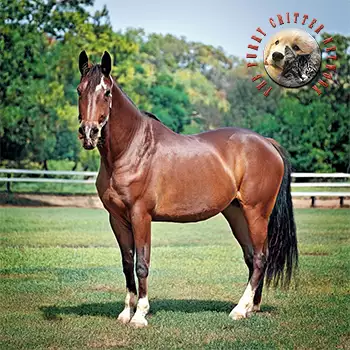

Warmbloods are intelligent, people-oriented horses that often develop behavioral problems when their mental needs go unmet. Unlike breeds that are content to stand quietly in a paddock for hours, many Warmbloods actively seek out interaction, novelty, and problem-solving opportunities. When those needs are not met through intentional enrichment, the horse often invents its own entertainment — and the results frequently involve destroyed blankets, chewed fence boards, or stereotypic behaviors like cribbing and weaving.
The connection between mental stimulation and training performance is well established in sport horse management. A Warmblood that spends twenty-two hours a day in a stall with nothing to engage its mind arrives at training sessions either dull and checked out or explosive and unfocused. Enrichment bridges the gap between formal training sessions, keeping the horse's brain active and reducing the stress hormones that accumulate during prolonged confinement.
Enrichment strategies should be varied and rotated regularly. Horses habituate quickly to static objects, so a toy that captures intense interest in the first week may be completely ignored by the third. A rotating library of enrichment items — swapped out every few days — maintains novelty without requiring a massive inventory. Understanding your individual horse's play preferences — whether they tend toward manipulative play, object investigation, or food-motivated problem solving — helps you invest in the categories most likely to hold their attention.
Safety must be the first filter when evaluating any enrichment product for a Warmblood. These are powerful animals that can generate enormous bite force and kicking impact. Anything placed in a stall or paddock must be free of small detachable parts, sharp edges, and materials that become hazardous when broken. If a toy cannot survive being kicked, stomped, and bitten by a 1,400-pound horse without creating dangerous fragments, it does not belong in the enclosure.