
Space Requirements

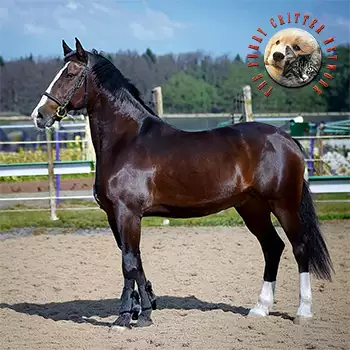
The Swedish Warmblood is a substantial sport horse that typically stands between 15.2 and 17 hands and weighs 1,000 to 1,400 pounds, so housing dimensions must accommodate this frame comfortably. A standard box stall for a horse of this size should measure at least 12 feet by 12 feet, though a 12-by-14-foot or even 14-by-14-foot stall is preferable for taller individuals. A stall that is too small restricts natural movement, makes it difficult for the horse to lie down and rise comfortably, and increases the risk of casting — becoming trapped against a wall while rolling.

Ceiling height is another dimension that often receives insufficient attention. For a horse that may stand 17 hands at the withers, the ceiling should be a minimum of 10 feet, with 12 feet being more appropriate in areas where the horse might raise its head suddenly, such as the aisle or wash rack. Low ceilings create a risk of head and poll injuries that can have lasting neurological consequences and may make the horse head-shy or reluctant to enter the barn.

Beyond the stall itself, turnout space is a critical component of any housing plan. Swedish Warmbloods are athletic, intelligent horses that benefit enormously from daily turnout in a paddock or pasture. A minimum of one acre per horse is a reasonable guideline for pasture turnout, though smaller dry lots or sacrifice paddocks can work for facilities where pasture quality or space is limited. The key is that the horse has room to move freely at all gaits, engage in natural social behaviors, and spend time outside the confines of the stall every day.

Aisle width in the barn should be at least 10 to 12 feet to allow safe passage of a horse and handler, with additional width needed if cross-tying is done in the aisle. Doorways — both stall doors and barn entrance doors — should be a minimum of 4 feet wide and 8 feet tall, though larger is always safer. A horse that feels crowded going through a doorway can rush, spin, or brace, creating dangerous situations for both horse and handler.

Stalls & Barn Design

Stall construction materials have a direct impact on the horse's safety, comfort, and the facility's long-term maintenance costs. Hardwood planking, steel panels, and heavy-gauge mesh are the most common options. Wood provides a forgiving surface if a horse kicks, but requires regular inspection for splintering, chewing damage, and rot. Steel panels are durable and low-maintenance but can cause injury if a horse strikes them at speed. Mesh or grille upper walls improve ventilation and allow social interaction between stall neighbors, which can reduce stress-related behaviors in a social breed like the Swedish Warmblood.

Flooring is one of the most important and frequently debated elements of stall design. Packed clay or limestone screenings provide natural drainage and a forgiving surface that absorbs concussion, making them excellent base materials. Rubber stall mats placed over a compacted base offer additional cushioning, reduce bedding usage, and make stall cleaning significantly easier. Concrete floors are durable and easy to sanitize but are unforgiving on joints and hooves unless covered with thick rubber matting — they should never be used as a bare stall floor for any horse, let alone a performance athlete.

Ventilation is arguably the single most important environmental factor in barn design. Horses produce significant amounts of ammonia through urine, and bedding generates dust and mold spores. Poor ventilation concentrates these irritants at breathing height, leading to inflammatory airway disease and reduced performance capacity. Barns should be designed with ridge vents, eave openings, or cupolas that create passive airflow, and supplemental fans may be needed in regions with hot, humid summers. The goal is continuous air exchange without direct drafts on the horse.

Lighting affects both the horse's circadian rhythms and the safety of daily barn operations. Natural lighting through windows and skylights is ideal during daytime hours and contributes to the horse's psychological wellbeing. Artificial lighting should be bright enough for safe handling and veterinary work — a minimum of 200 lux at stall level — and should be on a consistent schedule. For breeding operations, photoperiod manipulation using timed lighting is a standard management practice, but even for non-breeding Swedish Warmbloods, consistent light-dark cycles support healthy sleep patterns and hormonal regulation.

Bedding & Footing

Bedding serves multiple functions in the stall: cushioning for rest, absorption of urine, and insulation from cold flooring. Wood shavings are the most widely used bedding material for horses and offer a good balance of absorbency, availability, and cost. Kiln-dried shavings are preferable to green shavings because the drying process reduces dust, mold spores, and aromatic compounds that can irritate the respiratory tract. Avoid shavings from black walnut, which causes acute laminitis in horses, and be cautious with cedar, which contains volatile oils that some horses react to.

Straw bedding is traditional and provides an excellent cushion for horses that like to lie down frequently, which many Swedish Warmbloods do given their size and the physical demands of their training. However, straw is less absorbent than shavings, creates more waste volume, and some horses will eat their straw bedding, which can contribute to excessive caloric intake and digestive issues. If using straw, wheat straw is generally preferred over oat or barley straw because it is less palatable and more resistant to compression.

Pelleted bedding made from compressed wood fiber or recycled paper has gained popularity for its exceptional absorbency and ease of disposal. These pellets expand into a soft, fluffy material when wetted and are often the most economical option per unit of absorption. They produce very little dust when properly maintained and are particularly well-suited for horses with respiratory sensitivities. The main drawback is that the initial setup requires wetting the pellets and allowing them to expand, which adds a step to the stall preparation process.

Outdoor footing in paddocks and turnout areas deserves the same attention as stall bedding. Mud is the enemy of hoof health and soundness — standing in mud softens the hoof wall, predisposes to thrush and white line disease, and creates slippery conditions that increase injury risk. High-traffic areas around gates, water troughs, and feeding stations should be reinforced with geotextile fabric topped with crushed stone or gravel to prevent mud formation. Proper drainage grading throughout the turnout area ensures that water moves away from the paddock rather than pooling in low spots.

Fencing & Turnout Enclosures

Fencing is both a safety system and a significant investment, and the choice of fencing material should prioritize the horse's safety above all other considerations. For Swedish Warmbloods, which are large, athletic horses capable of generating substantial speed and force, the ideal fence is highly visible, has some give upon impact, and presents no sharp edges or entanglement hazards. Board fencing using four-inch or wider planks remains a gold standard — it is visible, relatively forgiving, and aesthetically pleasing, though it requires regular maintenance including painting or staining and replacement of broken boards.

Polymer or vinyl fencing has become a popular alternative to traditional wood, offering similar visibility and a smooth surface without the maintenance demands of painted lumber. High-quality polymer fencing is designed to flex on impact rather than shatter, reducing the risk of penetrating injuries. However, not all polymer fencing is created equal — thinner or lower-grade products can become brittle in cold weather or degrade under UV exposure, so selecting a product rated for your climate is essential.

High-tensile wire and electric fencing systems can be effective for perimeter containment, but they require careful installation and ongoing maintenance. Wire fencing must be properly tensioned and should incorporate a visible top rail or tape to prevent horses from running through it at speed. Electric tape or rope in widths of one inch or greater is preferred over thin electric wire because it is far more visible. Electric fencing works best as a psychological barrier — horses learn to respect it after initial contact — but it should never be the sole containment system for a high-value sport horse.

Gate design and placement are critical details that are often afterthoughts in fencing plans. Gates should be the same height as the fence line, wide enough for a horse and handler to pass through comfortably without the horse's hips brushing the posts, and equipped with latches that are easy for humans to operate but impossible for horses to manipulate. Placing gates away from corners prevents horses from being trapped or crowded during group turnout, and having a separate entry gate and exit gate in larger pastures simplifies the daily routine of bringing horses in and out.

Climate Considerations

The Swedish Warmblood originated in Scandinavia and carries a natural tolerance for cold weather that many other sport horse breeds lack. A healthy, unclipped Swedish Warmblood with access to a run-in shelter can often handle temperatures well below freezing without blanketing, provided it has adequate forage intake and protection from wind and precipitation. The natural winter coat is an extraordinarily effective insulation system — the hairs stand erect to trap warm air close to the body, and the natural oil in the coat repels water. Blanketing a horse that does not need it actually compresses this coat and can leave the horse colder than it would be without the blanket.

However, competitive Swedish Warmbloods are frequently body-clipped during the winter months to prevent excessive sweating during work and to speed post-exercise drying. A clipped horse has lost its primary insulation and absolutely requires blanketing when temperatures drop. A layered blanketing system — a lightweight sheet for mild cold, a medium-weight blanket for moderate cold, and a heavyweight blanket for severe weather — allows you to adjust coverage to match daily conditions. Fit is critical: a blanket that shifts, rubs, or restricts shoulder movement can cause hair loss, skin sores, and muscular tension.

Heat and humidity present their own challenges, particularly for a large-bodied horse generating significant metabolic heat during exercise. Barns in warm climates should prioritize maximum airflow through design features like high ceilings, open ridge vents, and end-to-end aisle openings. Stall fans, misting systems, and shade structures in turnout areas all contribute to heat management. Scheduling work during the cooler hours of the day and providing electrolyte supplementation during hot weather are management practices that directly impact the horse's comfort, performance, and safety.

Run-in shelters or loafing sheds in turnout areas provide essential protection from both weather extremes and insects. A three-sided shelter open to the south or southeast — away from prevailing winter winds in most Northern Hemisphere locations — gives the horse the option to seek cover without being confined. The shelter should be large enough for all horses in the turnout group to use simultaneously without conflict, with a general guideline of roughly 120 to 150 square feet per horse. Footing inside the shelter should be well-drained and reinforced to prevent mud accumulation at the entrance.

Multi-Horse Facilities

Managing a facility with multiple horses introduces social dynamics that directly influence housing decisions. Swedish Warmbloods are generally sociable horses that benefit from the ability to see, hear, and interact with herd mates. Barn layouts that position stalls along a central aisle with grille or mesh upper walls allow visual and limited physical contact between neighbors, which satisfies the horse's need for social connection while maintaining individual control over feeding and rest.

Turnout groupings require careful consideration of temperament, size, and social hierarchy. Introducing a new horse to an established turnout group should be done gradually — starting with adjacent paddocks separated by a safe fence, then progressing to supervised shared turnout once the horses have established familiarity. Swedish Warmbloods are typically not aggressive horses, but any horse can be injured during the jostling and chasing that occurs when group dynamics are being established, particularly in confined spaces.

Feed management in multi-horse environments prevents both nutritional imbalances and social conflict. Dominant horses will monopolize feed sources if hay or grain is offered in a single location, leaving subordinate horses underfed and stressed. Distributing hay in multiple stations spaced well apart — ideally with more feeding stations than horses — ensures that every horse has access. Ground-level feeding stations should be positioned away from fence lines and corners where a horse could be trapped by a more dominant herd mate.

Biosecurity becomes increasingly important as the number of horses on a property grows. Isolation protocols for new arrivals, separate equipment for sick horses, and quarantine stalls or paddocks are all elements of a responsible multi-horse operation. The Swedish Warmblood competing regularly is exposed to horses from many different farms at shows and events, making it a potential vector for contagious diseases. Having a designated quarantine area where returning competition horses can be monitored for 10 to 14 days before rejoining the general population is a prudent investment in herd health.

Always consult a qualified professional before making any health-related decisions. This content is provided for informational reference only and should not replace professional guidance specific to your animal.