
Play Style & Behavioral Needs

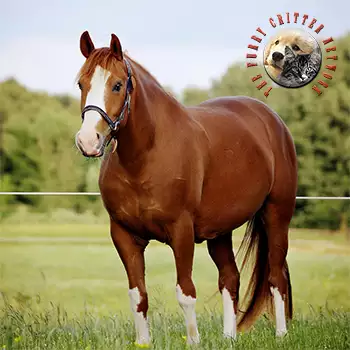
Quarter Horses are intelligent, curious animals that were bred for work. When that mental and physical energy has no productive outlet, it often redirects into undesirable behaviors — cribbing, weaving, stall walking, or wood chewing. These stereotypies are not personality flaws; they are coping mechanisms that signal boredom, stress, or insufficient stimulation. Enrichment is not a luxury for horses — it is a management tool that supports psychological health.

The breed's temperament plays into its enrichment needs. Quarter Horses tend to be bold and food-motivated, which makes treat-dispensing toys and foraging challenges particularly effective. They are also social learners who observe and mimic herd mates, so introducing a toy to one horse in a group often sparks interest from others. This willingness to engage makes them excellent candidates for a rotating enrichment program.

Understanding how your individual horse plays is key to choosing the right products. Some horses are mouthy and enjoy manipulating objects with their lips and teeth. Others prefer to push, kick, or nose items across the ground. A few are cautious about novel objects and need gradual introduction. Observe your horse's natural tendencies before investing heavily in any single category of toy.

Enrichment should complement — not replace — adequate turnout, social contact, and a forage-based diet. A horse that spends twenty-three hours a day alone in a stall with a single rubber ball is not enriched; it is warehoused with a prop. The most effective enrichment programs combine toys and puzzles with varied turnout, training sessions, and social time.

Foraging & Puzzle Toys

Foraging toys tap into the horse's strongest natural drive — the desire to find and consume food. Treat balls that release pellets or hay cubes when rolled are a staple of equine enrichment. These toys reward investigation and movement, keeping a stalled horse occupied for extended periods. Look for balls made from durable, food-safe materials that are large enough not to be picked up and thrown but light enough to roll easily across stall footing.

Slow feeders and hay nets serve a dual purpose: they extend forage consumption time and provide mental engagement. Nets with small openings (one and a half to two inches) force the horse to work for each mouthful, turning a twenty-minute hay pile into an hour or more of sustained activity. Wall-mounted hay bags with multiple compartments add variety by requiring the horse to shift attention between openings.

More advanced puzzle feeders challenge horses to manipulate lids, levers, or sliding panels to access hidden treats. These products are excellent for highly intelligent Quarter Horses that have already mastered simpler toys. Start with easy puzzles and increase difficulty over time — a horse that cannot solve a puzzle will quickly lose interest and may resort to stomping or destroying the device out of frustration.

DIY foraging enrichment is effective and inexpensive. Scatter a handful of hay cubes across the stall floor to encourage natural grazing head position and ground-level searching. Stuff treats inside a cardboard tube or paper bag for a disposable puzzle. Hang a cabbage or apple from a stall-safe rope at nose height for a swinging target that combines feeding with play. Rotate options every few days to maintain novelty.

Stall & Paddock Toys

Large rubber balls designed for horses provide tactile and physical stimulation. These balls — typically eighteen to twenty-five inches in diameter — are built to withstand biting, kicking, and rolling across uneven ground. Some horses develop elaborate solo games, pushing the ball around a paddock or batting it against a fence. Others lose interest quickly. Scenting the ball with a small amount of peppermint oil or apple juice can renew a horse's curiosity.

Hanging toys mounted in the stall give horses something to manipulate without the risk of the toy rolling into a corner and being trapped or stepped on. Designs range from simple suspended rubber rings to multi-component toys with rotating elements. Mount hanging toys at chest to shoulder height so the horse can engage comfortably without straining its neck upward. Check mounting hardware regularly — a toy that falls and startles a horse in a confined stall can cause injury.

Traffic cones, jolly eggs (oblong-shaped balls that roll unpredictably), and other unconventional shapes add variety to paddock play. The irregular movement patterns of an egg-shaped toy trigger more sustained engagement than a sphere that rolls in predictable lines. Introduce novel objects gradually, especially with horses that are initially wary, and always supervise the first few interactions to ensure the horse engages safely.

Durability is the primary safety concern with any horse toy. Quarter Horses are strong animals with powerful jaws, and a toy that can be bitten into pieces creates choking and impaction hazards. Avoid products made from brittle plastic, thin rubber, or materials that splinter. If a toy shows cracks, tears, or significant wear, replace it immediately rather than waiting for catastrophic failure.

Sensory & Environmental Enrichment

Enrichment extends beyond physical toys. Sensory stimulation — visual, auditory, and olfactory — contributes meaningfully to a horse's mental state. Barn radios playing calm music or talk programming provide ambient auditory enrichment that can reduce stress in stalled horses. Research has shown that classical music and country music tend to produce calming effects, while loud or bass-heavy genres may increase agitation.

Visual enrichment includes mirrors, windows, and varied scenery. Stall mirrors made from shatterproof acrylic give isolated horses the illusion of a companion, which has been shown to reduce weaving and other stereotypic behaviors. Windows or openings that allow a stalled horse to watch outdoor activity — other horses, wildlife, vehicles, people — provide passive stimulation that breaks the monotony of four blank walls.

Olfactory enrichment is underutilized but effective. Horses have a highly developed sense of smell, and novel scents provoke investigation and interest. Lavender has been studied for its calming effects in equines, while peppermint and apple scents tend to stimulate curiosity and approach behavior. Scent enrichment can be as simple as placing a few drops of essential oil on a cloth tied outside the stall — never directly on the horse or within chewing reach.

Variation in daily routine is itself a form of enrichment. Changing the order of turnout, grooming, and feeding; introducing the horse to new environments like an arena, a trail, or a wash rack; and providing regular training sessions that challenge the horse mentally all contribute to cognitive health. A Quarter Horse that encounters something new each day, however small, is a more engaged and psychologically resilient animal.

Social Enrichment & Companions

Horses are herd animals with deep social needs, and no toy fully substitutes for the presence of another living being. Whenever possible, Quarter Horses should have visual, tactile, and ideally direct contact with at least one compatible companion. Horses that can see, touch, and mutually groom a neighbor over a shared fence line show lower cortisol levels and fewer stress behaviors than those housed in isolation.

Not every companion needs to be another horse. Donkeys, miniature horses, goats, and even calm cattle have all been used successfully as equine companions. These species offer social presence and herd dynamics without the space and cost of a second full-sized horse. When pairing a Quarter Horse with a non-equine companion, ensure both species have adequate nutrition, veterinary care, and the ability to retreat to separate spaces if the relationship becomes contentious.

Group turnout provides the richest social enrichment, allowing horses to engage in mutual grooming, synchronized grazing, and play behavior. Introduce new group members gradually — side-by-side turnout in adjacent paddocks for several days before shared access reduces the intensity of dominance disputes. Remove hind shoes during the introduction period to minimize kick injuries during the inevitable sorting of hierarchy.

For horses that must be stalled for medical reasons or management constraints, maximize social contact within those limits. Stall grills that allow nose-to-nose contact, shared turnout time even if brief, and hand-walking past other horses during daily routines all provide social stimulation. Even a few minutes of direct social interaction per day can meaningfully reduce the behavioral and physiological effects of isolation.

DIY & Budget Options

Effective enrichment does not require expensive commercial products. Many of the best enrichment tools are improvised from everyday items. A sturdy plastic milk jug with a few holes cut in the sides and a handful of hay cubes or grain inside becomes a rolling treat dispenser. A knotted rope hung from a stall beam provides a tug toy. A pile of shavings in the center of a paddock gives horses something to paw through and investigate.

Cardboard boxes filled with crumpled paper and hidden treats offer destructible enrichment — the kind that satisfies the horse's desire to tear and manipulate materials. These are single-use items, which makes them ideal for variety without clutter. Remove all tape, staples, and printed labels before offering cardboard to a horse, and clean up debris promptly to prevent ingestion of non-food materials.

Trail obstacles built from ground poles, cones, tarps, and pool noodles serve double duty as enrichment and desensitization training. Set up a simple obstacle course in a round pen or arena and lead or ride the horse through it. Rearrange the layout every week to maintain novelty. The mental challenge of navigating new arrangements is often more stimulating for a Quarter Horse than repetitive circle work.

Rotation is the single most important principle in budget enrichment. A horse presented with the same three toys every day for a month will ignore all of them. Rotate items on a weekly cycle — two toys in for a week, then swapped for two different ones. Store inactive toys out of sight so they feel novel upon reintroduction. This strategy lets a small collection of simple items provide months of ongoing stimulation without additional spending.

Always consult a qualified professional before making any health-related decisions. This content is provided for informational reference only and should not replace professional guidance specific to your animal.