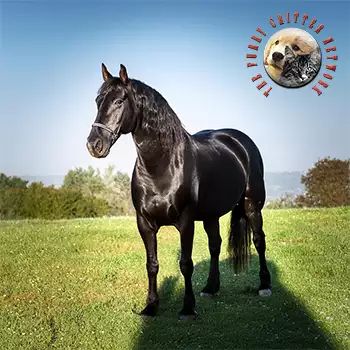

Play Style & Behavioral Needs

Percherons are intelligent, curious horses that benefit from mental engagement just as much as physical exercise. Despite their calm reputation, draft horses left without stimulation can develop stereotypic behaviors such as cribbing, weaving, stall walking, and wood chewing. These behaviors are often indicators of boredom or frustration rather than inherent personality flaws, and they can be significantly reduced or prevented through thoughtful environmental enrichment.

The Percheron's play style tends to be more exploratory and investigative than explosive. Where a high-energy sport horse might engage in energetic bursts of play, a Percheron is more likely to spend time manipulating objects, nosing around novel items in their environment, and engaging in slow, deliberate problem-solving. This temperament makes them excellent candidates for puzzle-type enrichment that rewards patience and curiosity rather than speed or athleticism.

Social interaction is itself a form of enrichment for Percherons. These horses were bred to work in teams and generally thrive in the company of other horses. When group turnout is not possible, visual and tactile contact with neighboring horses through stall grills or shared fence lines provides important social stimulation. For horses housed in isolation, enrichment products become even more critical to compensating for the lack of herd interaction.

Understanding your individual horse's preferences is key to selecting effective enrichment. Some Percherons gravitate toward objects they can push, roll, or carry in their mouths, while others prefer items that dispense food. Observing which types of novel objects naturally capture your horse's attention helps guide purchasing decisions and prevents the common scenario of investing in enrichment products that sit untouched in the paddock.

Interactive & Puzzle Toys

Food-dispensing puzzle toys are among the most reliably engaging enrichment options for Percherons. These products require the horse to manipulate the toy in specific ways — rolling, tipping, lifting, or pressing — to release treats or feed. The challenge of earning a reward keeps the horse mentally occupied for extended periods and mimics the natural foraging behavior that horses are hardwired to perform. Starting with simpler puzzles and gradually increasing difficulty prevents frustration and maintains the horse's interest over time.

Hanging treat dispensers that attach to stall walls or ceilings provide stimulation during stall confinement. These devices typically require the horse to push, spin, or rock the mechanism to release small amounts of feed. For Percherons, ensure that any hanging toy is mounted securely and rated for the force a draft horse can exert — a product designed for a lighter breed may not withstand the strength of a horse that weighs over a ton. Mounting hardware should be checked regularly for wear and loosening.

Lick-based enrichment products offer a different type of mental engagement. Flavored blocks, rollers, and wall-mounted lick stations give the horse something to focus on without the complications of loose food dispensing. Salt and mineral licks serve a dual purpose by providing nutritional supplementation while also occupying the horse's attention. Molasses-based and fruit-flavored options tend to generate more sustained interest, though their sugar content means they should be treated as supplements rather than unlimited resources.

Multi-step puzzle feeders represent the most advanced tier of interactive toys and are well-suited to Percherons who have mastered simpler options. These products require the horse to complete a sequence of actions — such as opening a lid, sliding a panel, and then tipping a container — to access the reward. The cognitive demand is higher, and horses that enjoy this level of challenge can spend substantial time working through the puzzle, making these feeders particularly valuable for horses on stall rest or those with limited turnout.

Durable Pasture Toys

Large, heavy-duty balls designed for equine use are a staple of pasture enrichment. These balls, typically ranging from 25 to 40 inches in diameter, are made from puncture-resistant materials that can withstand being kicked, bitten, and stepped on by draft-sized horses. Percherons often enjoy pushing these balls around their paddock, and the unpredictable rolling motion sustains interest better than stationary objects. Choose balls specifically marketed for horses rather than repurposing gym balls or playground equipment, which lack the durability to survive equine play.

Scented and textured toys add sensory variety to the paddock environment. Products infused with apple, peppermint, or other horse-safe scents trigger investigative behavior and can re-engage a horse that has lost interest in unscented toys. Textured surfaces with ridges, bumps, or varied materials provide tactile stimulation that encourages the horse to mouth and manipulate the object. Rotating scented toys in and out of the paddock on a weekly basis helps maintain novelty and prevents habituation.

Traffic cones, weighted barrels, and other large, durable objects can serve as effective enrichment items at a lower cost than purpose-built horse toys. Many Percherons enjoy picking up traffic cones and tossing them, which provides both physical engagement and entertainment for observers. Any repurposed item should be inspected for sharp edges, small parts that could be bitten off and swallowed, and materials that could become hazardous if broken. Items should be large enough that the horse cannot accidentally ingest pieces.

Paddle-based toys that rock or wobble when touched provide a self-resetting source of entertainment. The horse pushes the toy, it rocks back to its original position, and the motion invites another push. This simple feedback loop can keep a curious Percheron engaged for extended periods. Look for products with a weighted base heavy enough to resist being flipped entirely by a draft horse — lighter models designed for standard-sized horses may topple too easily and lose their interactive appeal.

Slow Feeders as Enrichment

Slow-feed hay nets and bags serve double duty as both nutritional management tools and enrichment devices. By extending the time it takes to consume a hay ration from minutes to hours, these products keep the horse occupied and engaged in a natural foraging behavior. For a stabled Percheron, a well-filled slow-feed net can provide mental stimulation throughout the night and reduce the gap between evening and morning meals that often triggers stereotypic behavior.

Net hole size is the primary variable in slow-feed hay products. Smaller openings — typically around one to one-and-a-half inches — create a greater challenge and extend feeding time more dramatically. However, starting with a very small opening can frustrate horses that are not accustomed to working for their hay. Beginning with a moderate mesh size and transitioning to smaller openings over several weeks allows the horse to develop the technique without becoming discouraged.

Ground-level slow feeders and hay pillows offer an alternative to hanging nets that allows the horse to eat in a more natural head-down position. This posture promotes better respiratory drainage and reduces the inhalation of hay dust compared to elevated feeding. For Percherons, ground-level feeders should be constructed from heavy-duty materials and designed to withstand being stepped on — a common occurrence with large horses that graze aggressively.

Multi-station feeding setups can transform a paddock into a foraging environment. By placing several small hay nets or feeders at different locations around the enclosure, you encourage the horse to walk between feeding stations, simulating the movement patterns of natural grazing. This approach combines the mental benefits of problem-solving at each feeder with the physical benefit of increased locomotion throughout the day.

Training-Based Enrichment

Structured training sessions provide some of the most effective mental enrichment available for Percherons. Draft horses are historically bred for cooperative work and respond exceptionally well to positive reinforcement training. Short daily sessions of ten to fifteen minutes focused on teaching new skills, refining ground manners, or introducing novel obstacles provide cognitive stimulation that passive toys cannot replicate. The social interaction with the handler adds an additional layer of enrichment.

Liberty work — training without a lead rope or halter — is an enrichment approach that is gaining popularity with draft horse owners. This type of training relies entirely on communication through body language, voice cues, and positive reinforcement, and it builds a deeper partnership between horse and handler. Percherons' naturally cooperative disposition and willingness to engage make them particularly well-suited to liberty exercises, and many owners find that their horses actively seek out these training interactions.

Obstacle courses and trail challenge setups can be constructed in a paddock or arena using simple materials. Walking over tarps, stepping through pool noodle curtains, crossing raised poles, and navigating between cones all challenge the horse's spatial awareness and confidence. For Percherons, obstacles should be scaled appropriately — poles set wider, tarps laid out larger, and passageways built wider than standard — to accommodate their size and ensure the exercises feel inviting rather than cramped.

Clicker training is an effective enrichment method that accelerates learning and keeps the horse mentally engaged between sessions. By pairing a distinct click sound with a food reward, the horse learns to associate specific behaviors with positive outcomes. This precision allows you to shape complex behaviors incrementally, and many horses become visibly excited when they hear the click — an indicator of genuine cognitive engagement rather than passive compliance.

DIY & Budget Options

Homemade enrichment does not require a large investment to be effective. A plastic milk jug with a few holes cut in the sides, filled with a small amount of grain, creates a simple food-dispensing toy that a horse can push around a stall or paddock. The jug should be large enough that pieces cannot be bitten off and swallowed, and it should be replaced as soon as it shows signs of cracking or breaking apart. Supervision during the initial introduction of any homemade toy is essential to ensure the horse interacts with it safely.

Frozen treat blocks are an excellent warm-weather enrichment option that costs virtually nothing to prepare. Fill a bucket with water, add pieces of apple, carrot, and a handful of grain, and freeze it overnight. The resulting ice block can be placed in a feed tub or directly on the ground, and the horse will lick, bite, and manipulate it as the treats gradually become accessible. This provides both mental stimulation and a cooling benefit on hot days. Avoid adding any ingredients that are unsafe for horses, and limit sugar-dense fruits to moderate quantities.

Cardboard boxes filled with hay and a few hidden treats create a simple destruction-based enrichment activity. The horse tears apart the box to find the rewards, satisfying both investigative and manipulative instincts. Use plain, uncoated cardboard without tape, staples, or printed coatings, and remove any debris from the paddock once the horse has finished. This type of disposable enrichment is particularly useful for horses on stall rest who need novel stimulation without vigorous physical activity.

Environmental variety itself functions as enrichment at no cost. Changing the location of water troughs, introducing new safe objects to the pasture, varying turnout companions, and altering daily routines all provide cognitive stimulation. Horses are naturally attentive to changes in their environment, and a Percheron that encounters something new in its paddock each week — whether a new log to investigate, a different arrangement of feeding stations, or a novel safe object — remains more mentally engaged than one living in an unchanging landscape.

Always consult a qualified professional before making any health-related decisions. This content is provided for informational reference only and should not replace professional guidance specific to your animal.