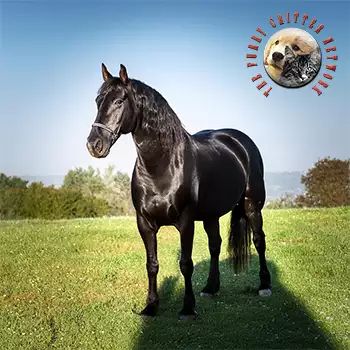

Standard horse halters do not fit Percherons. Draft-sized halters are constructed with wider noseband and crownpiece webbing — typically one and a quarter to one and a half inches — and feature extended cheekpiece lengths to accommodate the broader, deeper head structure characteristic of the breed. A poorly fitting halter can create pressure points behind the ears, across the bridge of the nose, or along the jawline, leading to rub marks, behavioral resistance, and difficulty controlling the horse during handling.
Lead ropes for Percherons should be heavier gauge than standard lines, typically three-quarter-inch diameter or larger, with snap hardware rated for draft horse strength. Lightweight snaps designed for average-sized horses can straighten or break under the force a Percheron can generate during a sudden pull or spook. Bull snaps and heavy-duty panic snaps provide the combination of strength and quick-release capability that draft horse handling demands. Lead rope length should allow adequate working distance — ten to twelve feet is appropriate for most groundwork and leading situations.
Driving harness is the most breed-specific tack category for Percherons, as these horses are most commonly worked in harness rather than under saddle. A properly fitted driving harness distributes pulling force across the chest and shoulders through a well-padded collar or breast collar, with traces, breeching, and a crupper completing the system. Harness sizing for draft horses is measured in substantially different dimensions than light horse harness, and off-the-shelf sets often require professional adjustment to achieve proper fit on an individual Percheron.
For those who ride Percherons, saddle fitting presents unique challenges. The Percheron's wide, flat back, broad withers, and short coupling require a saddle with an extra-wide tree — often designated as draft or full-draft width. Standard wide trees designed for warmblood-type backs rarely accommodate the full breadth of a Percheron's topline. Working with a qualified saddle fitter who has experience with draft breeds ensures proper weight distribution and prevents the back soreness that results from a saddle that bridges or pinches.