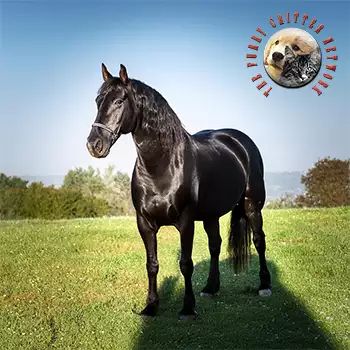

Nutritional Needs

Percherons are one of the largest draft breeds, and their nutritional demands reflect that size. An adult Percheron in moderate work may consume between 25 and 35 pounds of hay per day, with additional grain or concentrate rations depending on workload, age, and metabolic condition. Because of their sheer mass, even small miscalculations in feed ratios can lead to significant weight fluctuations over time, making careful portion management essential.

Draft horses like the Percheron have a slower metabolism relative to their body size compared to lighter breeds. This means they are often easy keepers who can maintain weight on forage alone when not performing heavy work. However, their caloric needs spike considerably during sustained labor such as pulling, logging, or farm work. Owners should be prepared to adjust rations seasonally and based on activity levels rather than relying on a fixed feeding program year-round.

Protein requirements for Percherons generally fall between 8 and 12 percent of total diet depending on life stage. Growing foals and lactating mares need the higher end of that range, while mature horses at maintenance can thrive on quality grass hay alone. Calcium and phosphorus ratios deserve close attention in draft breeds, as their heavy skeletal structure places greater demands on mineral balance. A ratio of approximately two parts calcium to one part phosphorus supports sound bone density and joint health.

Hydration is another critical factor that is sometimes overlooked with large breeds. A working Percheron can drink 15 to 25 gallons of water daily, and electrolyte supplementation becomes important during hot weather or heavy exertion. Ensuring constant access to clean, fresh water — and monitoring intake during cold months when horses naturally drink less — helps prevent impaction colic, a condition draft breeds can be prone to.

What to Look For

When selecting feed products for a Percheron, the ingredient list should lead with recognizable whole grains, quality fiber sources, and clearly identified fat and protein components. Avoid feeds where molasses or sugar-based fillers appear near the top of the ingredient panel. Draft breeds can be prone to metabolic issues, and excess sugar in concentrated feeds contributes to unwanted weight gain and increases the risk of insulin-related disorders.

Fiber content is the backbone of any good draft horse diet. Look for feeds and forages that emphasize long-stem fiber, which promotes healthy gut motility and reduces the risk of digestive upset. Hay should be evaluated not just by type — timothy, orchard grass, and mixed grass hays are all solid choices — but also by cut quality, leaf-to-stem ratio, and the absence of mold or dust. A hay analysis from your local extension service can reveal exact nutrient profiles and help you balance rations more precisely.

Fat supplementation can be a useful strategy for adding calories without the metabolic risks of high-starch feeds. Products that deliver calories through stabilized rice bran, flaxseed, or vegetable oils provide slow-release energy that suits the draft horse's metabolism. This approach is especially valuable for Percherons in heavy work who need sustained energy rather than the quick spikes associated with grain-heavy diets.

Finally, consider the physical form of the feed itself. Percherons with dental issues — common as they age — may benefit from pelleted or extruded feeds that are easier to chew and digest. Senior formulations that include pre- and probiotics can support gut health in older horses whose digestive efficiency has declined.

Recommended Dry Feed

Pelleted and textured feeds designed for draft or large-breed horses should form the foundation of any concentrate ration. These formulations typically feature controlled starch levels and boosted fiber content compared to feeds marketed toward performance or sport horses. For Percherons at maintenance, a ration balancer pellet — which delivers vitamins and minerals without excessive calories — is often the most appropriate choice.

For working Percherons, a moderate-energy pelleted feed with 10 to 12 percent protein and a fat content around 5 to 7 percent provides sustained fuel without overloading the digestive system. Feeds that incorporate beet pulp as a primary fiber source are especially well-suited to draft breeds because beet pulp is highly digestible and provides a slow, steady release of energy. Its low sugar content also makes it a safer option for metabolically sensitive individuals.

Complete feeds — which combine forage and concentrate into a single pellet — can be useful for older Percherons or those with compromised dentition who struggle to process long-stem hay. These products are designed to be fed at higher volumes than traditional concentrates and can fully replace hay when necessary. However, they should be introduced gradually and fed in multiple smaller meals throughout the day to mimic natural grazing patterns and reduce the risk of digestive upset.

When evaluating dry feed options, pay attention to the guaranteed analysis panel and compare products side by side. A slightly higher price point often reflects better ingredient quality, more consistent manufacturing standards, and the inclusion of chelated minerals, which are more bioavailable than their oxide counterparts. Investing in quality feed tends to reduce the need for additional supplements down the line.

Wet & Fresh Options

Soaked feeds and mashes serve an important role in draft horse nutrition, particularly for hydration support and digestive comfort. Beet pulp shreds soaked in water expand to several times their dry volume and provide an excellent vehicle for delivering medications, supplements, or additional water intake. Many Percheron owners make a warm beet pulp mash a daily staple, especially during colder months when water consumption tends to drop.

Fresh forage access — whether through managed pasture rotation or hand-cut grass — provides both nutritional and behavioral benefits. Percherons evolved to graze for 16 to 18 hours a day, and replicating that pattern as closely as possible supports digestive health and reduces stereotypic behaviors like cribbing or weaving. Rotational grazing on well-maintained pasture can supply a significant portion of a Percheron's daily forage needs during the growing season.

Haylage and fermented forage products offer an alternative for operations where dry hay quality is inconsistent or where dust is a respiratory concern. These products retain more moisture and nutrients than dry hay but require careful storage and management to prevent spoilage. The higher moisture content also means more pounds must be fed to deliver the same dry-matter intake as traditional hay, so owners should calculate rations on a dry-matter basis rather than by weight alone.

Sprouted grains and fodder systems have gained popularity as a supplemental fresh feed option. While they can add variety and some nutritional value to a Percheron's diet, they should not be considered a primary forage replacement. The nutrient density of sprouted grains on a dry-matter basis is often comparable to the original grain, so the main benefit is the added moisture and palatability rather than a dramatic nutritional upgrade.

Treats & Supplements

Joint supplements are among the most commonly recommended additions for Percheron diets. The combination of extreme body weight and large bone structure places significant mechanical stress on joints, and products containing glucosamine, chondroitin, and hyaluronic acid can support cartilage integrity and synovial fluid quality. Methylsulfonylmethane is another ingredient frequently included in equine joint formulas for its role in connective tissue health.

Hoof supplements are equally important for draft breeds. Percherons carry tremendous weight on their hooves, and any compromise in hoof wall integrity can lead to serious soundness issues. Biotin-based supplements, often combined with zinc, methionine, and copper, support keratin production and help maintain strong, resilient hoof structures. Results from hoof supplementation typically take four to six months to become visible as the new growth gradually replaces older horn.

Treats should be offered in moderation and chosen with nutritional awareness. Carrots, apples, and commercial horse treats are all acceptable in small quantities, but the sugar content adds up quickly when offered liberally. For a horse the size of a Percheron, the occasional treat has negligible caloric impact, but establishing a habit of hand-feeding large volumes of sugary treats can create pushy behavior and contribute to dental issues over time.

Salt and mineral blocks should be available at all times, but many horses do not consume enough from a block alone to meet their daily sodium and mineral requirements. Loose salt offered free-choice or top-dressed on feed ensures adequate intake. During periods of heavy sweating, a formulated electrolyte product replaces not just sodium but also potassium, chloride, and magnesium — all of which are lost in equine sweat at higher concentrations than in human perspiration.

Foods to Avoid

Certain foods that seem harmless can pose serious risks to horses. Members of the nightshade family — including tomatoes, potatoes, and eggplant — contain solanine, which is toxic to equines even in relatively small amounts. Similarly, plants in the allium family such as onions and garlic can cause hemolytic anemia when consumed in quantity. While garlic is sometimes marketed as a fly repellent supplement, the evidence for its effectiveness is mixed, and the potential for toxicity at higher doses warrants caution.

Lawn clippings should never be fed to horses. The rapid fermentation of finely chopped grass in the hindgut can trigger colic and laminitis, both of which can be life-threatening. Even if the grass itself is safe, lawn clippings may contain herbicide or pesticide residues that are dangerous to horses. The convenience of disposing of yard waste in a horse pasture is not worth the veterinary emergency that can result.

High-starch feeds deserve special attention with Percherons and other draft breeds. While not toxic in the traditional sense, feeds with excessive starch content — particularly those based on corn or barley — can overwhelm the small intestine's digestive capacity. Undigested starch then passes into the hindgut, where rapid fermentation produces lactic acid, disrupts the microbial population, and can trigger hindgut acidosis, laminitis, or colic.

Moldy hay and spoiled feed are obvious hazards but remain a persistent problem in equine management. Mycotoxins produced by common molds such as fusarium and aspergillus can cause liver damage, respiratory disease, and reproductive problems. Hay should be stored in dry, well-ventilated areas, and any bales showing visible mold, a musty smell, or excessive dust should be discarded entirely rather than fed selectively.

Feeding Schedule

Percherons thrive on consistent, frequent meals rather than one or two large feedings per day. The equine digestive system is designed for near-continuous forage intake, and the stomach — which is relatively small for the horse's body size — functions best when it is never completely empty. Ideally, hay or forage should be available around the clock, with concentrate meals divided into two or three smaller portions spaced throughout the day.

Morning and evening grain meals are the most common schedule for working Percherons, with a possible midday feeding added during periods of heavy labor. Each concentrate meal should be limited to no more than five to six pounds of grain to prevent overwhelming the digestive tract. Larger single meals increase the risk of starch overload reaching the hindgut, which is the primary trigger for fermentation-related colic and laminitis.

Slow-feed hay nets are a valuable management tool for Percherons who tend to consume their hay ration too quickly. By extending the time it takes to eat, these nets reduce the gaps between forage intake and help maintain a steadier pH in the stomach. This is particularly important overnight, when the longest fasting period typically occurs. A hay net filled at the last barn check of the evening can keep a Percheron occupied for several additional hours.

Seasonal adjustments to the feeding schedule are necessary in most climates. During winter, increased hay consumption helps generate body heat through the fermentation process in the hindgut — a natural warming mechanism. In summer, feeding the largest concentrate meal during the cooler parts of the day reduces the metabolic heat load associated with digestion. Water intake should be monitored closely year-round, as a Percheron's daily requirement can vary by several gallons depending on ambient temperature, humidity, and workload.

Always consult a qualified professional before making any health-related decisions. This content is provided for informational reference only and should not replace professional guidance specific to your animal.