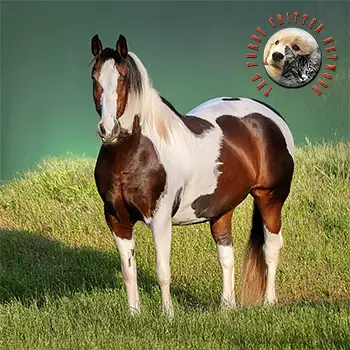

Equine wearable health monitors have matured significantly in recent years, moving from novelty gadgets to genuinely useful management tools. These devices typically attach to a halter, surcingle, or leg band and collect data on movement patterns, rest cycles, heart rate, and sometimes respiratory rate. The value for Paint Horse owners lies in establishing a baseline of normal activity so that deviations — a horse that's suddenly moving less, lying down more than usual, or showing elevated resting heart rate — trigger early investigation before a health issue becomes a veterinary emergency.
The most practical application of activity monitoring for Paint Horses is colic detection. Colic is the leading cause of non-traumatic death in horses, and early intervention dramatically improves outcomes. Wearable monitors that track rolling behavior, time spent lying down, and movement frequency can alert an owner to colic symptoms hours before they become visually obvious, particularly overnight when no one is physically watching the horse. Systems that send smartphone notifications when abnormal patterns are detected provide peace of mind for owners who don't live on the same property as their horses.
Fitness tracking features appeal to Paint Horse owners who train and compete regularly. Monitoring metrics like distance traveled, speed, heart rate recovery time, and daily activity levels helps gauge training progress and identify when a horse may be overworked or undertrained. This data-driven approach to conditioning is especially valuable for Paints transitioning between disciplines or returning to work after injury, where objective measurements supplement the rider's subjective feel.
When evaluating health monitors, consider battery life, durability, water resistance, and data transmission method. A device with a 24-hour battery that requires daily charging is significantly less useful than one lasting a week or more. The device must survive the realities of life on a horse — rain, mud, rolling, rubbing against fences and stall walls. Cellular-connected devices that transmit data directly to a cloud platform work on remote properties where Wi-Fi doesn't reach the barn, while Bluetooth-only devices require a nearby hub or smartphone to relay information.