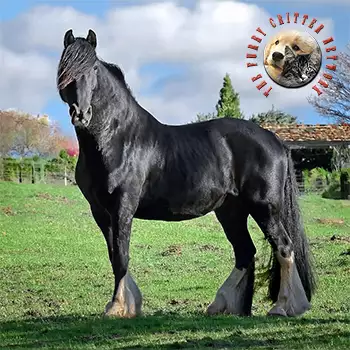

Play Style and Temperament

The Irish Draught is an intelligent and curious breed with a calm but engaged disposition. Unlike high-strung sport breeds that channel excess energy into nervous habits, the Irish Draught tends to express boredom through more deliberate behaviors — pawing, cribbing, weaving, or simply becoming dull and unresponsive. Recognizing these early signs of understimulation is key to selecting the right enrichment strategy before unwanted habits become entrenched.

This breed's intelligence works in your favor when it comes to enrichment. Irish Draughts are quick to investigate new objects and tend to interact with toys for longer periods than more reactive breeds that may spook at unfamiliar items and refuse to engage. Their problem-solving ability means they can graduate to more complex enrichment devices as they master simpler ones, creating an opportunity for progressive mental challenges.

The Irish Draught's substantial size and strength must be factored into any toy or enrichment purchase. Products designed for ponies or small horses may not withstand the weight and force of an Irish Draught at play. Durability and material quality are paramount — a toy that breaks apart under pressure becomes a potential choking hazard or a source of sharp fragments in the stall or paddock.

Social play is also important for this gregarious breed. When safe to do so, turnout with compatible companions provides enrichment that no manufactured toy can replicate. Mutual grooming, play fighting, and shared investigation of the environment all contribute to psychological health and help prevent the isolation-related stress that stalled horses commonly experience.

Treat-Dispensing and Puzzle Toys

Treat-dispensing toys are among the most effective enrichment tools for stalled Irish Draughts because they transform idle time into an engaging foraging activity. These products typically require the horse to roll, push, or manipulate an object to release small portions of feed or treats, mimicking the problem-solving and movement involved in natural grazing behavior.

When selecting a treat-dispensing toy, look for heavy-duty construction in food-safe materials. Hard plastic or dense rubber models designed specifically for horses withstand the kind of force an Irish Draught can apply. Adjustable difficulty settings are a valuable feature — you can start with openings that release treats easily and progressively reduce the size as the horse becomes more skilled, extending engagement time from a few minutes to thirty minutes or more.

The type of treat or feed used inside the toy matters both nutritionally and motivationally. Low-sugar, high-fiber options such as chopped hay cubes, beet pulp nuggets, or small pieces of carrot keep the caloric impact minimal while providing strong motivation. Avoid filling dispensers with sugary commercial treats or grain, as the horse may consume excessive calories if particularly adept at emptying the device.

Placement strategy influences how much benefit the horse derives from the toy. In a stall, placing the dispenser on the floor encourages natural head-down foraging posture. In a paddock, the toy can be placed in different locations each day to encourage exploration. Some owners hang treat-dispensing balls at chest height, which provides a different type of physical engagement and keeps the toy cleaner in muddy conditions.

Stall Toys and Boredom Busters

Stall toys serve a different purpose from treat dispensers — they provide sensory stimulation and an outlet for oral and tactile curiosity without necessarily involving food. Hanging toys that the horse can push, bite, or bat are popular options. Look for products made from non-toxic, durable materials that can be securely attached to a wall or stall fixture at an appropriate height, generally between chest and head level.

Textured rubber toys and lick surfaces offer oral stimulation that can redirect the impulse to crib or chew wood. Some lick surfaces can be coated with a thin layer of molasses-free supplement paste or applesauce to increase initial interest, though many horses engage with the texture alone once they discover it. These products are particularly useful during periods of enforced stall rest due to injury or veterinary recovery.

Mirror panels installed in stalls have shown promise in reducing stress-related behaviors in horses kept in visual isolation. The reflection provides a sense of companionship and can calm anxious individuals. Mirrors designed for equine use are made from shatterproof acrylic or polished stainless steel rather than glass, eliminating the risk of breakage. While a mirror is no substitute for real social contact, it can be a valuable addition for horses that must spend extended periods stabled alone.

Rotating toys on a regular schedule — swapping out one item every few days — maintains novelty and prevents habituation. An Irish Draught that has lost interest in a particular toy will often re-engage enthusiastically after a week or two without it. Keeping a small library of four or five different enrichment items and cycling them through the rotation maximizes engagement while minimizing expense.

Paddock and Pasture Enrichment

Outdoor enrichment takes advantage of the Irish Draught's natural inclination to explore and interact with its environment. Large, heavy-duty balls designed for horses provide excellent paddock entertainment. These balls are typically made from dense, puncture-resistant material and range from the size of a basketball to well over two feet in diameter. The larger sizes are generally preferable for Irish Draughts, as they are easier to push with the chest or nose and less likely to be picked up and thrown over fencing.

Trail features and obstacle elements can be incorporated into paddock design to create an engaging environment that encourages voluntary movement and problem-solving. Low platforms to step onto, poles spaced for walk-through exercises, and gentle berms or mounds all provide physical and mental stimulation. These features should be constructed from safe, sturdy materials and positioned away from fence lines to prevent entrapment.

Slow-feeder nets and hay stations placed at multiple locations around the paddock encourage the horse to move between feeding points, mimicking the natural grazing pattern of walking and eating. This approach combines nutritional management with enrichment, as the horse must navigate the paddock and work at extracting hay from the net rather than consuming a pile of loose hay in one stationary spot.

Natural environmental features provide underappreciated enrichment value. Safe trees and shrubs for browsing, varied terrain with gentle slopes, and access to a stream or pond for wading all contribute to a stimulating outdoor environment. Even something as simple as a fallen log positioned safely in the paddock gives the horse something to investigate, step over, and rub against.

Training-Based Enrichment

Structured training sessions are among the most powerful forms of enrichment for an intelligent breed like the Irish Draught. Groundwork exercises — including lunging, long-lining, and liberty work — provide mental engagement and physical exercise simultaneously. The Irish Draught's willingness and cooperative nature make it an ideal candidate for advanced groundwork that challenges both body and mind.

Clicker training and positive reinforcement methods are particularly well suited to the Irish Draught temperament. The breed's food motivation and desire to engage with humans create ideal conditions for rapid learning through reward-based systems. Teaching tricks such as targeting, fetching, or opening a latch on command provides genuine mental stimulation and strengthens the bond between horse and handler without requiring riding or athletic exertion.

Trail riding and hacking out provide a form of enrichment that no arena session can replicate. The constantly changing environment — new sights, sounds, smells, and terrain — engages the horse's senses and satisfies its curiosity in ways that repetitive ring work cannot. For Irish Draughts that are sound and fit, regular trail outings should be considered an essential component of their enrichment program rather than an occasional treat.

Variety in training is itself a form of enrichment. Alternating between flatwork, jumping, trail riding, and groundwork sessions prevents mental staleness and keeps the Irish Draught interested and engaged in its work. Even small changes — working in a different field, introducing a new ground pole exercise, or practicing in a different order — can refresh the horse's attention and enthusiasm.

DIY and Budget Options

Effective enrichment does not require expensive commercial products. Many of the best enrichment solutions for Irish Draughts can be created from safe, everyday materials at minimal cost. A heavy-duty traffic cone placed in the stall or paddock provides a surprisingly engaging toy that horses enjoy pushing, flipping, and carrying. Ensure the cone is free of sharp edges and made from flexible material that cannot shatter.

A simple hay-stuffed cardboard box offers foraging enrichment that most Irish Draughts find irresistible. Place a few handfuls of hay or a scattering of chopped carrots inside a sturdy cardboard box and let the horse figure out how to access the contents. The box will be destroyed in the process, so ensure it is free of staples, tape, and printed inks that could be harmful if ingested. This is a single-use enrichment option, but the cost is negligible.

Frozen treat blocks made from water and chopped fruit or vegetables provide entertainment and hydration during hot weather. Freeze a bucket of water with carrots, apple chunks, and a handful of hay mixed in, then turn it out into a feed tub in the paddock. The horse will lick and nudge at the ice block as it melts, receiving small rewards of food as the ice recedes. This is particularly engaging on warm days when the cooling effect adds an extra dimension of appeal.

Scent enrichment is an often-overlooked option that costs virtually nothing. Introducing safe aromatic herbs — such as peppermint, chamomile, or lavender — into the stall environment by hanging small bunches from the ceiling or placing them in a hay net provides novel olfactory stimulation. Many horses show strong interest in investigating and interacting with aromatic plants, and the calming properties of certain herbs may provide an additional benefit for anxious individuals.

Always consult a qualified professional before making any health-related decisions. This content is provided for informational reference only and should not replace professional guidance specific to your animal.