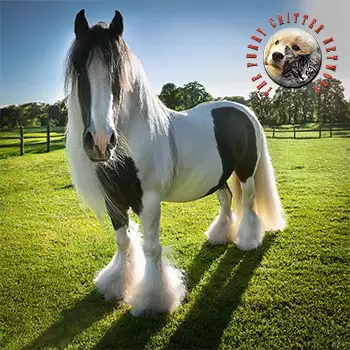

Activity & Health Monitors

Wearable activity monitors designed for horses have matured significantly in recent years, offering data that was previously available only through veterinary assessments. These devices typically attach to a halter, leg band, or surcingle and use accelerometers, gyroscopes, and sometimes heart rate sensors to track movement patterns, rest periods, and behavioral indicators throughout the day. For Gypsy Vanner owners, the ability to monitor daily activity levels is particularly valuable because the breed's easy-keeper metabolism means that subtle changes in movement or rest behavior can signal health issues before clinical signs become apparent.

The most useful metrics for Vanner owners include total daily movement, time spent lying down versus standing, rolling frequency, and gait quality indicators. A sudden decrease in movement or an increase in time spent lying down can be an early warning sign of laminitis, colic, or musculoskeletal pain — conditions that benefit enormously from early intervention. Establishing a baseline of normal activity over several weeks gives you a reference point against which changes become immediately visible.

Heart rate monitoring adds another layer of health insight, particularly for horses in regular work. Resting heart rate trends over time can indicate fitness improvements, the onset of illness, or pain. During exercise, heart rate data helps you gauge effort levels and recovery speed, which is useful for conditioning programs and for ensuring that a heavily built breed like the Vanner is not being pushed beyond its cardiovascular capacity during hot or humid weather.

When evaluating activity monitors, consider battery life, durability, water resistance, and the quality of the companion app or software platform. A device that requires daily charging or that fails in rain is impractical for equine use. Look for products with battery life measured in weeks rather than hours, an IP rating of at least IP67 for water and dust resistance, and a data platform that presents information in clear, actionable formats rather than overwhelming you with raw numbers.

GPS & Location Tracking

GPS tracking devices provide peace of mind for owners who keep Gypsy Vanners on large acreage, in shared boarding situations, or in areas where livestock theft is a concern. The breed's striking appearance and high market value make them attractive targets for theft, and a GPS tracker attached to a halter or braided into the mane provides a real-time location feed that can assist law enforcement in recovery situations. Beyond security, GPS tracking also allows you to monitor how much ground your horse covers during turnout, which provides useful data about activity levels and social dynamics within a herd.

Cellular-based GPS trackers rely on mobile network coverage to transmit location data to your phone or computer. These devices work well on properties with reliable cell service but may have coverage gaps in rural or mountainous areas. Check the coverage maps for the tracker's cellular provider against your property's location before purchasing, and consider devices that support multiple carrier networks for better redundancy.

Satellite-based tracking options are available for properties in areas with poor cellular coverage. These devices communicate via satellite networks that provide global coverage regardless of cell tower proximity, though they typically cost more in both hardware and monthly subscription fees. For remote properties or horses that are trailed through wilderness areas, the reliability of satellite communication may justify the premium.

Geofencing is a feature offered by many GPS platforms that sends an alert to your phone when your horse leaves a defined boundary. You can set virtual fences around pastures, paddocks, or the entire property, and receive immediate notification if a horse breaches the perimeter. This feature is particularly valuable during severe weather events when fencing may be damaged, or in situations where gates might be accidentally left open. The alert speed varies by device — some update every few minutes while others offer near-real-time tracking — so choose a product whose update frequency matches your security needs.

Smart Feeders & Water Monitors

Automated feeding systems bring precision and consistency to the task of managing a Gypsy Vanner's diet, which is especially important for a breed prone to metabolic issues from overfeeding. Programmable feeders can dispense controlled portions of concentrates, ration balancers, or supplements at preset intervals throughout the day, eliminating the risk of a well-meaning barn helper offering an extra scoop. The ability to divide daily rations into four or more small meals supports digestive health and helps maintain stable blood sugar levels.

Slow-feed hay systems with timer-controlled access represent a significant advancement for managing forage intake. These devices hold a day's hay ration and open access panels on a programmed schedule, allowing the horse to eat for defined periods before closing again. For metabolically sensitive Vanners who need restricted forage access, these systems solve the challenge of limiting intake while still providing multiple small meals spread across the day — something that is difficult to achieve through manual feeding without a dedicated caretaker.

Water monitoring technology ranges from simple float-valve automatic waterers with usage counters to smart systems that track consumption volumes and alert you to changes. Monitoring water intake is one of the simplest and most effective ways to detect early signs of illness in horses, as a drop in water consumption is often the first indicator of colic, fever, or dental pain. Smart water monitors that send alerts when intake deviates from established patterns give you a head start on veterinary intervention.

Water temperature management is relevant in both summer and winter. Heated water buckets and trough heaters prevent freezing during cold months and encourage adequate hydration when horses might otherwise reduce intake due to painfully cold water. Some advanced systems monitor water temperature continuously and activate heating elements only when needed, reducing energy costs while ensuring that water remains in the 45-to-65-degree Fahrenheit range that most horses prefer.

Cameras & Barn Monitoring

Barn and pasture camera systems have become increasingly affordable and capable, providing remote visual monitoring that is invaluable for horse owners who cannot be on-site around the clock. Modern systems offer high-definition video, night vision, wide-angle coverage, and two-way audio, all accessible through smartphone apps. For Gypsy Vanner owners, camera monitoring is particularly useful for observing horses during overnight hours, foaling watch, post-surgical recovery, and monitoring herd dynamics in group turnout situations.

Wireless camera systems simplify installation in barn environments where running cable through walls and ceilings is impractical. Battery-powered or solar-powered cameras can be mounted on fence posts, shelter walls, or trees to cover pasture areas without any wired infrastructure. When selecting wireless cameras, consider the distance between the camera location and your wireless access point — barn and field environments with metal roofing and dense vegetation can significantly reduce wireless range compared to manufacturer specifications.

Motion-activated recording and alert features reduce the amount of footage you need to review while ensuring that significant events are captured. Setting motion sensitivity zones around stall doors, gates, feed rooms, and tack rooms provides security monitoring alongside animal welfare observation. Many systems allow you to define separate alert profiles — for example, receiving immediate push notifications for motion in the tack room at night while simply recording motion in the pasture for later review.

Environmental sensors that monitor temperature, humidity, and air quality in barn spaces complement camera systems by tracking conditions that affect respiratory health. Ammonia levels in poorly ventilated barns can rise to harmful concentrations that cameras alone would never detect. A sensor that alerts you when temperature, humidity, or ammonia exceeds preset thresholds enables timely interventions — opening vents, adjusting fans, or increasing bedding changes — that protect your Vanner's respiratory system.

Training Technology

Equine training technology has expanded well beyond the traditional round pen and longe line, offering tools that help riders and handlers develop their skills while providing objective feedback on the horse's performance. Video analysis apps that use your smartphone camera to record and annotate training sessions are among the most accessible and effective tools available. Slow-motion playback, side-by-side comparison of sessions, and angle-measurement overlays help you identify asymmetries, timing issues, and progress that are difficult to perceive in real time.

Rider position sensors and smart saddle pads provide data on weight distribution, seat balance, and posting symmetry during mounted work. For Gypsy Vanner riders, this feedback is valuable because the breed's wide barrel and rolling gaits can mask rider imbalances that would be more obvious on a narrower horse. Understanding where your weight falls relative to the horse's center of gravity helps you become a more effective and comfortable rider, which in turn allows the horse to move more freely and develop better muscle symmetry.

Ground training aids that incorporate sensor technology can measure stride length, cadence, and straightness during in-hand and longe work. These metrics are useful for tracking the development of young Vanners, monitoring rehabilitation progress after injury, and identifying subtle lameness that might not be visible to the naked eye. Longitudinal data collected over weeks and months reveals trends that single-point assessments cannot capture.

Online training platforms and virtual coaching services have made expert instruction accessible to Gypsy Vanner owners regardless of geographic location. Many platforms allow you to upload video of your training sessions and receive detailed feedback from certified instructors who specialize in draft and cob breeds. This is particularly valuable for Vanner owners in areas where local trainers may have limited experience with the breed's unique movement characteristics and training requirements.

Veterinary Telehealth

Veterinary telehealth platforms connect horse owners with licensed equine veterinarians through video consultation, enabling real-time assessment of non-emergency health concerns without the cost and scheduling delays of an in-person farm call. For Gypsy Vanner owners, telehealth is particularly useful for evaluating skin conditions beneath the feathering, monitoring the progression of known issues like scratches or mild thrush, discussing body condition and diet adjustments, and obtaining second opinions on treatment plans.

The effectiveness of a telehealth consultation depends heavily on the quality of visual information you can provide. Investing in the ability to capture clear, well-lit video and photographs of your horse — including close-ups of affected areas — makes telehealth consultations far more productive. A basic smartphone stabilizer or a second person to hold the phone while you handle the horse can dramatically improve the footage quality. For feathered breeds, parting the hair and holding it back while filming the skin beneath gives the veterinarian the visual access needed to make informed assessments.

Digital health records that aggregate veterinary history, vaccination schedules, deworming protocols, farrier records, and dental charts in a single accessible platform streamline both in-person and telehealth veterinary interactions. Several apps designed specifically for equine health management allow you to log observations, upload photos, and share records directly with your veterinary team. Having a comprehensive health timeline available during a consultation — whether virtual or in person — helps the veterinarian identify patterns and make more informed recommendations.

Remote monitoring integration, where data from wearable health monitors feeds directly into a veterinary telehealth platform, represents the emerging frontier of equine health management. Some systems already allow veterinarians to review activity data, heart rate trends, and behavioral patterns collected by the horse's wearable device before or during a consultation. This data-driven approach to veterinary care is especially relevant for metabolically sensitive breeds like the Gypsy Vanner, where early detection of trends — a gradual decline in activity, a subtle increase in resting heart rate, or changes in lying-down patterns — can prompt intervention weeks before clinical signs would have prompted a traditional farm call.

Always consult a qualified professional before making any health-related decisions. This content is provided for informational reference only and should not replace professional guidance specific to your animal.