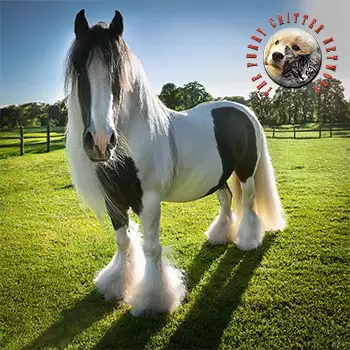

Halters, Lead Ropes & Tack Fit

Finding properly fitting tack for a Gypsy Vanner can be one of the more frustrating aspects of ownership because the breed occupies an unusual space between pony and draft sizing. A standard horse halter is often too long in the cheek pieces and too narrow across the jaw, while a draft halter may be oversized overall. Many Vanner owners find the best results with adjustable halters that allow independent sizing of the noseband, crownpiece, and cheek straps, or with halters specifically marketed for cob or heavy-boned breeds.

Lead ropes should be heavy enough to provide a clear feel without being cumbersome. A ten-foot cotton or yacht-braid lead with a sturdy bull snap gives adequate length for groundwork and daily handling. The snap hardware matters — lightweight triggers can open under pressure, and the consequences of a loose draft-type horse in a barn aisle or parking lot are more significant than with a lighter breed. Test snap quality by checking the spring tension and ensuring the mechanism locks securely under load.

Saddle fit for the Gypsy Vanner's broad, flat back and wide shoulder angle requires careful attention. The breed's mutton withers and short, powerful back mean that many standard tree sizes create pressure points or bridge across the spine. A qualified saddle fitter who has experience with draft and cob types is an invaluable resource. Flexible-tree and treeless saddle designs have gained popularity among Vanner owners because they accommodate the breed's unique topline better than rigid-tree saddles designed for taller, narrower builds.

Bridles and bits follow similar sizing challenges. The Vanner's broad jaw and relatively short head often require a pony or cob browband paired with a full-size or oversize bit. Many owners keep a measuring tape in their tack kit and order based on precise measurements rather than relying on standard size labels. When in doubt, most tack shops will allow exchanges for fit issues, and investing the time to get accurate measurements before purchasing prevents the cycle of buying, returning, and reordering that so many new Vanner owners experience.

Grooming Tools

Grooming a Gypsy Vanner is a significantly more involved process than grooming a short-coated breed, and having the right tools makes the difference between an efficient session and a frustrating one. A quality detangling comb or wide-toothed mane and tail comb is arguably the single most important grooming tool for this breed. The thick, often wavy mane, tail, and feathering tangle readily, and attempting to work through knots with a standard brush leads to breakage and a frustrated horse.

Detangling sprays and leave-in conditioners are not luxuries for the Gypsy Vanner — they are essential maintenance products. Applied before combing, these products reduce friction and breakage, preserve hair length, and make the grooming process more comfortable for the horse. Look for silicone-free formulas if you plan to braid or band the mane for showing, as silicone residue makes hair slippery and difficult to work with. For daily maintenance, a light spray-and-comb routine takes five minutes and prevents the formation of mats that require far more time and effort to address.

Feather care demands specific attention beyond standard body grooming. The long hair on the lower legs traps moisture, mud, and debris against the skin, creating conditions favorable for bacterial and fungal infections such as scratches, mud fever, and pastern dermatitis. A dedicated feather-cleaning routine — lifting and separating the hair, inspecting the skin beneath, and drying thoroughly after washing — should be performed several times per week during wet seasons. Soft-bristle brushes and microfiber towels work well for cleaning and drying feathering without pulling or damaging the hair.

Body grooming follows standard equine practices but should account for the Vanner's thick coat. A rubber curry comb works effectively to loosen dirt and stimulate the skin, followed by a stiff dandy brush to remove debris, and a soft finishing brush for the face and sensitive areas. During shedding season, shedding blades and grooming blocks can help remove the dense winter undercoat more efficiently, though care should be taken near the mane, tail, and feathering where these aggressive tools can damage long hair.

Blankets & Sheets

The question of whether to blanket a Gypsy Vanner generates strong opinions among owners, but the practical answer depends on individual circumstances. An unclipped Vanner with a full winter coat, adequate shelter, and good body condition rarely needs a blanket in temperatures above freezing. However, horses that are body-clipped for work, those in poor condition, very young or very old animals, and horses in wet-and-windy climates may benefit from appropriate blanketing during the coldest months.

Sizing a blanket for a Gypsy Vanner presents challenges similar to other tack because the breed's broad chest and round barrel often require a larger blanket size than their back length would suggest. Many owners find they need to go up one or two sizes from what the length measurement indicates, then adjust shoulder gussets and belly straps to achieve a proper fit. A blanket that is too tight across the chest restricts shoulder movement and causes rub marks, while one that is too loose shifts and can become tangled around the legs.

Fly sheets and lightweight summer covers deserve consideration in regions with heavy insect pressure. The Gypsy Vanner's feathering provides some natural protection to the lower legs, but the breed is no more immune to biting flies, mosquitoes, and gnats than any other horse. A well-fitted fly sheet with belly coverage and a neck attachment reduces the stress and skin damage caused by persistent insects, and many owners find that a fly sheet paired with a fly mask dramatically improves their horse's comfort during peak bug season.

Waterproof turnout sheets are useful for managing the feathering during wet weather. While the Vanner's coat has natural water-shedding properties, prolonged exposure to rain saturates the feathering and creates the damp conditions that promote skin infections. A lightweight waterproof turnout sheet worn during rainy periods keeps the coat and feathering dry without causing overheating, and it substantially reduces the grooming time needed after the horse comes in from turnout.

Hoof Care Tools

Daily hoof care is non-negotiable for any horse, and the Gypsy Vanner's feathered legs add an extra dimension to the process. A sturdy hoof pick with a stiff brush attachment is the foundation tool, used to clean packed debris from the sole, frog, and commissures before and after each ride or turnout period. The feathering should be pushed aside and held back while cleaning to allow a clear view of the hoof and to check for signs of thrush, bruising, or foreign objects lodged in the foot.

Hoof conditioners and topical treatments play a role in maintaining hoof wall integrity, particularly in climates where hooves are subjected to cycles of wet and dry conditions. Products that contain natural oils and waxes help regulate moisture balance in the hoof wall, preventing the cracking and chipping that occur when hooves dry out rapidly after being saturated. Apply conditioners to clean, dry hooves according to product directions — overapplication or application to wet hooves can actually trap moisture and worsen the problems you are trying to prevent.

Thrush treatment products should be a permanent fixture in every Gypsy Vanner owner's grooming kit. The breed's heavy feathering creates a microenvironment around the hoof and pastern that retains moisture and limits air circulation, making Vanners statistically more prone to thrush than clean-legged breeds. Early detection is critical — a dark discharge from the frog clefts and a characteristic foul odor are the hallmark signs. Keeping a commercial thrush treatment on hand allows immediate intervention before the infection advances to a stage that causes lameness.

Rasp and nippers are tools best left to trained farriers for actual trimming, but a basic rasp can be useful for addressing small chips or flares between scheduled farrier visits. If you choose to keep a rasp for minor touch-ups, invest in a quality product and learn proper technique from your farrier to avoid inadvertently altering hoof balance. The farrier visit schedule for most Gypsy Vanners runs every six to eight weeks, and maintaining that cadence is one of the most effective things you can do for your horse's long-term soundness.

Travel Gear

Transporting a Gypsy Vanner requires trailer space and equipment proportionate to the breed's substantial build. A standard two-horse straight-load trailer may feel cramped for a broad-bodied Vanner, and many owners prefer slant-load or stock-type trailers that offer more lateral room. Before purchasing or renting a trailer, measure your horse's width at the widest point of the barrel and add at least six inches on each side to determine the minimum stall width needed for comfortable travel.

Shipping boots or leg wraps protect the lower legs during transport, but they require special consideration for feathered breeds. Standard shipping boots may compress and mat the feathering, and they can trap heat and moisture against the skin during long hauls. Look for shipping boots designed with breathable materials and generous dimensions that accommodate heavy feathering without compressing it. Some owners prefer loose-fitting quilted wraps secured with standing bandages, which allow the feathering to lie naturally while still providing impact protection.

Head bumpers and poll guards protect the horse's head during loading, unloading, and transit. A Gypsy Vanner's relatively short stature compared to other draft breeds means that most trailer ceiling heights provide adequate clearance, but sudden stops or rough road surfaces can cause a horse to throw its head into the ceiling regardless. A lightweight padded poll cap is inexpensive insurance against a painful and potentially serious head injury.

Travel kits should include everything needed for the horse's care during the trip and upon arrival at the destination. Pack a halter and lead, water buckets, a supply of the horse's regular hay and feed, electrolytes, basic first aid supplies, registration papers, and a current health certificate if crossing state lines. Having a well-organized travel kit ready to go eliminates the last-minute scramble that often leads to forgotten essentials and stressful departures.

Seasonal & Weather Gear

Fly masks are a summer essential for horses in most regions, and the Gypsy Vanner's prominent eyes and light-skinned faces — common in the breed's many pinto-patterned individuals — make them particularly vulnerable to UV damage and insect irritation. Choose a fly mask with UV protection rated at 70 percent or higher, with mesh fine enough to exclude gnats and no-see-ums in addition to larger flies. The mask should fit snugly enough to prevent gaps where insects can enter but loosely enough to avoid rubbing on the prominent facial bones.

Fly boots and leg wraps designed for turnout protect the lower legs from stomping injuries caused by persistent biting flies. For Gypsy Vanners, these products must accommodate heavy feathering without crushing or matting it. Mesh fly boots with elastic openings tend to work better than rigid designs because they flex around the feathering and allow air circulation. Check the boots at least twice daily for debris accumulation and skin irritation, as trapped material beneath a fly boot can cause more damage than the insects it was intended to prevent.

Cooler sheets and moisture-wicking fabrics are important for managing the Gypsy Vanner's heavy coat after exercise. The breed's dense hair holds moisture longer than lighter coats, and turning a sweaty Vanner out in cool or windy conditions invites chilling. A quality wool or fleece cooler draped over the horse after work wicks moisture away from the skin and through the fabric, allowing the coat to dry evenly. In very cold weather, switching to a dry cooler partway through the drying process accelerates the transition and gets the horse comfortable sooner.

Ice boots and cold therapy wraps round out the seasonal gear collection for active Vanners. Whether used for routine post-exercise leg care or for managing acute inflammation, cold therapy products reduce swelling and support recovery. Look for designs that provide consistent contact around the entire lower leg and that hold ice or cold packs securely in place without slipping. The Vanner's feathering can make it more difficult to achieve direct skin contact, so products with adjustable compression and flexible cold panels tend to perform better than rigid molded designs.

Always consult a qualified professional before making any health-related decisions. This content is provided for informational reference only and should not replace professional guidance specific to your animal.