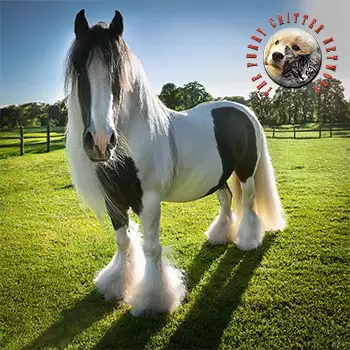

The Gypsy Vanner is a compact, heavily muscled draft-type horse that was historically bred to thrive on modest rations while pulling traditional caravans across the British countryside. This heritage means the breed is remarkably efficient at extracting calories from forage, which makes them prone to weight gain and metabolic issues when fed like a typical performance horse. Understanding this easy-keeper tendency is the single most important factor in designing an effective feeding program.
A mature Gypsy Vanner in light to moderate work generally requires between 1.5 and 2 percent of its body weight in total daily feed, with the vast majority of that intake coming from quality forage. Protein requirements sit in the range of 8 to 12 percent depending on age, workload, and reproductive status. Lactating mares and growing foals have elevated needs, while idle adults can often maintain condition on forage alone with a ration balancer.
Because the breed carries dense bone and abundant feathering, mineral balance deserves close attention. Adequate biotin, zinc, and methionine support hoof integrity and hair quality, while calcium-to-phosphorus ratios should be maintained near 2:1 to protect skeletal health. A forage analysis from your local agricultural extension service is one of the best investments you can make, as it reveals exactly which nutrients your hay provides and which gaps need to be filled through supplementation.
The Gypsy Vanner's predisposition to insulin resistance and equine metabolic syndrome means that sugar and starch intake should be carefully controlled. Total non-structural carbohydrate levels in forage ideally stay below 10 to 12 percent, and grain-based concentrates should be limited or replaced entirely with low-calorie ration balancers. Working closely with an equine nutritionist or veterinarian will help you tailor a plan that keeps your Vanner in optimal body condition without tipping toward obesity.