
Behavior & Enrichment Needs

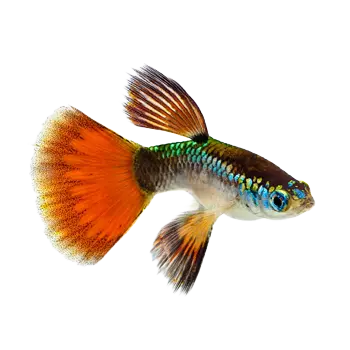
Guppies are far more behaviorally complex than their small size might suggest. In the wild, they spend their days foraging through vegetation, exploring their environment, interacting socially within loose shoals, and navigating changing water conditions. A bare tank with nothing but water and a filter strips away nearly all of these natural behaviors and can lead to lethargy, stress, and increased susceptibility to disease.

Enrichment for fish is fundamentally about environmental complexity. Unlike mammals that interact with discrete toys, fish respond to the structure, variety, and changeability of their surroundings. A well-enriched guppy tank provides opportunities for exploration, foraging, social interaction, and retreat. The goal is to create an environment that engages the fish's senses and encourages a full range of natural behaviors throughout the day.

Male guppies in particular benefit from enrichment because their social lives revolve around display and competition. In a featureless tank, dominant males may relentlessly chase subordinates with nowhere for the pursued fish to break line of sight. Structured environments with visual barriers, plants, and varied terrain distribute social pressure more evenly and reduce chronic stress for all inhabitants.

Enrichment also plays a role in breeding success and fry survival. Gravid females seek out dense cover as they approach delivery, and newborn fry instinctively dart into fine-leaved vegetation or tight spaces to avoid predation. A tank designed with enrichment in mind naturally supports the reproductive cycle without requiring the keeper to intervene with breeding traps or separate nursery tanks.

Live Plants & Natural Decor

Live plants are the single most effective enrichment tool available for guppy tanks. They transform a static glass box into a dynamic, living ecosystem that changes subtly over time as plants grow, spread, and respond to light cycles. Java moss is perhaps the quintessential guppy plant. It grows in dense, tangled mats that provide ideal fry cover, hosts a population of tiny microorganisms that guppies forage on, and requires virtually no maintenance beyond occasional trimming.

Floating plants such as water lettuce, frogbit, and salvinia are exceptionally valuable in guppy aquariums. Their trailing roots create a curtain of cover beneath the surface where guppies naturally congregate. The shade they cast mimics the dappled light of the shallow tropical streams guppies evolved in, and many keepers report that their fish display more vivid coloration and more relaxed behavior when floating plants are present.

Driftwood and smooth river stones add structural complexity at the mid and lower levels of the tank. Guppies will weave through gaps between stones, rest in the lee of driftwood branches, and explore surfaces covered in biofilm. Driftwood also releases tannins that slightly lower pH and tint the water a warm amber, which approximates the natural blackwater conditions found in parts of the guppy's native range. This tannin release is cosmetic rather than essential but many fish respond positively to it.

When selecting natural decor, avoid anything with sharp edges, rough textures, or small openings that could trap a guppy. The elaborate fins of fancy male guppies are delicate and tear easily on jagged rock or splintered wood. Smooth, rounded pieces are always the safer choice, and any new driftwood or stone should be rinsed thoroughly and soaked before placement to remove dust, debris, and potential contaminants.

Artificial Decor & Structures

Artificial plants and decorations serve a practical purpose in tanks where live plants are not feasible, whether due to lighting limitations, personal preference, or compatibility with certain medications that harm live vegetation. Modern silk and soft plastic aquarium plants have come a long way in both appearance and safety. Silk plants in particular offer gentle, flexible surfaces that will not damage guppy fins the way older hard-plastic plants sometimes did.

Ceramic and resin decorations such as caves, tunnels, arches, and hollow logs provide hiding spots and visual barriers that help structure the social environment. Even a single small cave can make a meaningful difference in a guppy tank by giving harassed females or subordinate males a place to retreat and rest out of sight. Look for aquarium-safe decorations with smooth interiors and openings large enough that a guppy could never become stuck.

Aquarium backgrounds applied to the outside of the rear glass serve an often-overlooked enrichment function. A dark or planted background reduces reflections that can confuse and stress fish, provides a visual boundary that makes the tank feel more enclosed and secure, and enhances the apparent depth of the aquarium. Even a simple black background cut from poster board can noticeably calm skittish guppies.

Avoid decorations with metallic paints, unsealed ceramics, or materials not specifically rated for aquarium use. Household ornaments, garden stones, and craft-store items may leach chemicals, heavy metals, or dyes into the water. If you are unsure whether a decoration is aquarium-safe, err on the side of caution and choose products from established aquarium supply manufacturers that guarantee their materials are non-toxic and water-stable.

Feeding Enrichment & Foraging

Changing where and how you deliver food is one of the simplest and most effective enrichment strategies for guppies. Rather than dropping flakes in the same corner of the tank at the same time every day, vary the feeding location so guppies must actively search for their meal. This small change encourages natural foraging behavior and keeps fish mentally engaged.

Vegetable clips attached to the tank glass with blanched zucchini, cucumber, or lettuce leaves create a focal point that guppies will nibble at throughout the day. This slow-feeding approach mimics the grazing behavior guppies exhibit in the wild and keeps them occupied between regular meals. The clip can be moved to different positions in the tank each time to maintain novelty.

Scattering freeze-dried or frozen foods across the surface rather than placing them in one spot encourages guppies to spread out and forage individually. This reduces the competitive feeding frenzy that can develop when all food arrives at a single point, ensuring that smaller or less dominant fish get their share. In planted tanks, tucking small portions of food among the leaves rewards guppies that actively explore the vegetation.

Live food introductions create the most dynamic feeding enrichment events. Releasing a small quantity of live brine shrimp or daphnia into the tank triggers an immediate and dramatic foraging response. Guppies switch from passive hovering to active pursuit, darting through the water column to chase individual prey items. These live feeding sessions provide excellent exercise and stimulate predatory instincts that go unused when fish eat only processed foods from the surface.

Water Current & Sensory Stimulation

Gentle water movement provides ongoing physical and sensory enrichment for guppies. While they are not strong-current fish, a mild and varied flow pattern encourages swimming exercise and distributes scent cues from food and other fish throughout the tank. Adjustable-flow filters, small wavemakers set to their lowest settings, or strategically placed air stones can all create subtle currents without overwhelming the fish.

Bubble walls and air curtains are visually appealing additions that also serve an enrichment purpose. The rising column of bubbles creates a gentle upwelling current that guppies often swim through repeatedly, apparently enjoying the sensation. The bubbles also increase surface agitation and gas exchange, which benefits water oxygenation. Position bubble features away from the calmest areas of the tank so guppies can choose whether to engage with the current or rest in still water.

Lighting changes throughout the day can serve as a form of sensory enrichment. Programmable LED fixtures that gradually ramp up from dim morning light to full midday brightness and back down to a warm sunset tone before switching off simulate the natural photoperiod. Guppies respond to these light transitions with changes in activity level and social behavior, becoming more active during bright periods and settling into calmer resting behavior as lights dim.

Mirror exposure is a controversial but occasionally used enrichment technique for fish. Briefly placing a small mirror against the tank glass can trigger display behavior in male guppies, who flare their fins and intensify their colors in response to their reflection. This should be used sparingly, no more than a few minutes at a time and no more than once or twice a week, to avoid chronic stress from perceived territorial intrusion.

DIY & Low-Cost Enrichment Ideas

Some of the most effective guppy enrichment costs nothing at all. Rearranging the existing decor in your tank every few weeks resets the environment and encourages fresh exploration. Moving a piece of driftwood from one side to the other, repositioning a stone, or shifting plant groupings creates a novel layout that guppies will investigate with renewed curiosity. This simple practice combats the environmental monotony that develops in static tank setups.

Ping pong balls floated on the water surface are a surprisingly effective and inexpensive enrichment item. Guppies will investigate, nudge, and swim around the floating balls, which also move with the water current and create shifting shadows below. Use only clean, unprinted balls and remove them after a few hours to maintain water quality. This is a particularly good option for bare or hospital tanks that lack other enrichment.

Leaf litter from aquarium-safe tree species such as Indian almond leaves, oak leaves, or guava leaves provides both enrichment and mild water conditioning. As the leaves soften and decompose, they develop a biofilm coating that guppies actively graze on. The leaves also release tannins and humic substances that can support immune function. A few dried leaves scattered across the substrate create a natural-looking environment that encourages bottom foraging.

Creating DIY hiding spots from food-safe materials is another budget-friendly approach. A clean terracotta pot laid on its side, a section of food-grade PVC pipe, or a stack of smooth stones arranged with gaps between them all provide shelter and visual barriers without any cost. The key requirement is that all materials must be free of chemicals, glazes, adhesives, or coatings that could leach into the water. When in doubt, boil or soak any item in clean water for several days and test the water before adding it to an inhabited tank.

Always consult a qualified professional before making any health-related decisions. This content is provided for informational reference only and should not replace professional guidance specific to your animal.