
Natural Behavior & Stimulation

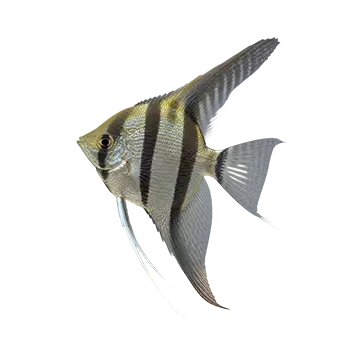
Angelfish are far more intelligent and behaviorally complex than many aquarists give them credit for. They establish hierarchies, recognize their owners, defend territories, and engage in elaborate courtship rituals. In the wild, their days are spent navigating root tangles, foraging among submerged vegetation, and interacting with a constantly shifting environment. A bare or static aquarium deprives them of these natural stimuli, which can lead to lethargy, aggression born from boredom, and faded coloration.

Enrichment for fish operates on the same fundamental principles as enrichment for any captive animal — it encourages natural behaviors, provides mental stimulation, and gives the animal a degree of control over its environment. For angelfish, this means creating an environment that rewards exploration, offers visual and tactile variety, and changes periodically to prevent habituation. A tank that looks and feels the same every single day is the aquatic equivalent of a bare room with white walls.

Observing your angelfish closely will reveal individual preferences and personality traits that can guide your enrichment strategy. Some angelfish are bold explorers that investigate every new addition to the tank within minutes. Others are cautious and prefer to observe from a distance before approaching. Tailoring enrichment to the personality of your specific fish makes it more effective and more enjoyable for both you and the fish.

The good news is that angelfish enrichment does not require expensive specialized products. Many of the most effective enrichment strategies involve rearranging existing decor, varying feeding methods, or adding inexpensive natural materials. The key is consistency — enrichment should be an ongoing practice, not a one-time setup.

Live Plants & Decor

Live plants are the single most impactful enrichment element you can add to an angelfish aquarium. They provide shelter, spawning surfaces, foraging opportunities, and constantly changing visual stimuli as they grow and shift. Broad-leafed plants like Amazon swords and Anubias are angelfish favorites — the fish will rest among their leaves, inspect them for microorganisms, and use them as egg-laying sites. Floating plants such as Amazon frogbit and water lettuce create shaded areas that reduce stress and encourage natural territorial behavior beneath their canopy.

Rearranging decor periodically is one of the simplest and most effective enrichment techniques available. Moving driftwood, repositioning rock formations, or adding a new plant every few weeks gives your angelfish a fresh environment to explore and map. This practice also helps disrupt established territorial boundaries, which can reduce chronic aggression between tank mates. Avoid making drastic changes all at once — subtle rearrangements are less stressful while still providing the novelty that enrichment aims to deliver.

Natural driftwood serves multiple enrichment functions beyond visual appeal. Angelfish will graze on the biofilm that develops on submerged wood, which provides a natural food source and foraging activity. The complex shapes of spider wood and branching driftwood create swim-through passages and hiding spots that encourage exploratory behavior. Over time, mosses like Java moss and Christmas moss will colonize the wood surface, creating a living, evolving element in the aquascape.

Ceramic caves, terracotta pots, and slate formations offer additional shelter options that angelfish readily adopt. A halved terracotta pot laid on its side provides a dark, enclosed retreat that anxious or newly introduced fish find particularly comforting. Slate pieces leaned against the back glass at an angle create spawning surfaces that many angelfish prefer over plant leaves. These inexpensive additions can be rotated or repositioned regularly as part of your enrichment rotation.

Mirrors & Visual Enrichment

Mirrors can be a powerful short-term enrichment tool for angelfish, which are naturally territorial and respond strongly to the sight of a perceived rival. Placing a small mirror against the outside of the tank glass for five to ten minutes will typically trigger a dramatic display — flared fins, darkened coloration, and lateral posturing as the angelfish attempts to intimidate its reflection. This intense behavioral response provides vigorous exercise and mental stimulation that a static environment cannot match.

The critical caveat with mirror enrichment is duration. Extended or constant mirror exposure causes chronic stress rather than beneficial stimulation. The angelfish cannot resolve the territorial dispute because the rival never retreats, leading to elevated cortisol levels, suppressed immune function, and potential exhaustion. Limit mirror sessions to brief, infrequent intervals — no more than two or three times per week, and always remove the mirror once the fish begins to lose interest or shows signs of distress such as rapid breathing or color fading.

Visual stimulation from outside the tank is another often-overlooked enrichment avenue. Angelfish are visually oriented fish that pay attention to movement and color in their surroundings. Placing the aquarium where the fish can observe household activity provides a constantly changing visual landscape. Some keepers report that their angelfish watch television or track the movement of pets in the room, suggesting a level of visual engagement that goes beyond simple startle responses.

Changing the background on the tank is a subtle but effective form of visual enrichment. Alternating between solid black, printed habitat, and plain blue backgrounds every few months alters the perceived depth and boundaries of the environment. Even repositioning external objects near the tank — a new houseplant beside the stand, a different colored towel draped nearby during maintenance — introduces visual novelty that curious angelfish will notice and investigate from their side of the glass.

Feeding Enrichment

Transforming mealtime into a foraging activity is one of the most rewarding forms of enrichment for angelfish. In the wild, finding food requires effort — searching among roots, picking invertebrates off leaves, and sifting through debris. Replicating even a fraction of this foraging challenge in the aquarium engages the fish mentally and physically in ways that simply dropping flakes at the surface cannot.

Scattering food across the water surface rather than depositing it in a single spot forces angelfish to search and compete mildly for each morsel. This distributes feeding activity across the tank, reduces the dominance advantage that alpha fish typically hold at a single feeding point, and extends the duration of the feeding event. For sinking pellets, distributing them in several locations across the substrate achieves the same effect in the lower water column.

Feeding clips and vegetable holders attached to the tank glass provide a different kind of feeding challenge. Clipping a piece of blanched zucchini, cucumber, or spinach to the glass requires the angelfish to approach, position themselves, and pick at the food rather than simply inhaling it from the surface. This sustained feeding activity can occupy the fish for an hour or more and closely mimics the grazing behavior angelfish exhibit in planted environments.

Live food introductions are perhaps the most stimulating feeding enrichment available. Releasing a small portion of live brine shrimp, daphnia, or blackworms into the tank triggers an immediate and intense hunting response. The angelfish must track, pursue, and capture individual prey items — a complex behavioral sequence that engages predatory instincts rarely activated by prepared foods. Even occasional live food sessions provide significant enrichment value and are well worth the modest effort required to source or culture the prey.

Tank Mates as Enrichment

Compatible tank mates provide a form of social enrichment that no artificial product can replicate. The presence of other fish species introduces dynamic social interactions — schooling patterns, feeding competition, territorial negotiations, and interspecies curiosity — that keep angelfish engaged and alert throughout the day. A well-planned community tank is inherently more enriching than a species-only setup because the environment is unpredictable in ways that static decor can never be.

Corydoras catfish are among the best enrichment-oriented tank mates for angelfish. Their constant bottom-dwelling activity provides visual stimulation without direct competition or aggression. Angelfish frequently observe corydoras foraging along the substrate, and the two species coexist with minimal interaction. A school of six or more corydoras creates a lively lower-tank presence that contrasts nicely with the stately mid-water cruising of the angelfish.

Schooling tetras in the mid-water column add movement, color, and visual complexity to the angelfish environment. Species like rummy-nose tetras are particularly effective because their tight schooling behavior creates constantly shifting patterns that angelfish watch and navigate around. The tetras also serve as early-warning indicators — a school that suddenly breaks formation or hides often signals a water quality issue or external disturbance before the angelfish themselves show visible stress.

Snails and shrimp contribute enrichment at a different scale. Nerite snails gliding across glass and decor provide slow-moving visual interest, while larger shrimp species like Amano shrimp create brief moments of excitement when they dart across the open water. Keep in mind that angelfish will eat small shrimp, so only large, fast species are appropriate as tank mates. The unpredictable movements of these invertebrates add yet another layer of environmental complexity that keeps the tank feeling alive and dynamic.

DIY & Budget Options

Some of the most effective angelfish enrichment strategies cost nothing at all. Rearranging existing decor on a biweekly rotation creates a novel environment without any additional purchases. Simply moving a piece of driftwood from the left side of the tank to the right, or shifting a rock formation to create a new swim-through passage, is enough to trigger exploratory behavior and re-engagement with the surroundings. Keep a mental map of two or three layout variations and rotate through them.

Smooth river stones collected from a clean, unpolluted source make excellent free additions to an angelfish tank. After a thorough scrubbing and boiling to sterilize, these stones can be stacked to create caves, arranged as spawning surfaces, or scattered to add substrate texture. Flat slate pieces work particularly well as spawning sites and can often be found inexpensively at landscaping supply stores. Avoid limestone or calcium-rich rocks that can raise your water hardness and pH beyond the angelfish comfort zone.

Ping-pong balls floating on the water surface have gained popularity as a simple enrichment tool in the fishkeeping community. Angelfish and other cichlids will nudge, investigate, and attempt to push the balls around, providing a form of interactive stimulation. While not every fish responds to floating objects, those that do often engage with them repeatedly over days or weeks. Use plain white balls without logos or printing to avoid introducing inks or coatings into the water.

Training sessions are a surprisingly effective and completely free form of enrichment. Angelfish can be conditioned to follow a finger along the glass, swim through submerged hoops, or gather at a specific spot on command using food as a reward. These short training interactions, even just a few minutes per day, provide focused mental stimulation and strengthen the relationship between keeper and fish. Start with simple target training — tapping the same spot on the glass before each feeding — and build from there as the fish learns to associate the cue with a reward.

Always consult a qualified professional before making any health-related decisions. This content is provided for informational reference only and should not replace professional guidance specific to your animal.