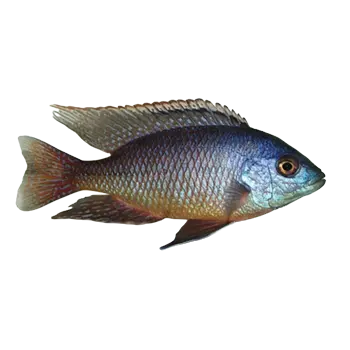

Tank Size & Dimensions

Haplochromis-type cichlids are active, open-water swimmers that require significantly more horizontal swimming space than many other freshwater species. A minimum tank size of 55 gallons is generally recommended for a small group of smaller Hap species, but most experienced keepers consider 75 gallons the practical starting point for a mixed Hap community. Larger species such as Nimbochromis and Dimidiochromis should ideally be housed in tanks of 125 gallons or more to accommodate their adult size and territorial behavior.

Tank dimensions matter as much as raw volume. Long, wide tanks are far preferable to tall, narrow ones because Haps spend most of their time cruising the middle and upper water column and establishing lateral territories. A standard 75-gallon tank measuring 48 inches long by 18 inches wide provides a better footprint than a tall 75-gallon column tank of the same volume. When upgrading, prioritize length and width over height to give your fish the space they actually use.

Overstocking is a deliberate strategy employed by many Hap keepers to manage aggression. In a sparsely stocked tank, dominant males can single out and relentlessly harass individual targets. Increasing the number of fish distributes aggression more broadly and prevents any one individual from bearing the brunt of territorial behavior. However, overstocking only works when paired with robust filtration, frequent water changes, and adequate tank volume to begin with.

Planning for growth is essential when choosing a tank for Haps. Juveniles purchased at two to three inches may seem comfortable in a smaller setup, but many species reach six to ten inches within 12 to 18 months under good conditions. Starting with a tank sized for adult specimens saves the expense and disruption of upgrading later and ensures the fish are never cramped during their rapid growth phase.

Substrate & Aquascaping

Sand is the preferred substrate for Hap tanks because it closely replicates the sandy lake bottoms these fish inhabit in the wild. Fine-grain pool filter sand or aquarium-specific sand in natural tan or white tones provides an attractive, functional base that is gentle on the fishes' mouths and gills. Many Hap species sift sand as a natural foraging behavior, and this activity is an important form of environmental enrichment that coarse gravel does not permit.

Rockwork forms the structural backbone of a Hap aquascape, but the approach differs from the densely stacked rock walls typical of Mbuna setups. Haps prefer open swimming lanes with scattered rock formations that create visual barriers and loose territorial boundaries without cluttering the mid-water space. Arrange rocks to create a few distinct groupings with clear open water between them, allowing the fish to swim freely while still having structures to retreat to when needed.

Lake Malawi-appropriate stone types include limestone, ocean rock, Texas holey rock, and similar alkaline-buffering materials that also help maintain the elevated pH and mineral hardness that Haps require. Avoid acidic stones like driftwood-stained river rock or slate with metalite veins, as these can lower pH over time and work against the water chemistry goals for an African cichlid setup.

Live plants are generally challenging in Hap tanks because many species dig and uproot vegetation, and the high pH and hard water are inhospitable to most common aquarium plants. Hardy species like Anubias, Java Fern, and Vallisneria can survive if anchored to rocks or housed in terracotta pots buried in the substrate. Artificial plants and silk plants offer a maintenance-free alternative that adds visual complexity without the risk of being destroyed.

Filtration Systems

Robust filtration is non-negotiable for Hap tanks due to the high bioload that comes with keeping large, actively feeding cichlids in densely stocked communities. The general guideline is to provide filtration rated for at least twice the actual tank volume. For a 75-gallon Hap tank, a filter rated for 150 gallons or more ensures adequate biological, mechanical, and chemical filtration to maintain stable water quality.

Canister filters are the most popular choice for Hap setups because they offer high flow rates, large media capacity, and quiet operation. A quality canister filter provides excellent biological filtration through ceramic media and bio-balls, mechanical filtration through sponge and floss layers, and optional chemical filtration through activated carbon or specialty resins. For larger tanks, running two canister filters simultaneously provides redundancy and ensures continuous filtration if one unit requires maintenance.

Hang-on-back filters can serve as supplementary filtration in smaller Hap setups or as secondary filters alongside a primary canister system. They are less expensive and easier to maintain than canisters but typically offer lower media capacity and flow rates. Sponge filters, while excellent for biological filtration, generally lack the mechanical filtration power needed for the debris load generated by large, messy-eating cichlids.

Water circulation and surface agitation are important secondary functions of the filtration system. Haps come from large lakes with significant water movement, and adequate circulation prevents dead spots where waste accumulates, ensures oxygenation throughout the water column, and helps maintain consistent temperature across the entire tank. Powerheads or wave-making devices can supplement filter output to achieve the desired flow throughout the aquarium.

Heating & Lighting

African Hap cichlids thrive in water temperatures between 76 and 82 degrees Fahrenheit, and maintaining this range consistently requires a reliable aquarium heater. Submersible heaters with built-in thermostats are the standard choice, and selecting a wattage appropriate to the tank volume is critical. The general rule of thumb is three to five watts per gallon, so a 75-gallon tank typically requires a 250 to 300 watt heater or two smaller heaters placed at opposite ends of the tank for even heat distribution.

Using two heaters instead of one provides a safety margin that is especially valuable in larger setups. If one heater fails, the second continues to maintain temperature while you address the issue. Placing heaters near areas of high water flow, such as the filter outlet, helps distribute heat evenly and prevents localized hot spots. A separate digital thermometer should always be used to verify heater accuracy, as built-in thermostats can drift over time.

Lighting for Hap tanks serves primarily aesthetic purposes, as these fish do not have specialized lighting requirements. Standard LED aquarium fixtures with adjustable brightness and color temperature work well and have the added benefit of low heat output and energy efficiency. A lighting period of 8 to 10 hours per day on a timer provides a consistent day-night cycle that reduces fish stress and helps manage algae growth.

Color-enhancing LED fixtures with adjustable spectrum settings can dramatically improve the visual presentation of Hap coloration. Lights that emphasize blue and actinic wavelengths make the iridescent blues and greens of many Hap species truly pop, while full-spectrum settings show off reds and yellows. Experimenting with color settings to find the combination that best showcases your particular species is one of the enjoyable aspects of keeping these visually stunning fish.

Water Quality & Maintenance

Maintaining proper water chemistry is arguably the most important aspect of Hap housing. Lake Malawi water is hard and alkaline, with a pH typically ranging from 7.8 to 8.6, general hardness between 4 and 6 dGH, and carbonate hardness between 6 and 8 dKH. Replicating these conditions in the aquarium provides the stable, mineral-rich environment that Haps have evolved to thrive in, and deviations can lead to stress, disease susceptibility, and shortened lifespans.

Buffering substrates and rocks help maintain elevated pH and hardness naturally, but many keepers supplement with commercial cichlid buffer products or mineral salts to achieve and stabilize target parameters. Consistency matters more than hitting an exact number. A tank that holds steady at pH 8.0 is far healthier than one that fluctuates between 7.6 and 8.4 due to inconsistent buffering. Test water parameters weekly with a reliable liquid test kit to catch any drifts before they become problematic.

Weekly water changes of 25 to 50 percent are the cornerstone of long-term Hap health. The high bioload of a stocked cichlid tank produces substantial nitrate accumulation between changes, and keeping nitrates below 20 parts per million requires consistent, disciplined maintenance. Using a gravel vacuum during water changes removes detritus from the substrate and prevents the buildup of organic waste in sand beds.

Water change preparation should include temperature matching and dechlorination before the new water enters the tank. Sudden temperature swings or chlorine exposure during water changes are common triggers for ich outbreaks and stress-related illness in cichlids. Preparing replacement water in advance and adjusting its temperature and chemistry to match the tank reduces the physiological shock of large water changes.

Multi-Species & Community Setups

Housing multiple Hap species together is one of the great appeals of keeping these fish, and a well-planned community tank showcases an impressive diversity of color and behavior. The key to success is selecting species that occupy different ecological niches and exhibit compatible aggression levels. Mixing open-water cruisers like Copadichromis with ambush predators like Nimbochromis creates visual variety and reduces direct competition because the fish have fundamentally different behavioral patterns.

Avoiding species that look too similar to each other is an important rule for Hap communities. Males of closely related or similarly colored species are far more likely to engage in serious aggression because they perceive each other as rivals for mates. Choosing species with distinctly different color patterns and body shapes minimizes this cross-species aggression and leads to a more peaceful community overall.

The ratio of males to females within each species significantly affects tank harmony. Most Hap keepers maintain a ratio of one male to three or four females per species. This distributes the male's breeding attention across multiple females, preventing any single female from being harassed to the point of exhaustion or injury. Keeping multiple males of the same species requires very large tanks with extensive line-of-sight breaks to prevent constant territorial conflict.

Mixing Haps with Mbuna is a frequently debated topic in the cichlid-keeping community. While it can work in very large tanks with careful species selection, the differing dietary needs and aggression styles of these two groups often lead to problems. Mbuna are relentlessly territorial rock dwellers, while Haps are open-water swimmers, and the constant low-level harassment from Mbuna can stress Haps significantly. Most experienced keepers recommend dedicating separate tanks to each group for the best long-term results.

Always consult a qualified professional before making any health-related decisions. This content is provided for informational reference only and should not replace professional guidance specific to your animal.