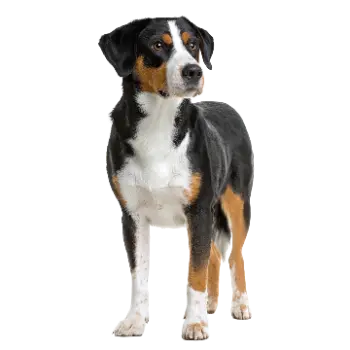

Space Requirements

The Entlebucher Mountain Dog is a medium-sized breed, but its energy level and working drive demand more space than its compact frame might suggest. This is not a dog that thrives in a small apartment without significant daily exercise commitments. A home with a securely fenced yard provides the ideal setup, giving the Entlebucher room to move, patrol, and burn off energy between structured walks and play sessions.

Indoor space should include a designated area where the dog can rest undisturbed. Entlebuchers tend to be closely bonded with their families and prefer to be in the same room as their people, so placing the dog's bed or crate in a common living area — rather than an isolated back room — supports their social nature while still providing a defined retreat. A corner of the living room or a quiet spot near the kitchen works well for most households.

Yard fencing deserves careful attention. Entlebuchers are athletic and surprisingly agile, capable of clearing low barriers if sufficiently motivated. A fence height of at least five feet is recommended, and the base should be secure against digging. This breed's herding instinct can also lead to fence-line running and barking at passersby, so solid panel fencing or privacy slats may help reduce visual triggers that fuel this behavior.

For owners in apartments or homes without yards, success is possible but requires a firm commitment to multiple daily outings, access to nearby parks or trails, and consistent mental enrichment indoors. The Entlebucher can adapt to smaller living quarters if its physical and psychological needs are met through structured activities outside the home.

Crates & Kennels

A properly sized crate serves as a valuable management and training tool for the Entlebucher Mountain Dog, particularly during puppyhood and adolescence. The crate should be large enough for the dog to stand without ducking, turn around comfortably, and lie down fully stretched out. For most adult Entlebuchers, a 36-inch or 42-inch crate fits well, depending on the individual dog's build. A crate that is too large undermines housetraining efforts, while one that is too small creates discomfort and resistance.

Wire crates offer excellent ventilation and visibility, which suits the Entlebucher's desire to keep tabs on household activity. They also fold flat for storage and travel. Heavy-gauge wire is preferable for this breed, as a determined Entlebucher can bend or warp lightweight wire panels. For dogs that find the openness of a wire crate overstimulating, a fitted cover draped over three sides can create a more den-like atmosphere without sacrificing airflow.

Plastic airline-style crates are a solid alternative, especially for owners who travel frequently. These crates provide a more enclosed environment that some dogs find naturally calming, and they meet airline cargo requirements when properly sized. They are also easier to clean after muddy outdoor adventures, a common occurrence with an active herding breed.

Crate training should always be a positive process. The crate is a resting place, not a punishment tool. Entlebuchers are intelligent and can develop negative associations quickly if the crate is used punitively. Gradual introduction with high-value treats, feeding meals inside the crate, and building up duration slowly will establish the crate as a welcome retreat rather than a source of anxiety.

Beds & Sleeping Areas

A quality dog bed is an important investment for the Entlebucher Mountain Dog, particularly given the breed's susceptibility to joint issues. Orthopedic beds with high-density memory foam or supportive bolsters provide the cushioning needed to protect hips, elbows, and shoulders during rest. This is especially important for older dogs or those showing early signs of joint stiffness, but even young Entlebuchers benefit from sleeping on a surface that distributes weight evenly.

Durability is a key factor when choosing a bed for this breed. Entlebuchers, particularly younger ones, can be enthusiastic chewers and diggers, and a flimsy bed may not survive the first week. Look for beds with chew-resistant covers, reinforced stitching, and removable, machine-washable covers for easy maintenance. Waterproof liners beneath the cover add an extra layer of protection against accidents and drool.

Placement matters as much as the bed itself. Most Entlebuchers prefer to sleep near their family members, so positioning the bed in the bedroom or adjacent hallway accommodates this instinct while maintaining boundaries. Some owners find that providing two beds — one in the main living area for daytime napping and one in the bedroom for overnight sleep — keeps the dog comfortable and settled throughout the day.

Elevated cot-style beds are a practical option for warm climates or dogs that tend to overheat. These beds promote airflow beneath the dog, keeping the sleeping surface cooler than a traditional floor-level bed. They are also easy to clean and resistant to the nesting and digging behavior that can destroy plush beds. For Entlebuchers that enjoy burrowing, a bed with raised bolster edges provides a sense of enclosure without the heat retention of a fully enclosed cave-style bed.

Outdoor Enclosures

Outdoor enclosures and dog runs can extend the Entlebucher Mountain Dog's living space and provide a safe area for supervised outdoor time. A well-constructed kennel run — typically six feet wide by twelve to fifteen feet long with a six-foot-high chain-link or welded wire perimeter — gives the dog room to move and explore while preventing unsupervised roaming. The enclosure should include a shaded area or covered section to protect against sun, rain, and wind.

Flooring in outdoor enclosures matters for both hygiene and joint health. Concrete pads are easy to clean and sanitize but can be hard on joints and hot in summer. Pea gravel provides decent drainage and a softer surface but requires periodic raking and replacement. Rubber matting or interlocking kennel tiles offer a good balance of comfort, durability, and ease of cleaning. Bare dirt or grass tends to become muddy and difficult to maintain, especially with a dog that digs.

Outdoor enclosures should supplement, not replace, the Entlebucher's time with the family. This breed was developed to work alongside people, and extended isolation in an outdoor kennel — even a spacious one — can lead to boredom, anxiety, and destructive behavior. The enclosure is best used for short periods of supervised outdoor access, such as when the owner is gardening, doing yard work, or needs a safe containment option for brief intervals.

Security features should include a padlocked gate latch, dig-proof footer (buried wire or a concrete border along the base), and a roof or inward-angled top extension to prevent climbing. Entlebuchers are problem-solvers, and an unsecured gate latch or a low enclosure wall may be treated as an invitation rather than a boundary.

Climate Considerations

The Entlebucher Mountain Dog was developed in the Swiss canton of Entlebuch, a region characterized by cool alpine and pre-alpine conditions. As a result, this breed carries a dense double coat that provides excellent insulation against cold weather. Entlebuchers are generally comfortable in moderate to cold climates and enjoy outdoor activity in winter conditions that would send thinner-coated breeds indoors.

Heat is the greater concern for this breed. The thick undercoat that protects against cold can cause overheating in hot and humid environments. During warm months, indoor spaces should be climate-controlled, and outdoor access during peak heat hours should be limited. Providing a cool tile or elevated cot sleeping surface, access to fresh water at all times, and a shaded outdoor rest area helps manage the dog's core temperature on warmer days.

In cold climates, the Entlebucher generally needs little in the way of additional protection. However, if the dog is housed in an outdoor kennel for any period, an insulated shelter with a raised floor and a wind-blocking entrance flap is essential. The shelter should be just large enough for the dog to enter, turn around, and lie down — a smaller interior retains body heat more effectively than a roomy one. Straw or cedar shavings make excellent insulating bedding for outdoor shelters, as they resist moisture better than fabric blankets.

Transitional seasons require attention to the coat blowing cycle. Entlebuchers shed their undercoat heavily in spring and moderately in fall. During these periods, more frequent grooming helps manage loose fur indoors, and ensuring that sleeping areas and bedding are cleaned regularly prevents the buildup of shed hair that can trap heat and reduce bedding comfort.

Multi-Pet Households

Entlebucher Mountain Dogs can coexist well with other pets when properly introduced and socialized, but their herding instinct and strong personality require thoughtful management of shared living spaces. In multi-dog households, each dog should have its own designated resting area — a separate crate, bed, or corner — to prevent resource guarding and give every animal a place to decompress without competition.

Feeding stations should be separated, especially during the initial introduction period. Entlebuchers can develop possessive behavior around food and high-value chews, and allowing dogs to eat in proximity without management invites conflict. Feeding in separate rooms or crates eliminates mealtime tension entirely and allows each dog to eat at its own pace.

The Entlebucher's herding drive may manifest as nipping, body-checking, or chasing behavior directed at smaller pets, including cats and small dogs. This behavior is instinctive rather than aggressive, but it can be stressful or dangerous for smaller animals. Baby gates and separate zones within the home allow controlled interactions and provide smaller pets with escape routes and safe spaces that the Entlebucher cannot access.

When introducing an Entlebucher into a household with existing pets, gradual and supervised exposure is essential. Initial meetings should occur in neutral territory when possible, and indoor cohabitation should progress incrementally — starting with scent swapping and visual barriers before moving to supervised shared access. Patience during this process pays dividends in long-term household harmony, and rushing introductions often creates setbacks that are harder to correct than to prevent.

Always consult a qualified professional before making any health-related decisions. This content is provided for informational reference only and should not replace professional guidance specific to your animal.