Entlebucher Mountain Dog

Entlebucher Mountain Dog

Quick Facts

🐕 Breed Group
Herding Group
📏 Size Category
Medium
📏 Height
Males: 17.5-20.5 inches, Females: 16.5-19.5 inches
⚖️ Weight
Males: 45-65 pounds, Females: 35-55 pounds
⏱️ Life Expectancy
11-13 years
🧣 Coat Type
Short, dense, double coat
🎨 Coat Colors
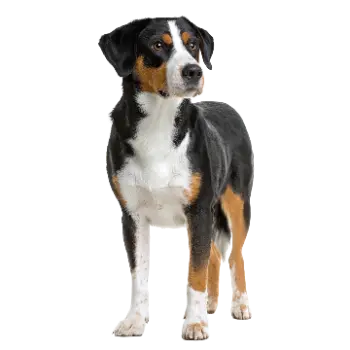
Tricolor: black with rich fawn to mahogany and white markings
😀 Temperament
Loyal, Confident, Energetic, Protective, Intelligent, Alert
🏃 Exercise Needs
High
🎓 Training Difficulty
Moderate
👶 Good with Children
Good with older, active children
🐾 Good with Other Pets
Good when raised together; may herd smaller animals

Other Names & Breed Recognition

The Entlebucher Mountain Dog goes by several names that all mean essentially the same thing, just with varying levels of German pronunciation confidence required. The full formal name is the Entlebucher Sennenhund - Sennenhund translating roughly to "dog of the Alpine herdsman" - and you will see this used interchangeably with Entlebucher Mountain Dog in international breed literature. In common usage, Entlebucher owners and fans almost universally shorten it to Entle or Entle Mountain Dog. Some older references use Entelbuch Cattle Dog or Entlebucher Cattle Dog, reflecting the breed's original working role driving cattle through mountain terrain. None of these are wrong - they all describe the same dog.

The name Entlebucher comes from the Entlebuch region in the Canton of Lucerne, Switzerland, which is where the breed developed as a distinct type. All four Swiss mountain dogs - the Entlebucher, the Appenzeller Sennenhund, the Bernese Mountain Dog, and the Greater Swiss Mountain Dog - are named for the Swiss regions they came from. The Entlebucher is the smallest of the group, and that distinction is worth noting because the other three are all considerably larger. When someone says they are interested in a Swiss mountain dog, it is worth clarifying which one - an Entle is a very different daily commitment than a Bernese.

In the United States, the breed received full AKC recognition in 2011, placed in the Herding Group where it competes today. The Herding Group classification reflects the breed's original working function accurately - these dogs drove cattle on mountain terrain, not guarded livestock passively like a flock guardian. Their herding style involved physical confidence and initiative, which still shows up in how the breed interacts with the world.

The FCI lists the Entlebucher Sennenhund under Group 2 (Pinscher and Schnauzer Type, Molossoid and Swiss Mountain and Cattle Dogs), Section 3. This classification groups the four Swiss mountain dog breeds together, acknowledging their common ancestry in the mastiff-type dogs Roman armies brought through the Alpine passes more than two thousand years ago. The Kennel Club in the UK places the breed in the Pastoral Group, which is the British equivalent of the AKC's Herding Group. Canadian recognition mirrors the AKC placement.

It is worth noting that the Entlebucher is genuinely rare in the United States compared to its Swiss mountain dog cousins. The Bernese Mountain Dog, for example, ranks in the top forty AKC breeds by registration. The Entlebucher sits well outside the top one hundred. People who have one are typically enthusiasts who did their research and specifically chose this breed. That relative obscurity means most veterinarians have limited direct experience with the breed, which is something owners should plan for when seeking breed-specific health guidance.

Entlebucher Mountain Dog Organizations & Standards

The National Entlebucher Mountain Dog Association, known as NEMDA, is the AKC parent club for the breed in the United States. NEMDA has been the primary driver of health initiatives, breeder standards, and public education about the Entlebucher since well before the AKC granted full recognition in 2011. The club maintains a health statement that strongly recommends specific testing protocols for all breeding dogs, and their Breeder Code of Ethics requires participating breeders to complete documented health evaluations before producing litters.

The NEMDA health recommendations call for OFA or FCI hip evaluation at 24 months of age or older, patellar luxation examination by a veterinary practitioner or specialist, and annual ACVO ophthalmologist eye examination for all breeding dogs. These three areas - hips, patellas, and eyes - reflect the breed's documented health priorities. DNA testing for prcd-Progressive Retinal Atrophy through an approved laboratory such as Optigen is also strongly encouraged. Because the breed's foundation population was rebuilt from very few animals after World War I, responsible breeding decisions carry particular weight in maintaining genetic diversity alongside health.

The breed standard describes a medium-sized, slightly rectangular dog - the ratio of height to length is approximately 8:10 in males. The standard emphasizes a balanced, muscular structure suited to working endurance over terrain. The head is well-proportioned to the body with a strong, flat skull and a moderately long, well-formed jaw. The tricolor pattern is strictly defined: a black base coat with symmetrical fawn to mahogany markings above the eyes, on the cheeks, and on the legs, and white markings on the muzzle blaze, chest, and feet. The symmetry and placement of these markings are taken seriously in the show ring.

In Switzerland, the breed is governed by the Schweizerischer Klub fuer Entlebucher Sennenhund (SKES), which maintains the FCI standard and coordinates with European breed clubs. The Swiss standard and the AKC standard are aligned in most respects, though minor differences in emphasis reflect the different developmental histories of conformation showing in Europe versus the United States.

Tails in the US can be docked or left natural according to owner and breeder preference, as the AKC standard allows both. Some Entlebuchers are born with a natural bob tail of varying length, which is also acceptable. In Europe, docking is generally prohibited under animal welfare legislation, and natural tails are the norm. This creates some visual variation between European and American breeding lines that is worth knowing about when evaluating photographs from different sources.

Buyers researching breeders should look specifically for NEMDA membership and ask to see OFA records for both parents. The OFA database is publicly searchable at ofa.org - you can look up any dog by registered name and verify what health testing was completed and when. For a breed with the documented health concerns of the Entlebucher, this is not an optional step in evaluating a breeder. A breeder who cannot or will not share verifiable health documentation is not the right source for this breed.

Kennel Club Recognition

  • American Kennel Club (AKC): Recognized in 2011, Herding Group
  • United Kennel Club (UKC): Recognized, Herding Dog Group
  • Canadian Kennel Club (CKC): Recognized, Herding Group
  • FCI: Recognized, Group 2
  • The Kennel Club (UK): Recognized, Pastoral Group

Entlebucher Mountain Dog Physical Description

The first thing you notice about an Entlebucher Mountain Dog in person is how solid they are. The description "medium-sized" is accurate by the numbers, but standing next to one you get the impression of a dog with a lot of dog packed into a relatively compact frame. They are strongly muscled, with substantial bone and a body that looks built for work rather than decoration. The overall outline is slightly rectangular - body length exceeds height by a ratio of roughly 10 to 8 in males, with females tending toward a more square silhouette. This is not a leggy, elegant breed. It is purposeful, grounded, and sturdy.

The head is well-proportioned to the body - not excessively large or refined. The skull is broad and flat, with a defined but moderate stop. The muzzle is strong, slightly shorter than the skull, and tapers slightly without becoming snipey. The jaw is well-formed with a scissors bite. The nose is black. The overall expression conveyed by a well-bred Entlebucher is one of attentive intelligence - alert eyes, ears raised slightly when interested, a dog that is clearly tracking what is happening around it.

The eyes are small to medium-sized, set somewhat obliquely, and dark brown in color. Light eyes are a fault. The expression they create is keen and lively, consistent with a breed that spent centuries making independent decisions in rough Alpine terrain. The ears are triangular, set high, and hang flat against the cheeks at rest. When the dog is alert, they raise slightly at the base, giving the head a more animated look. Ear leather is moderately thick.

The neck is strong and moderately long, carried with good posture. The topline is level and firm. The chest is deep and moderately broad, with well-sprung ribs and good capacity. The loin is short and strong, the croup slightly sloping. This is not a dog with a roached back or a tucked-up belly - the underline is nearly level. The overall body shape communicates functional athletic ability, which is accurate.

Forequarters are well-angulated with strong, straight legs and compact, round feet with firm pads. The pasterns are slightly sloping. Hindquarters are equally well-muscled with good breadth through the thigh and well-bent stifles. When the dog moves, it should do so with a ground-covering trot that shows good reach and drive - free, effortless, and coordinated. An Entlebucher that paddles in front or has a restricted rear stride is missing the structural efficiency the breed standard requires.

The coat is the breed's simplest feature in terms of maintenance and one of its most distinctive in terms of appearance. It is short, dense, harsh in texture, and lies close to the body. There is a dense undercoat beneath the outer coat that provides insulation appropriate to the Alpine origins of the breed. No trimming or professional grooming is needed - this is a wash-and-go coat, which is part of its practical appeal. The tricolor pattern is non-negotiable: black as the base, with fawn to mahogany markings (also called rust or tan) appearing symmetrically above the eyes, on the cheeks, on the chest, and along the legs, and white markings on the muzzle blaze, chest, and feet. The symmetry of the markings matters - a dog with markings significantly off-center is a fault in the breed standard. The white on the feet typically extends to just above the pasterns. A white tail tip is preferred on natural tails. No other colors or patterns are accepted.

Males run notably more substantial than females in practice. A well-conditioned adult male in working trim is a physically impressive dog for his size category - dense through the shoulder, wide through the chest, and carrying enough muscle in the rear to cover ground efficiently. Females are built on a slightly smaller, more refined frame but should not appear slight or lacking in substance. Both sexes should look like dogs that could work a full day in the mountains - because structurally, they still can.

The Entlebucher is also a dog that moves noticeably differently from the long-striding, flowing gaited breeds. The trot is brisk and ground-covering but compact, reflecting the need to navigate uneven terrain efficiently rather than eat up open ground. When you watch a well-built Entlebucher move, the impression is of controlled athleticism - every stride purposeful, nothing wasted. A dog that minces or shuffles is missing the physical quality that defines the breed. Judges and experienced breeders evaluate gait carefully because a dog that cannot move correctly cannot work correctly, even if that work is now mostly hiking trails and agility courses rather than Alpine cattle paths. The overall picture the breed standard asks for is a dog that looks exactly like what it is: a practical, purposeful, handsomely marked working animal that happens to fit comfortably in a suburban home when its needs are met.

Affectionate With Family
Entlebuchers form intense bonds with their family and want to be included in everything. They follow you around the house and are not content sitting in another room while life happens without them.
Good With Young Children
The breed's physical exuberance and herding instinct - including body-checking and nipping at heels - makes it genuinely risky around toddlers. Older, active children are a much better match.
Good With Other Dogs
Well-socialized Entlebuchers generally get along with other dogs. They can be pushy and may attempt to herd canine housemates, which some dogs tolerate and others find offensive.
Shedding Level
Moderate shedding year-round with seasonal increases. The short coat is easy to clean up, but these dogs do leave hair on furniture and clothing.
Coat Grooming Frequency
One of the easiest-maintenance coats in any herding breed. A weekly brush and occasional bath is genuinely all it takes to keep an Entlebucher looking clean and healthy.
Drooling Level
Minimal drooling. The Entlebucher has a normal, non-pendulous lip structure and is not a drool-prone breed in any notable way.
Coat Type
A short, close-lying double coat that is as practical as the dog that wears it. No trimming required, no professional grooming needed.
Openness To Strangers
These dogs are watchful and reserved with people they do not know. They need time to assess new people on their own terms - do not expect an Entlebucher to greet strangers warmly without a proper introduction.
Playfulness Level
Enthusiastic, physical, and always up for a game. The Entlebucher plays with full commitment and does not know how to take it easy - which is both the appeal and the challenge.
Watchdog/Protective Nature
Naturally territorial and alert. They have a purposeful bark used when warranted, not constantly - but they take their watchdog role seriously and will not overlook an unfamiliar presence.
Adaptability Level
This breed requires space, daily vigorous exercise, and an owner who can match their energy and commitment. Apartment living or sedentary households are genuinely problematic for this breed.
Trainability Level
Intelligent and motivated, they pick up concepts quickly. They will test boundaries to see if you are consistent, so training must be firm, fair, and never dropped once established.

Entlebucher Mountain Dog History & Development

The Entlebucher Mountain Dog's history is inseparable from the agricultural life of the Swiss Alps. For centuries before formal breed registries existed, the farmers and dairymen of the Entlebuch valley and the surrounding Canton of Lucerne used compact, tricolored working dogs to drive their cattle between summer alpine meadows and lower winter pastures. The terrain these dogs worked was steep, rocky, and unforgiving - a dog that lacked the physical coordination, working intelligence, and toughness to navigate Alpine trails while keeping cattle on safe paths was simply not useful. Natural selection and working selection together produced a dog that was agile, confident, and physically robust in a medium-sized package.

The breed's ancient ancestors are believed to trace to mastiff-type dogs brought through the Alpine passes by Roman legions more than two thousand years ago. Those dogs interbred with local working stock over generations, and the regional Sennenhund types that eventually emerged - the Entlebucher, the Appenzeller, the Bernese, and the Greater Swiss - all carry that foundational heritage. The differences in size and coat between the four reflect regional breeding preferences rather than fundamentally different ancestry. Translated literally, Sennenhund means dog of the Senn - the Alpine herdsmen who drove cattle to and from seasonal pastures.

Formal recognition of the Entlebucher as a distinct breed came in 1889 when the Swiss Kennel Club stud book included it. But recognition on paper did not immediately translate to organized preservation. World War I devastated the breed's population to the point that by the mid-1920s, fewer than twenty dogs of identifiable type could be located. The breed was effectively on the edge of extinction. In 1926 and 1927, a Swiss breeder named Franz Schertenleib gathered what remained - sixteen animals - and rebuilt a breeding program from that narrow foundation. The Swiss Entlebucher Club was formed in 1926 to coordinate the effort. That the breed survived at all is a testament to the commitment of those early fanciers.

The genetic bottleneck from that recovery period has had lasting health implications. The small number of foundation animals means that hip dysplasia and certain heritable eye conditions became more prevalent in the breed than they might have been with a larger founding population. Responsible breeding programs today balance selecting for health and working structure with the need to maintain what genetic diversity the breed has. This is one reason NEMDA and Swiss breed clubs place strong emphasis on health testing transparency.

AKC recognition as a fully registered breed came in 2011, placing the Entlebucher in the Herding Group. The breed remains rare in the United States - it is not a dog found at pet stores or from casual breeders. Those who seek out an Entlebucher typically do so after significant research, which tends to produce a community of owners who understand what they signed up for. NEMDA maintains breeder referral resources and a rescue network for the breed.

Today the breed is much better established than it was in the mid-20th century, both in Switzerland and internationally, but it remains a minority breed by most measures. The annual regional celebration in the Entlebuch valley - the alpine cattle descent - keeps alive the cultural connection between the land, the cattle, and the dogs that once worked them side by side. For Entlebucher enthusiasts, that living history is part of what makes the breed meaningful.

Entlebucher Mountain Dog Temperament & Personality

Understanding what an Entlebucher was bred to do explains almost everything about how one behaves in a household. These dogs drove cattle through mountain terrain. They did not guard livestock quietly from a distance or wait for instruction - they actively moved large animals by body-checking them, nipping at heels, and using their own physical presence and confidence to redirect several hundred pounds of cow. That working style produces a dog that is bold, physically assertive, decisive, and deeply motivated to engage with the world around it. Every one of those traits is still present in a pet Entlebucher today.

Within their family, Entlebuchers are genuinely devoted and affectionate in an active, participatory way. They do not sit quietly in another room while their people go about the day - they want to be in the middle of it. They bond intensely, follow their person from room to room, and have strong opinions about being left out. This kind of attachment is rewarding when your lifestyle accommodates it. When it does not - when the dog is isolated for long stretches daily - you get a very different result. Entlebuchers left without sufficient exercise, engagement, and company develop persistent behavioral problems: obsessive barking, destructive chewing, inappropriate herding of kids or other animals, and a general restless agitation that does not resolve on its own.

With strangers, the breed's standard explicitly uses the word aloof. This is not shyness in the anxious sense - it is a calm reserve born from a working dog's territorial orientation. Entlebuchers are watchdogs by nature, and they take that role seriously. An unknown person in the yard or entering the house will be assessed carefully before being accepted. Proper socialization from puppyhood is what prevents that natural reserve from tipping into reactive wariness. An Entlebucher that was consistently exposed to a wide variety of people and situations during puppyhood reads new situations with confidence and curiosity. One that was not can become difficult to manage around unfamiliar people.

The herding instinct is present and active in most individuals and needs to be acknowledged and managed rather than ignored. Small running children are an obvious target for herding behavior - heel nipping and body pressure are things these dogs will do because those are the tools of their trade. It is not aggression; it is a dog doing what its genetics designed it to do. Redirecting and training an "off switch" for this behavior is necessary, not optional. Cats and small animals in the household can be managed with early introduction and ongoing supervision, but the chase instinct for critters outside the family unit is strong.

With older children who can match the breed's energy, play hard without fear, and understand the difference between play and roughhousing, Entlebuchers can be fantastic companions. The key word is older. A toddler and an enthusiastic Entle puppy is a combination that typically ends with someone knocked over, and the dog is not being bad - it is being an Entlebucher.

It is also worth saying clearly that this breed is not right for first-time dog owners in most cases. The combination of high energy, working intelligence, herding instinct, and territorial reserve creates a dog that rewards experience and consistency. Someone who has previously lived with a herding breed or another working dog will likely find the Entlebucher manageable and enormously rewarding. Someone who has only owned low-key companion dogs may find the demands of this breed genuinely overwhelming without a realistic picture going in.

Entlebucher Mountain Dog Family Life & Living Requirements

The Entlebucher Mountain Dog is not a dog for everyone, and being direct about that serves both the dog and potential owners. This breed needs significant daily exercise - a genuine hour to ninety minutes of purposeful, vigorous activity, not just a stroll around the block. They were built to cover mountainous terrain all day. A dog with that working background living in an apartment with two short daily walks is a recipe for behavioral problems that are frustrating for the owner and genuinely unpleasant for the dog. A house with a securely fenced yard where the dog can run is the practical baseline for this breed.

Fencing should be secure and of meaningful height - Entlebuchers are athletic and motivated, and a low fence will not contain a dog that has decided something on the other side requires investigation. They are not known as dedicated escape artists the way some breeds are, but they are capable and confident, and bored dogs of any intelligent breed tend to find creative solutions to containment. The fence is for keeping them safe, not for substituting for exercise.

Shedding is moderate. The short coat is easy to clean up and does not accumulate in dramatic drifts the way a longer-coated double coat does, but Entlebuchers do leave hair on furniture and dark clothing. This is a practical consideration for households that are particular about this. The coat also dries fast, which is a genuine advantage for a breed that will happily explore wet trails and creeks.

These dogs prefer cooler temperatures and originated in a cool Alpine climate. In hot summer weather, outdoor exercise should shift to early morning or evening hours, and signs of overheating should be taken seriously. They handle cold weather without complaint, and many Entlebucher owners find the breed thrives in northern climates where outdoor winter activity is normal family life.

Time commitment is substantial - not just the exercise hours but the engagement. An Entlebucher that goes on long hikes and gets good physical exercise but spends the rest of the day ignored will still develop problems. These are working-intelligence dogs that need mental engagement: training sessions, dog sports, scent work, puzzle feeding. The mental side of their needs is as real as the physical side. The ideal owner is an active person or family who wants a dog that participates fully in an outdoor lifestyle and who will commit to consistent training and engagement for the decade-plus lifespan of the dog.

Entlebucher Mountain Dog Training & Exercise Needs

Training an Entlebucher well is one of the most rewarding experiences you can have with a dog. They are fast learners who pick up concepts quickly, remember what they learn, and genuinely enjoy working with a person who is consistent and fair. The caveat is that they are equally fast at learning what they can get away with, and an inconsistent owner who lets the rules slide will end up with a dog that tests limits constantly. Set the rules early, hold them consistently, and you have a cooperative, engaged partner. Waffle on the rules, and the dog will notice.

Early socialization is not optional for this breed - it is foundational. The Entlebucher's natural reserve with strangers and territorial instincts need to be shaped during puppyhood when the critical socialization window is open. That means controlled exposure to many different people, dogs, environments, sounds, and situations before twelve to sixteen weeks of age, followed by continued positive exposure throughout adolescence. A puppy class starting at ten weeks for socialization and basic manners is the right move. Level 1 obedience training around six months builds on that foundation. Waiting until a problem shows up before starting training means you are already working against ingrained patterns.

Positive reinforcement methods work best with this breed. Entlebuchers have a high pain tolerance and do not respond to physical corrections - you will not intimidate this dog into compliance. What motivates them is play, food rewards, and the attention of their person. Keep training sessions short, varied, and fun. Boredom during repetitive drills produces an Entlebucher that starts inventing its own entertainment, which is rarely what the trainer had in mind. Mix up the exercises, work in new locations, and end sessions on a success.

Exercise needs are genuinely high - sixty to ninety minutes of vigorous activity daily is the realistic requirement for an adult Entlebucher. Hiking and trail running are natural fits given the breed's Alpine heritage and endurance. Fetch, swimming, and structured play with other compatible dogs also work well. Where this breed truly shines is in dog sports: agility, herding trials, rally obedience, tracking, and advanced obedience are all areas where an Entlebucher with good training can excel. Sports provide both the physical outlet and the mental engagement the breed needs simultaneously, which makes them particularly effective for this type of dog.

Leash manners require deliberate training from the start. An Entlebucher with no leash training is a substantial dog that pulls with purpose, and the breed's physical confidence means they will drag an unprepared owner. Teaching loose-leash walking from puppyhood - before the dog has developed the habit of pulling - is far easier than correcting an adult that has been allowed to pull for two years. A well-fitted front-clip harness can help manage adolescent pulling while training is in progress.

Entlebucher Mountain Dog Health Concerns

The Entlebucher is generally a healthy, robust breed with a lifespan of 11 to 13 years. However, the breed's recovery from near-extinction in the 1920s through a very small founding population created a genetic bottleneck that has made certain heritable conditions more prevalent than they might otherwise be. Understanding those conditions and choosing a breeder who tests for them is the most meaningful thing you can do to give a puppy the best possible start.

Patellar Luxation and Cranial Cruciate Ligament injury are also documented in the breed. Patella evaluation is recommended by NEMDA for all breeding stock. Weight management throughout life is important for joint health - an overweight Entlebucher places additional stress on hips, patellas, and cruciate ligaments, compounding any underlying structural vulnerability.

Common Health Issues

  • Hip Dysplasia: Abnormal development of the hip joint is the most commonly documented health problem in the breed, exacerbated by the narrow genetic foundation after the 1920s reconstruction. Ranges from mild - Managed with weight control and exercise modification, to severe (requiring surgical intervention).
  • Progressive Retinal Atrophy (prcd-PRA): A heritable retinal degeneration that progresses from night blindness to complete vision loss. A DNA test through Optigen identifies Clear, Carrier, and Affected dogs - Affected dogs go blind, Clear and Carrier dogs do not.
  • Entlebucher Urinary Syndrome - Ectopic Ureters, : A breed-specific congenital condition where one or both ureters open in the wrong location, causing urinary incontinence from puppyhood. More noticeable in females. Surgically correctable in many cases.
  • Patellar Luxation: The kneecap slips out of its normal groove - Producing intermittent lameness or skipping gait. NEMDA recommends patella evaluation for all breeding dogs.
  • Cranial Cruciate Ligament Injury: Documented in the breed - Likely exacerbated by high-activity lifestyle and hip dysplasia. Surgical repair is typically required for complete rupture.
  • Hemolytic Anemia: An immune-mediated condition documented in the breed where the body attacks its own red blood cells - Less common than orthopedic and eye conditions but worth awareness.

Preventive Care & Health Monitoring

  • OFA or FCI hip evaluation at 24 months for all breeding dogs - As recommended by NEMDA. For pet dogs, have hips evaluated if lameness, stiffness, or reluctance to exercise appears.
  • DNA testing for prcd-PRA through an approved laboratory - Such as Optigen, for all breeding dogs. Ask for documentation of both parents' prcd-PRA status before purchasing a puppy.
  • Annual ACVO ophthalmologist eye examination for breeding stock to detect other heritable eye conditions not covered by DNA testing alone. - Annual ACVO ophthalmologist eye examination for breeding stock to detect other heritable eye conditions not covered by DNA testing alone.
  • Patellar luxation examination for all breeding dogs per NEMDA health recommendations - Monitor pet dogs for skipping or leg-holding behavior.
  • Weight management throughout the dog's life to protect hips - Patellas, and cruciate ligaments from the additional stress of excess body weight.

Entlebucher Mountain Dog Grooming & Maintenance

If you want a dog that is easy to keep clean and presentable, the Entlebucher delivers. The short, dense, close-lying coat is one of the most low-maintenance coats of any herding breed, and its practical no-fuss quality reflects the working origins of the dog. There is no trimming, no professional grooming schedule, and no elaborate coat care routine. What you need is a firm bristle brush or rubber grooming mitt, a good dog shampoo, and a few minutes of attention per week.

Weekly brushing removes loose undercoat and surface debris, distributes coat oils, and keeps shedding manageable. During the twice-yearly coat blows in spring and fall, you will want to brush more frequently - daily or every other day - to manage the increased shedding. A rubber curry comb is particularly useful during these periods for pulling out dead undercoat efficiently. The short hair does not tangle or mat, which means there is no urgency to catch a missed brushing session the way there would be with a longer-coated breed.

Bathing frequency depends on lifestyle. An Entlebucher that hikes muddy trails and swims in creeks may need bathing every two to three weeks. A more urban dog might need a bath once a month or less. The short coat dries quickly - a towel dry and fifteen minutes in a warm environment is usually enough. This is a genuine advantage for an active breed that regularly gets dirty outdoors.

Ear cleaning should happen weekly given the hanging ear structure that limits air circulation. Check for odor, redness, or discharge with each inspection and clean with a gentle veterinary ear cleanser on a cotton ball when needed. Dental care is important - daily tooth brushing is the most effective approach, with dental chews and water additives serving as supplements rather than replacements. Nail trimming every three to four weeks keeps nails at a functional length. An Entlebucher that gets significant outdoor exercise on varied surfaces may naturally wear nails down somewhat, but this is not reliable enough to skip trimming entirely. Eye area cleaning is simple - wipe away any morning discharge with a damp cloth as part of a daily check.