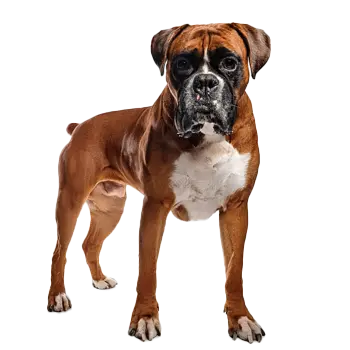

Collars, Harnesses & Leashes

Boxers have a distinctive body structure — a deep chest, muscular neck, and a head that is roughly the same width as the neck — which creates unique challenges for collar and harness fit. Flat buckle collars work for holding ID tags and general identification, but they are not ideal as the primary walking attachment for a Boxer that pulls. A determined Boxer can slip a standard collar by lowering its head and backing up, and sustained leash pressure against the throat can aggravate brachycephalic breathing issues.

Front-clip harnesses are widely considered the best walking option for Boxers. The front attachment point redirects pulling force to the side, naturally discouraging the dog from lunging forward without applying pressure to the neck or trachea. Look for harnesses with padded chest plates, adjustable straps at both the chest and belly, and a back clip option for casual walking once leash manners have been established. The harness should sit behind the front legs without restricting shoulder movement.

For leashes, a standard six-foot nylon or leather leash provides the best combination of control and freedom. Retractable leashes are generally not recommended for Boxers — the thin cord can cause rope burns, the locking mechanism can fail under a sudden lunge from a 65-pound dog, and the variable length teaches the dog that pulling extends the available range. A fixed-length leash establishes consistent boundaries and gives the handler reliable control in high-stimulation environments.

Martingale collars offer a middle ground for Boxers that have outgrown heavy pulling but still need more security than a flat collar provides. These collars tighten gently under tension to prevent slip-outs but have a built-in limit that prevents choking. They are especially useful for Boxers with narrow heads relative to their neck width. Avoid prong collars and choke chains, which can cause tracheal damage and are unnecessary for a breed that responds well to positive reinforcement training methods.

Grooming Tools

Boxers have a short, smooth coat that requires minimal grooming compared to long-haired breeds, but they are not maintenance-free. They shed moderately year-round with heavier shedding periods in spring and fall. A rubber curry brush or grooming mitt used two to three times per week removes loose hair, distributes natural skin oils, and keeps the coat looking sleek. These tools conform to the dog's muscular contours and feel more like a massage than a brushing session, which most Boxers enjoy.

Bathing should be done as needed — typically every four to six weeks unless the dog gets particularly dirty. Over-bathing strips the coat of natural oils and can lead to dry, flaky skin. Use a gentle, pH-balanced dog shampoo formulated for sensitive skin, as Boxers are prone to skin allergies and irritation. A deshedding shampoo used during seasonal coat changes can help loosen and remove dead undercoat during the bath.

Nail maintenance is one of the most commonly neglected aspects of Boxer grooming. Active dogs that regularly walk on pavement may wear their nails down naturally, but most indoor Boxers need their nails trimmed every two to three weeks. Guillotine-style or scissor-style clippers both work, though many owners find rotary grinders (dremel-type tools) less stressful for the dog because they file the nail gradually rather than making a single cut. Introduce nail trimming tools early in puppyhood to build positive associations.

Facial wrinkles — particularly the deep folds above the nose and around the muzzle — require regular cleaning to prevent bacterial and yeast infections. Use a soft cloth or unscented grooming wipe to clean between the folds at least every other day, and dry the area thoroughly afterward. Moisture trapped in wrinkles creates a breeding ground for infection, so keeping these areas clean and dry is an essential part of Boxer-specific grooming.

Bowls & Feeders

Bowl selection for Boxers involves practical considerations beyond simple aesthetics. Stainless steel bowls are the gold standard — they are durable, dishwasher-safe, resistant to bacterial buildup, and heavy enough to resist tipping during enthusiastic eating. Ceramic bowls are another good option for their weight and stability, though they should be inspected regularly for chips or cracks that can harbor bacteria.

Plastic bowls are best avoided for Boxers. They scratch easily, creating microscopic grooves where bacteria thrive, and some dogs develop a contact allergy to plastic that manifests as chin acne — reddened, irritated bumps on the lower lip and chin. Boxers are already predisposed to skin sensitivity, so eliminating plastic food and water contact removes a common trigger for this condition.

Slow-feeder bowls are strongly recommended for Boxers due to the breed's elevated risk for bloat. These bowls feature raised ridges, mazes, or divided compartments that force the dog to eat around obstacles, dramatically slowing consumption speed. A Boxer that inhales a meal in 90 seconds from a standard bowl may take eight to ten minutes with a slow feeder, significantly reducing the volume of air swallowed during eating and lowering bloat risk.

Elevated feeding stations have been debated in the veterinary community regarding bloat risk. Some older guidance recommended raised bowls for deep-chested breeds, but more recent research suggests elevated feeding may actually increase bloat risk in some dogs. Unless your veterinarian specifically recommends elevated feeding for your Boxer due to a medical condition such as megaesophagus, feeding from floor-level bowls is the safer default. Regardless of bowl height, always provide fresh water in a separate bowl that is cleaned and refilled daily.

Travel Gear

Boxers generally love car rides and travel, but safe vehicle containment is essential for a dog of this size and energy level. A crash-tested travel crate secured to the cargo area is the safest option for vehicle transport. The crate should be large enough for the dog to stand and turn around but not so oversized that the dog is thrown around during sudden stops. Wire crates with reinforced corners and secure latches provide ventilation while containing the dog during transit.

For owners who prefer not to use a crate in the vehicle, a crash-tested harness that attaches to the car's seatbelt system is the next best option. The harness should be specifically rated for crash safety — not all seat belt tethers provide meaningful restraint during a collision. Look for products that have been independently tested and rated by a recognized safety organization. The tether should be short enough to prevent the dog from being thrown forward but long enough to allow comfortable sitting and lying positions.

Travel water bottles with integrated drinking troughs are indispensable for Boxers on the go. Brachycephalic dogs are more susceptible to overheating and dehydration during travel, especially in warm weather, and should be offered water at every rest stop. Collapsible silicone bowls pack flat and take up minimal space in a travel bag. Keep a dedicated travel kit with water, a bowl, waste bags, a leash, and a copy of your dog's vaccination records for any trip beyond your daily routine.

For air travel, Boxers face significant restrictions. Most airlines do not permit brachycephalic breeds in cargo holds due to the elevated risk of respiratory distress at altitude. Boxers are too large for in-cabin travel on commercial flights. If air travel is necessary, consult your veterinarian about health clearances and research pet transport services that specialize in brachycephalic breeds and use climate-controlled ground or air transport with veterinary oversight.

Safety & ID

Every Boxer should wear a collar with an ID tag at all times, even when indoors. Tags should include the dog's name, the owner's phone number, and the city or town of residence. Avoid listing the dog's full home address for security reasons. Durable stainless steel or brass tags with engraved text are more reliable than printed tags, which fade over time. Slide-on tags that attach flat against the collar produce less noise than dangling tags and are less likely to catch on objects.

Microchipping provides a permanent, tamper-proof form of identification that cannot be lost, removed, or damaged. A microchip is a passive RFID transponder about the size of a grain of rice, implanted between the shoulder blades during a routine veterinary visit. Register the chip with the manufacturer's database immediately after implantation and update your contact information whenever you move or change phone numbers — an unregistered chip is essentially useless.

Reflective and LED-illuminated collars or collar attachments are important safety accessories for Boxers walked during dawn, dusk, or nighttime hours. A dark-coated Boxer is virtually invisible to motorists at night without some form of illumination. Clip-on LED lights that attach to the collar or harness are inexpensive, lightweight, and visible from several hundred feet away. Reflective leashes and harness panels add an additional layer of visibility.

For Boxers that spend time in unfenced areas or have a history of escape attempts, a GPS tracking collar provides real-time location monitoring through a smartphone app. These devices use cellular networks to report the dog's location at regular intervals and can send instant alerts if the dog leaves a predetermined geographic boundary. Battery life varies by model and update frequency, so compare options carefully to find a tracker that balances location accuracy with practical battery endurance for your usage patterns.

Seasonal Gear

Boxers' thin, single-layer coat provides almost no insulation against cold weather, making winter gear a functional necessity rather than a fashion choice. A well-fitted winter coat or jacket should cover the dog from the base of the neck to the base of the tail, wrap around the chest and belly, and allow full range of leg motion. Fleece-lined, waterproof outer shells provide the best combination of warmth and weather protection. Avoid coats that rely on velcro closures alone, as active Boxers can dislodge velcro during play — buckle or snap closures are more secure.

Paw protection is equally important in winter. Road salt and chemical deicers irritate paw pads and can be toxic if ingested during self-grooming. Dog-safe paw wax applied before walks creates a protective barrier, while booties provide the most comprehensive protection against salt, ice, and extreme cold. If your Boxer resists booties, at minimum wipe all four paws with a damp cloth immediately after returning from winter walks to remove chemical residue.

Summer gear focuses on heat management and sun protection. Cooling vests that are soaked in water and placed on the dog use evaporative cooling to lower body temperature during outdoor activities. These vests are particularly valuable for Boxers during walks, hikes, or outdoor training sessions in warm weather. Portable collapsible water bowls and insulated water bottles ensure hydration is always available during summer outings.

Boxers with white or light-colored markings on their face, ears, and body are susceptible to sunburn during prolonged sun exposure. Pet-safe sunscreen formulated without zinc oxide or PABA can be applied to exposed areas — particularly the nose, ear tips, and any areas with thin or unpigmented skin. Lightweight, UV-protective shirts designed for dogs provide broader coverage for sun-sensitive Boxers and double as a barrier against insect bites during outdoor adventures.

Always consult a qualified professional before making any health-related decisions. This content is provided for informational reference only and should not replace professional guidance specific to your animal.