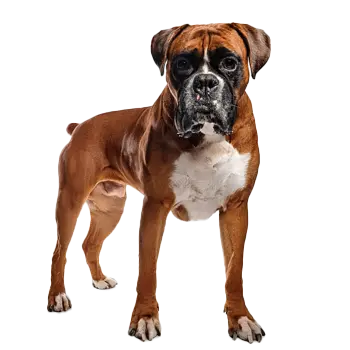

Play Style & Drive

Boxers are one of the most playful breeds in the dog world, maintaining a puppyish enthusiasm for games and interaction well into their senior years. Their play style tends to be physical, energetic, and mouthy — they love to grab, carry, shake, and tug objects with gusto. Understanding this natural play drive is essential for selecting toys that will hold their interest rather than ending up ignored in a corner after five minutes.

This breed has a strong prey drive paired with a desire for human interaction, which means they gravitate toward toys that involve cooperative play with their owner rather than solitary entertainment. A Boxer will almost always choose a tug-of-war session with a person over chewing a toy alone. This social orientation makes interactive toys — those designed for two participants — some of the best investments for Boxer owners.

Boxers are also known for their characteristic "boxing" behavior, using their front paws to bat and swipe at objects during play. Toys that bounce unpredictably, roll erratically, or dangle from ropes appeal to this instinct and keep the dog engaged for longer periods. The unpredictability element is key — Boxers lose interest quickly in toys that behave the same way every time.

Despite their muscular build and powerful jaws, Boxers are not the most destructive chewers among large breeds. They fall into the moderate-to-heavy chewing category, which means standard plush toys will not survive but ultra-heavy-duty options designed for the most extreme chewers may be unnecessary. Medium-to-heavy-duty toys rated for "aggressive chewers" typically hit the right balance of durability and engagement.

Interactive & Puzzle Toys

Puzzle toys are invaluable for Boxers because they engage the dog's mind as well as their mouth. Treat-dispensing puzzles that require the dog to slide panels, lift flaps, or rotate compartments to access hidden rewards provide mental stimulation that physical exercise alone cannot deliver. Start with beginner-level puzzles and gradually increase difficulty as your Boxer masters each one — most Boxers figure out entry-level puzzles within minutes.

Snuffle mats and lick mats offer a different type of mental engagement. Snuffle mats — fabric mats with deep folds that hide kibble or small treats — tap into the dog's natural foraging instinct and can keep a Boxer occupied for 15 to 20 minutes. Lick mats spread with a thin layer of yogurt, peanut butter (xylitol-free), or wet food promote calming behavior and are particularly useful for managing excitement before guests arrive or during thunderstorms.

Interactive toys that respond to the dog's actions — squeaking, bouncing, or dispensing treats when manipulated — hold a Boxer's attention far longer than passive toys. Ball-shaped dispensers that release a treat when rolled at the right angle combine physical activity with problem-solving. The Boxer's natural tendency to bat and push objects with their paws makes them particularly adept at mastering these types of toys.

Rotating puzzle toys on a weekly basis prevents boredom and keeps each toy feeling novel. Rather than leaving all toys available at all times, keep a selection of five or six in a bin and swap two or three out every few days. This simple rotation strategy can make a modest toy collection feel like an endless supply of new challenges to your Boxer.

Chew Toys & Durability

Every Boxer needs a reliable selection of chew toys to satisfy their oral fixation and protect household items from becoming unintended chew targets. Durable rubber toys that can be stuffed with treats or frozen with a filling provide long-lasting engagement and are tough enough to withstand sustained chewing from a Boxer's strong jaws. Freezing a stuffed rubber toy adds an extra layer of difficulty and extends chewing time significantly.

Nylon and composite chew toys designed for power chewers are another good option, though they should be inspected regularly for signs of wear. Once a chew toy develops sharp edges, cracks, or starts breaking into pieces, it should be replaced immediately to prevent ingestion of fragments. No chew toy is truly indestructible, and even products marketed as such should be treated as durable rather than permanent.

Rope toys serve a dual purpose for Boxers — they satisfy the urge to chew while also providing an excellent tool for tug-of-war, one of the breed's favorite games. Choose thick, multi-knot rope toys made from natural cotton fiber. Thinner ropes can be shredded and swallowed quickly, creating a risk of intestinal blockage. Supervise rope play and discard ropes once they begin to unravel or lose structural integrity.

Avoid toys with small removable parts, such as plastic eyes on stuffed animals or small squeaker units that can be extracted and swallowed. If your Boxer enjoys plush toys for carrying and comfort rather than destruction, look for "tough" plush lines that use reinforced seams and embedded squeakers that are sewn into multiple layers of fabric rather than sitting in a thin pocket.

Fetch & Outdoor Toys

Fetch is a natural fit for Boxers, combining their love of running with their enthusiasm for retrieving and returning objects to their owner. Standard tennis balls work for casual backyard games but wear down quickly and can become a choking hazard as they compress — switch to larger, more durable rubber balls designed for medium-to-large breeds for safety and longevity. Balls with irregular shapes that bounce unpredictably add excitement and challenge to the game.

Ball launchers extend throwing distance and reduce strain on the owner's arm during extended fetch sessions. Manual lever-style launchers are lightweight and require no batteries, while automatic launchers can provide independent fetch sessions for dogs trained to reload them. If using an automatic launcher, supervise the first several sessions to ensure your Boxer uses it safely and does not become fixated on the machine to the point of exhaustion.

Flying discs designed for dogs — made from flexible rubber or soft fabric rather than hard plastic — give Boxers an aerial target that satisfies their jumping instinct. Hard plastic discs intended for human recreation can injure a dog's mouth and teeth on impact, so always choose dog-specific options. Soft rubber discs are also more forgiving during missed catches, reducing the risk of facial impact injuries.

Water toys expand the play repertoire for Boxers that enjoy swimming or wading. Floating retrieval toys, water-resistant bumpers, and buoyant rope toys allow fetch games to continue in lakes, pools, or shallow streams. Not all Boxers are confident swimmers due to their dense, muscular build and short muzzle, so introduce water play gradually and always supervise aquatic activities. A canine life vest is recommended for deeper water sessions, even for strong swimmers.

Comfort & Companion Toys

While Boxers are known for their tough, athletic image, many are surprisingly attached to comfort objects. A soft plush toy that a Boxer carries around the house, sleeps with, or presents to guests is a common sight in Boxer households. These companion toys provide emotional comfort and can help ease mild separation anxiety by giving the dog a familiar-scented object to associate with security.

Heartbeat toys — plush animals with a battery-operated pulsing mechanism inside — are particularly useful for Boxer puppies transitioning to a new home. The rhythmic vibration mimics the sensation of sleeping alongside littermates, reducing nighttime whining and helping the puppy settle into its crate more quickly. Many adult Boxers continue to find heartbeat toys soothing during stressful events like fireworks or thunderstorms.

When selecting comfort toys, choose options that are appropriately sized — large enough that they cannot be swallowed whole but not so large that the dog cannot comfortably carry them. Stitchless or minimal-seam designs hold up better under gentle mouthing, and toys without internal stuffing eliminate the risk of the dog consuming batting material if the toy eventually tears.

Some Boxers develop strong attachments to specific toys and become distressed if those toys are lost or discarded. If your Boxer bonds with a particular comfort toy, consider purchasing a backup before the original wears out. Having a duplicate that you can rotate in during washing cycles ensures your dog always has access to their preferred comfort item without interruption.

DIY & Budget Options

Not every engaging toy needs to come from a pet store. Simple homemade enrichment options can be just as stimulating for a Boxer as commercial products. A muffin tin with tennis balls placed over treats in each cup creates an instant puzzle that requires the dog to remove each ball to access the reward underneath. This setup costs almost nothing and can be assembled in seconds.

Frozen enrichment is another budget-friendly strategy. Fill a silicone mold or small container with a mixture of low-sodium broth, kibble, and small treat pieces, then freeze it solid. The resulting frozen block provides a long-lasting chewing and licking challenge that also helps cool your Boxer down on hot days. You can increase difficulty by freezing layers — a base layer of broth, then a treat layer, then another broth layer — so the dog must work through each stage to reach the rewards.

Old towels and t-shirts can be repurposed into tug toys by braiding three strips together and tying knots at each end. These DIY tug toys are free, machine-washable, and easy to replace when they wear out. Avoid using socks or items that resemble clothing your dog should not chew, as this can blur the line between acceptable toys and off-limits household items.

Cardboard boxes and paper bags (with handles removed) make excellent single-use enrichment toys. Hide treats inside a loosely closed cardboard box and let your Boxer figure out how to tear it open. The destruction is part of the fun, and cleanup is simple since cardboard is recyclable. Supervise these activities to ensure your dog is shredding the material for the reward rather than consuming large quantities of cardboard.

Always consult a qualified professional before making any health-related decisions. This content is provided for informational reference only and should not replace professional guidance specific to your animal.