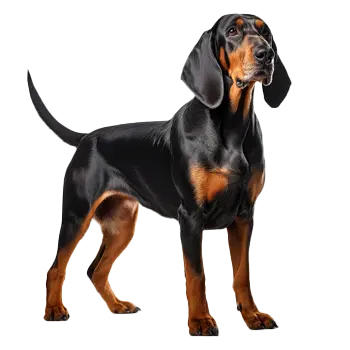

Play Style & Drive

Understanding how a Black and Tan Coonhound plays is the first step toward choosing toys that will actually hold its interest. This breed was developed to follow scent trails for hours across difficult terrain, so its primary drives are olfactory and food-based rather than visual or retrieval-oriented. A Coonhound is far more likely to spend twenty minutes working a treat out of a puzzle toy than chasing a ball back and forth, which sets it apart from retrievers and herding breeds that thrive on repetitive fetch.

The breed's play energy tends to come in bursts followed by extended rest. A Coonhound will throw itself into an activity with full enthusiasm for fifteen to thirty minutes, then collapse for a leisurely nap. Toys that provide intense, focused engagement over shorter periods align better with this natural rhythm than toys designed for marathon play sessions. Owners who expect their Coonhound to sustain interest in a single toy for hours will be disappointed, but owners who rotate toys strategically will find the dog consistently engaged.

Social play is another dimension worth considering. Coonhounds generally enjoy interactive play with their owners and often do well with other dogs. Tug toys, flirt poles, and toys that facilitate shared activity strengthen the bond between dog and handler while providing physical exercise. The breed's gentle mouth and sociable nature make it a good candidate for cooperative games, though the dog's size and strength mean that toys and equipment need to be proportioned accordingly.

Prey drive exists in this breed but manifests primarily through nose work rather than the chase-and-catch behavior seen in sighthounds or terriers. Toys that simulate tracking — scented objects hidden around the yard, trail-laying games, snuffle mats — tap directly into the Coonhound's deepest instincts and provide a level of mental satisfaction that physical toys alone cannot match.

Interactive & Puzzle Toys

Puzzle toys are arguably the single most important toy category for Black and Tan Coonhounds. These dogs have powerful noses and methodical problem-solving abilities that make them naturals at working through food-dispensing challenges. Start with basic puzzle toys that require the dog to nudge, paw, or roll the toy to release treats, then progress to more complex designs with sliding compartments, layered lids, and sequential steps.

Snuffle mats deserve special mention for this breed. These fabric mats with deep fleece strips mimic the experience of foraging through grass, and a Coonhound's nose is perfectly adapted to root through the material and locate hidden kibble or treats. Using a snuffle mat for a portion of the dog's daily meal transforms routine feeding into a mentally stimulating activity that can occupy the dog for twenty minutes or more.

Interactive toys that require owner participation add a social dimension to problem-solving. Hide-and-seek games where the owner conceals a scented toy or treat pouch in increasingly difficult locations around the house or yard leverage the Coonhound's tracking heritage in a domestic context. These games build confidence, reinforce recall and search commands, and provide a workout for the dog's most powerful sensory system without requiring extensive physical space.

Durability is a consideration with puzzle toys, as a frustrated Coonhound may resort to brute force if the puzzle proves too difficult. Choose products made from reinforced rubber or hard composite materials rather than thin plastic, which can crack under pressure from a large dog's jaws. Supervise initial sessions with any new puzzle toy to gauge the dog's approach and ensure it is working the mechanism rather than attempting to destroy it.

Chew Toys & Durability

Black and Tan Coonhounds are moderate chewers compared to breeds like pit bulls or Labrador Retrievers, but their size means that even moderate chewing exerts significant force. Toys rated for medium chewers often fall apart within days, so selecting products designed for large, powerful breeds saves money and reduces the risk of the dog ingesting broken toy fragments.

Rubber chew toys made from natural or reinforced rubber compounds offer the best combination of durability and dental benefit. The resistance of the rubber massages gums and helps scrape plaque from teeth as the dog chews. Hollow rubber toys that can be stuffed with treats or peanut butter provide double duty as both chew satisfaction and food-dispensing enrichment, keeping the dog occupied for extended periods.

Nylon and composite chew bones are another durable option. These synthetic bones come in various flavors and textures that appeal to dogs, and they wear down gradually rather than breaking into sharp pieces. Monitor the toy's condition and replace it when it becomes small enough to pose a swallowing hazard. Some dogs develop preferences for specific textures, so offering a rotation of rubber, nylon, and rope-style chews helps you identify what your individual Coonhound enjoys most.

Avoid toys with small parts, squeakers that can be extracted, or stuffed toys with polyfill unless you plan to supervise every second of play. While Coonhounds are not the most destructive breed, any large dog can disembowel a plush toy in short order, and ingested stuffing or squeaker components can cause gastrointestinal blockages that require surgical intervention. Reserve soft toys for supervised interactive play and put them away when you leave the room.

Fetch & Outdoor Toys

Fetch is not the Black and Tan Coonhound's most natural game — the breed lacks the obsessive retrieve drive of a Labrador or Golden Retriever — but many Coonhounds enjoy a modified version of the game, especially when the thrown object is interesting enough to pursue. Standard tennis balls often fail to hold a Coonhound's attention after one or two throws, but larger rubber balls with irregular bounce patterns or balls infused with scent can sustain engagement longer.

Flirt poles are an underrated tool for Coonhounds. These long poles with a lure attached to a cord allow the owner to simulate prey movement at ground level, triggering the dog's chase instinct without requiring a large open space. A few minutes of flirt pole play provides intense cardiovascular exercise and satisfies the prey-drive component of the dog's personality. Use a heavy-duty flirt pole rated for large breeds, as the standard models designed for smaller dogs will not survive the force of a Coonhound's lunge.

Water toys can be a hit with Coonhounds that enjoy swimming, which many do. Floating fetch toys, water-safe tug ropes, and buoyant bumpers designed for retriever training work equally well for Coonhounds with access to safe swimming areas. The combination of physical exercise and sensory stimulation from the water makes swimming sessions particularly tiring and satisfying for the dog.

Trail-based activities represent the ultimate outdoor enrichment for this breed. Laying a scent trail using a drag cloth saturated with an interesting scent — anise oil, commercially available tracking scent, or even a favorite treat rubbed along the ground — and letting the Coonhound follow it to a reward at the end engages every instinct the breed possesses. Start with short, straight trails and gradually increase complexity with turns, intersections, and aged trails as the dog develops its skills.

Comfort & Companion Toys

Despite their rugged hunting heritage, many Black and Tan Coonhounds have a surprisingly gentle side that manifests in attachment to comfort objects. Some individuals adopt a particular stuffed toy and carry it around the house, sleep with it, and become visibly distressed if it goes missing. For these dogs, having a dedicated comfort toy provides emotional security, particularly during stressful events like thunderstorms, fireworks, or periods when the owner is away.

Choose comfort toys that are appropriately sized — large enough that the dog cannot accidentally swallow them, soft enough to be pleasant to carry and lie with, but durable enough to survive gentle mouthing. Flat, unstuffed plush toys are a good compromise, as they provide the soft texture that comfort-seeking dogs enjoy without the polyfill stuffing that creates a hazard if the toy is eventually torn open.

Heartbeat-simulating toys can be useful for Coonhound puppies adjusting to their new homes. These battery-operated devices emit a rhythmic pulse that mimics the sensation of sleeping next to a littermate, reducing nighttime whining and easing the transition to sleeping alone. The effect is most pronounced during the first few weeks in a new home and can significantly improve the puppy's — and the owner's — sleep quality.

Rotating comfort toys less frequently than play toys is generally advisable. While novelty drives engagement with puzzle and chew toys, the opposite applies to comfort objects — familiarity is their value. If your Coonhound has bonded with a particular toy, purchasing a backup identical to the original ensures continuity if the first one eventually wears out. Some owners rotate the two copies to keep both equally worn and familiar-smelling, preventing the dog from rejecting a replacement that looks and smells brand new.

DIY & Budget Options

Not every enrichment activity requires a purchase. Some of the most effective mental stimulation for a Black and Tan Coonhound costs nothing beyond a few minutes of preparation. The muffin tin game — placing treats in the cups of a muffin tin and covering each cup with a tennis ball — creates an instant puzzle that challenges the dog to remove the balls and locate the rewards. Most Coonhounds figure out the basic concept within seconds but remain engaged by the variability of which cups contain treats.

Cardboard boxes make excellent disposable enrichment. Place treats inside a small box, close the flaps, and place that box inside a larger box with additional treats scattered between the layers. The dog must tear through the cardboard to reach the rewards, which satisfies the urge to shred while channeling it toward a sanctioned target. Supervise to ensure the dog is not ingesting significant amounts of cardboard, and recycle the remains afterward.

Frozen enrichment is simple and highly effective during warm months. Fill a large rubber toy or a silicone mold with a mixture of wet dog food, mashed banana, and water, then freeze it solid. The resulting frozen block takes a Coonhound twenty to forty minutes to work through, providing sustained occupation and a cooling treat simultaneously. You can vary the filling ingredients to keep the experience novel without spending money on new toys.

Old towels and t-shirts can be braided into tug ropes or rolled around treats to create simple scent puzzles. These homemade toys should be treated as supervised-play-only items, since fabric can cause serious digestive blockages if swallowed. The advantage is that they carry the owner's scent, which adds a comforting dimension that commercial toys lack. Replace fabric toys when they begin to fray or unravel, and never leave them accessible to an unsupervised dog.

Always consult a qualified professional before making any health-related decisions. This content is provided for informational reference only and should not replace professional guidance specific to your animal.