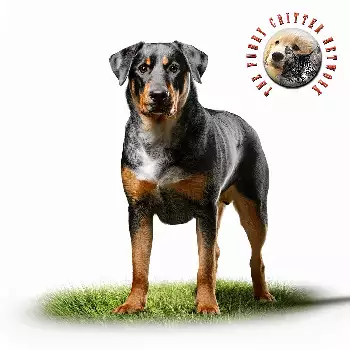

The Beauceron's combination of size, strength, and drive makes collar and leash selection a decision with real consequences. A flat collar in nylon or leather is the standard for everyday wear and ID tag attachment. For this breed, look for collars at least 1.5 inches wide to distribute pressure across the neck, with heavy-duty hardware — welded D-rings rather than split rings, and a buckle or quick-release clasp rated for dogs over 80 pounds. A collar that fails under the sudden lunge of a 100-pound Beauceron is a safety crisis, not an inconvenience.
Harnesses are the superior choice for walking and training, particularly for dogs that pull or for owners who want to avoid any pressure on the trachea and cervical spine. Front-clip harnesses redirect pulling energy by turning the dog toward the handler, making them effective training tools without the aversive pressure of choke or prong designs. Back-clip harnesses are more comfortable for dogs that already walk politely but offer less mechanical advantage against pulling. Dual-clip models that accommodate either attachment point provide the most flexibility.
Leash selection should prioritize strength and comfort in equal measure. A six-foot leash in leather or heavy nylon with a secure bolt snap provides the standard combination of control and freedom for urban walks. Traffic handles — short loops sewn near the clip — are extremely useful with a strong breed like the Beauceron, allowing the handler to quickly shorten the leash in crowded or high-distraction environments. Retractable leashes are generally not recommended for this breed, as they provide inconsistent tension, teach the dog that pulling extends the walk radius, and can malfunction under the sustained force of a large dog.
For off-leash training or recall work in open areas, a long line of 15 to 30 feet provides controlled freedom without full trust of recall reliability. Long lines should be made from biothane or lightweight nylon rather than cotton rope, which absorbs water, becomes heavy, and can cause rope burns if it runs through the handler's hands. Always use a long line with a harness rather than a collar to prevent neck injury if the dog hits the end of the line at speed.