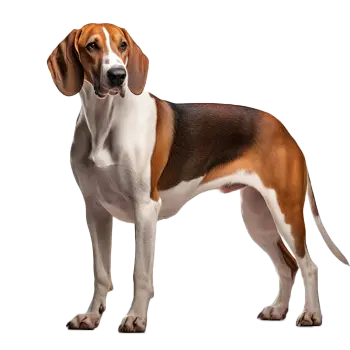

Play Style & Drive

Understanding the American Foxhound's play style starts with recognizing its primary drive: scent. This breed was developed to track quarry over long distances using its extraordinary nose, and that instinct carries directly into play. American Foxhounds are most engaged by activities that involve following trails, locating hidden objects, and investigating novel smells. Physical speed and agility are secondary to the sustained, methodical tracking behavior that defines the breed.

Despite their hunting heritage, American Foxhounds are not typically intense or aggressive players. Their play style tends to be social, relaxed, and endurance-oriented rather than competitive or possessive. They enjoy parallel play with other dogs, casual games of chase, and extended sniffing sessions. This easygoing temperament means that toy aggression or resource guarding is relatively uncommon, making them well-suited for shared play environments.

The breed's independence can present a challenge during structured play. American Foxhounds may lose interest in repetitive fetch games or predictable routines more quickly than retrieving breeds. Variety and novelty are key — rotating toys, changing play locations, and introducing scent-based challenges keep the Foxhound engaged where a simple ball might not.

Energy management through play is essential for household harmony. An under-stimulated American Foxhound will find its own entertainment, often through destructive chewing, excessive baying, or escape attempts. Regular, engaging play sessions channel that energy constructively and contribute to a calmer, more contented dog at rest.

Interactive & Puzzle Toys

Puzzle toys are exceptionally well-suited to the American Foxhound's scent-driven intelligence. Toys that require the dog to manipulate compartments, slide panels, or lift covers to access hidden treats tap directly into the breed's natural problem-solving abilities. Start with beginner-level puzzles and progress to more complex designs as the dog develops proficiency. A puzzle that is too easy will be ignored after one session, while one that is appropriately challenging provides repeated engagement.

Snuffle mats represent one of the most effective enrichment tools for scent hounds. These fabric mats with deep, irregular folds hide kibble or treats throughout their surface, requiring the dog to use its nose to locate each piece. A single feeding session on a snuffle mat can provide fifteen to twenty minutes of focused mental activity, making it an excellent alternative to bowl feeding for dogs that eat too quickly or need additional stimulation.

Treat-dispensing toys that release food as the dog rolls, pushes, or manipulates them combine physical activity with mental challenge. Rubber toys with irregular shapes create unpredictable bounce and roll patterns that sustain interest. Adjustable difficulty settings allow you to increase the challenge as the dog becomes more skilled, extending the useful life of the toy.

Interactive toys that involve owner participation strengthen the bond between dog and handler. Tug toys, hide-and-seek games, and scent trail exercises all require cooperative engagement. For American Foxhounds, laying a treat trail through the house or yard and releasing the dog to follow it replicates the tracking behavior the breed was designed for and provides deeply satisfying mental exercise.

Chew Toys & Durability

American Foxhounds are moderate chewers that benefit from having appropriate chew options available throughout the day. Chewing satisfies a natural behavioral need, promotes dental health, and provides a calming, stress-relieving activity. Without designated chew toys, the Foxhound will select its own targets, and those selections rarely align with the owner's preferences.

Durability should match the dog's chewing intensity. While American Foxhounds are not typically power chewers on the level of pit bulls or mastiffs, they are large dogs with strong jaws. Medium to heavy-duty rubber toys, nylon chews, and rope toys designed for large breeds provide appropriate resistance. Avoid toys marketed for small dogs, as these can be destroyed quickly and present choking hazards when reduced to fragments.

Natural chew products like bully sticks, tendons, and dried fish skins offer a consumable chewing experience that most Foxhounds find highly appealing. These products satisfy the chewing urge while providing a protein-rich snack. Always supervise consumption of natural chews and discard any piece small enough to be swallowed whole. Rawhide products are controversial due to digestibility concerns and are generally best avoided in favor of alternatives that break down more safely in the digestive system.

Rotating chew toys on a weekly basis maintains novelty and prevents the dog from losing interest. Store unused toys out of sight and reintroduce them after a period of absence. A toy that was ignored last month may generate renewed enthusiasm after a few weeks in the closet. This rotation strategy also allows you to inspect toys for wear and retire any that have developed sharp edges, loose pieces, or structural weakness.

Fetch & Outdoor Toys

While the American Foxhound is not a natural retriever, many individuals enjoy fetch games when the activity is introduced properly and kept varied. Standard tennis balls work for casual play, though purpose-built fetch balls made of durable rubber are safer for strong jaws and resist compression better than felt-covered tennis balls, which can also wear down tooth enamel over extended use.

Ball launchers extend throwing distance and reduce strain on the owner's arm during extended play sessions. These tools are particularly useful for Foxhounds that need to cover significant ground to burn energy. Use them in enclosed areas, as the breed's tendency to follow scent trails means a dog that chases a ball into an open field may pick up a more interesting smell and decide not to return.

Flying discs designed for dogs offer an alternative to ball-based fetch. Soft rubber or fabric discs are safer for the dog's mouth than rigid plastic models. The unpredictable flight path of a disc can hold a Foxhound's interest longer than a straight ball throw, adding a visual tracking element to the physical exercise.

Water toys expand the play repertoire for Foxhounds that enjoy swimming. Floating fetch toys, splash-resistant balls, and buoyant rope toys allow play to continue in lakes, ponds, or backyard pools. Not all American Foxhounds take to water naturally, so introduce aquatic play gradually and never force a reluctant dog into deep water. A shallow wading pool can serve as a comfortable starting point for water-hesitant dogs.

Comfort & Companion Toys

Despite their rugged hunting heritage, many American Foxhounds develop attachments to soft comfort toys. Plush toys can serve as security objects that the dog carries, grooms, or sleeps with. This behavior is harmless and often endearing, provided the toy is durable enough to withstand gentle mouthing without releasing stuffing or squeakers that could be ingested.

For Foxhounds that enjoy plush toys, look for reinforced stitching, double-layered fabric, and minimal small parts. Some manufacturers produce "tough" plush toys with internal reinforcement layers and sewn-in squeakers rather than loose inserts. These survive significantly longer than standard stuffed toys, though no plush toy is truly indestructible and regular inspection for damage is essential.

Heartbeat toys and warmth-emitting comfort toys can be particularly helpful for puppies transitioning to a new home or for adult dogs experiencing separation anxiety. These toys simulate the presence of a companion and can reduce whining, pacing, and stress-related behaviors during alone time. They are supplements to proper behavioral management, not replacements for it, but many owners report noticeable calming effects.

Squeaker toys appeal to the Foxhound's prey drive, as the high-pitched sound mimics the vocalizations of small animals. While most dogs enjoy the feedback of a squeaking toy, be aware that some Foxhounds become obsessively focused on extracting and destroying the squeaker mechanism. If your dog is a dedicated squeaker surgeon, opt for toys with multiple embedded squeakers or switch to crinkle-sound toys that provide auditory feedback without a removable component.

DIY & Budget Options

Enrichment for an American Foxhound does not require a large financial investment. Some of the most effective activities leverage the breed's scent drive using items already available in most households. A muffin tin with tennis balls covering treats in each cup creates an instant puzzle. A cardboard box filled with crumpled paper and hidden kibble provides a satisfying search-and-destroy activity. Old towels rolled up with treats tucked inside offer a simple snuffle challenge.

Scent trails are essentially free enrichment. Drag a treat or scented cloth along a path through the yard, making the trail progressively more complex over time with turns, switchbacks, and varied surfaces. Hide a jackpot reward at the end. This activity replicates the Foxhound's core working behavior and can occupy the dog for extended periods as the trails become more challenging.

Frozen enrichment toys are easy and inexpensive to prepare. Fill a durable rubber toy with a mixture of peanut butter, yogurt, and kibble, then freeze overnight. The frozen filling extends the chewing session significantly and provides a cooling treat during warm weather. Frozen broth blocks in a bowl or ice cube tray offer similar benefits with minimal preparation.

Rotation is the most cost-effective enrichment strategy available. Rather than buying new toys constantly, maintain a collection and rotate three to four toys into active use at a time while storing the rest. The periodic reintroduction of a forgotten toy generates the same novelty response as a new purchase. Combined with occasional DIY activities and scent games, a modest toy collection can provide year-round engagement for even the most active American Foxhound.

Always consult a qualified professional before making any health-related decisions. This content is provided for informational reference only and should not replace professional guidance specific to your animal.