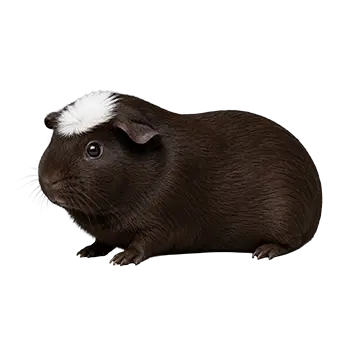

Play Style & Temperament

White Crested guinea pigs are known for their curious, outgoing personalities, which makes them particularly responsive to enrichment activities. Unlike some more timid cavy breeds, the White Crested tends to investigate new objects relatively quickly, often approaching a new toy within minutes of its introduction rather than hiding from it. This inquisitive nature means they benefit from regular rotation of enrichment items to keep their environment novel and engaging.

Guinea pig play looks very different from the play styles of dogs or cats. Cavies do not fetch, pounce, or chase objects with predatory intensity. Instead, their play revolves around exploration, foraging, hiding, running in short bursts called zoomies, and manipulating objects with their mouths and noses. Understanding this distinction is important because it shapes which types of toys actually provide enrichment versus which ones simply take up cage space unused.

Social play is a significant component of guinea pig enrichment that no toy can fully replicate. White Crested guinea pigs housed in pairs or groups will popcorn together during floor time, engage in follow-the-leader running patterns, and groom one another as a bonding activity. Toys and enrichment items enhance these social interactions by creating shared experiences — two guinea pigs exploring a new tunnel together, for instance, strengthens their bond while providing physical and mental stimulation.

Age and individual personality influence play preferences considerably. Young guinea pigs under a year old tend to be more active and adventurous, readily engaging with new toys and showing frequent popcorning behavior. Older guinea pigs may prefer gentler enrichment such as foraging opportunities and cozy resting spots. Observing your individual White Crested's responses to different enrichment types is the most reliable way to identify what truly engages them.

Tunnels & Exploration Toys

Tunnels are arguably the single most universally enjoyed toy category among guinea pigs. The instinct to run through enclosed passages is deeply rooted in cavy behavior, and most White Crested guinea pigs will use a tunnel within moments of it being placed in their cage or floor time area. Fabric tunnels, rigid plastic tunnels, and even simple cardboard tubes all serve this purpose effectively, though each material has different durability and maintenance characteristics.

Fabric tunnels are lightweight, collapsible, and often feature crinkle material in the lining that produces a satisfying sound as the guinea pig moves through. They are easy to wash and store but can absorb urine if a guinea pig decides to use them as a resting spot, so regular laundering is necessary. Rigid tunnels made from food-safe plastic are more durable and easier to wipe clean, but they lack the textural variety of fabric and can slide across smooth floors during enthusiastic use.

Connecting multiple tunnels into a network creates a more complex exploration environment that encourages extended periods of active movement. T-shaped and Y-shaped tunnel connectors allow you to build branching pathways that present the guinea pig with choices, adding a cognitive element to what would otherwise be simple linear travel. For floor time sessions, a tunnel network combined with scattered hay piles transforms an open room into an engaging exploration course.

Cardboard tubes from paper towel or wrapping paper rolls serve as excellent disposable tunnels that double as chew toys. Guinea pigs will run through them, push them around the cage, and gradually gnaw them apart, providing both physical activity and dental enrichment. Because they are free and readily available, they are an ideal way to add variety to the cage without any financial investment. Replace them once they become soggy, flattened, or too small to navigate comfortably.

Chew Toys & Dental Health

Chewing is not merely recreational for guinea pigs — it is a biological necessity. Guinea pig teeth grow continuously throughout their lives at a rate of approximately two to three millimeters per week, and only consistent grinding against fibrous material keeps them worn to a functional length. When teeth become overgrown, they can develop sharp points or spurs that lacerate the tongue and cheeks, leading to pain, infection, and an inability to eat. While hay provides the majority of dental wear, chew toys offer supplementary grinding surfaces and keep guinea pigs engaged between meals.

Apple wood sticks are one of the most popular and effective chew toy materials. The wood is hard enough to provide meaningful resistance but soft enough that guinea pigs can make satisfying progress as they gnaw. Other safe wood options include willow, pear, birch, and kiln-dried pine. Avoid any wood from stone fruit trees such as cherry, peach, or plum, as these contain compounds that are toxic to small animals. Also avoid any wood that has been treated, painted, stained, or sourced from areas where pesticides may have been applied.

Woven grass and hay-based chew toys combine dental benefits with foraging stimulation. Balls, mats, and rings woven from timothy hay or seagrass give guinea pigs something to shred, pull apart, and nibble on, mimicking the destructive foraging they would engage in naturally. These toys are fully edible and digestible, so there is no risk of intestinal blockage if a guinea pig consumes pieces. They wear out relatively quickly, which is actually a feature rather than a flaw — the destruction is itself the enrichment activity.

Mineral chews and pumice stones are sometimes marketed as essential dental products for guinea pigs, but their actual contribution to tooth wear is minimal compared to hay and wood. Guinea pig teeth are designed to grind laterally against fibrous material, and the gnawing motion used on hard mineral surfaces does not effectively replicate this grinding pattern. These products are not harmful in moderation but should not be relied upon as primary dental maintenance tools.

Foraging & Puzzle Enrichment

Foraging enrichment taps into one of the guinea pig's strongest natural drives. In the wild, cavies spend a large portion of their waking hours searching for food across varied terrain, selecting preferred plant species, and navigating to productive grazing areas. Domestic guinea pigs retain these instincts but rarely have the opportunity to express them when food is simply placed in a bowl. Foraging toys and puzzle feeders bridge this gap by requiring the guinea pig to work for its food, slowing consumption and providing meaningful cognitive engagement.

The simplest foraging enrichment requires no purchased products at all. Scattering pellets or small vegetable pieces throughout the cage bedding rather than presenting them in a dish forces the guinea pig to search for each morsel, extending feeding time from minutes to an hour or more. Hiding treats inside loosely crumpled paper balls, under overturned cups, or inside toilet paper rolls stuffed with hay creates accessible puzzles that most guinea pigs can solve quickly but still find satisfying.

Commercial puzzle feeders designed for guinea pigs and rabbits typically involve hay racks, treat balls, or compartmented feeders that dispense food as the animal manipulates them. A hay ball suspended at nose height requires the guinea pig to pull strands through the openings, slowing consumption and encouraging standing stretches that provide mild physical exercise. Snack boards with shallow holes or pegs require the guinea pig to nudge and flip to access hidden treats, providing light cognitive challenge without the frustration that more complex puzzle designs might cause.

When introducing foraging enrichment, start with easy challenges and gradually increase difficulty as your White Crested learns the mechanics. A guinea pig that cannot access its food will not persist indefinitely the way a dog might — it will simply give up and return to the hay rack. The goal is mild, rewarding challenge, not genuine difficulty. If your guinea pig ignores a foraging toy after a few attempts, simplify the design or make the reward more visible until the connection between interaction and payoff clicks.

Floor Time & Exercise

Floor time is the most impactful enrichment activity you can offer a White Crested guinea pig, providing space for full-speed running, popcorning, and social interaction that even a generously sized cage cannot accommodate. Most guinea pig owners aim for at least thirty minutes to an hour of supervised floor time daily, though many guinea pigs will happily explore for much longer if given the opportunity.

Setting up a safe floor time area requires some preparation. The space should be enclosed with low barriers or exercise pen panels to prevent escape and block access to electrical cords, furniture gaps, and areas where the guinea pig could become trapped. Hard floors like tile or laminate should be covered with fleece blankets, towels, or old sheets to provide traction and prevent slipping, which can injure a guinea pig's legs and spine. Carpet provides natural traction but is difficult to clean when accidents occur, so a protective layer is still advisable.

Populating the floor time area with an assortment of toys, tunnels, hides, and hay piles transforms simple open space into a stimulating adventure course. Rearranging the layout each session keeps the environment novel and encourages renewed exploration. White Crested guinea pigs are particularly responsive to this kind of environmental variation, often spending the first several minutes of a rearranged floor time session conducting a thorough investigation of every changed element.

Exercise wheels and balls, commonly used for hamsters, are not safe for guinea pigs and should never be used. A guinea pig's spine does not flex the way a hamster's does, and the curved running surface of a wheel forces an unnatural posture that can cause serious spinal injuries. Exercise balls present additional dangers including overheating, toe injuries from ventilation slots, and the stress of being enclosed in a moving, transparent sphere. Guinea pigs get their exercise through natural running, exploring, and social play, which floor time accommodates far more safely.

DIY & Budget Options

Guinea pig enrichment does not need to be expensive. Many of the most effective toys and activities can be created from household materials at virtually no cost, and guinea pigs frequently show as much interest in homemade enrichment as they do in commercial products. The key is understanding what behaviors you are trying to stimulate — chewing, exploring, foraging, or hiding — and building accordingly with safe materials.

Cardboard is the most versatile DIY toy material available. Paper towel tubes, shoe boxes with entrance holes cut into the sides, and small cardboard shipping boxes can serve as tunnels, hides, and chew toys simultaneously. Remove any tape, staples, or printed labels with glossy coatings before offering cardboard to your guinea pig, as adhesives and certain inks can be harmful if ingested. Plain, undyed cardboard is always the safest choice. Brown paper bags with the handles removed also make excellent crinkle toys and temporary hides.

DIY foraging mats can be made by threading strips of fleece fabric through a rubber sink mat or a section of plastic grid. Tucking small pieces of vegetable or hay between the fleece strips creates a foraging challenge that requires the guinea pig to push, pull, and root through the mat to find the rewards. These mats are easy to wash and reuse indefinitely, making them one of the most cost-effective enrichment tools available.

Old towels and fleece scraps can be fashioned into simple cuddle sacks, tunnel covers, and cozy pads. Even a towel draped over a small box creates an appealing dark hiding spot that most guinea pigs will investigate immediately. Rotating these homemade items in and out of the cage every few days keeps the environment fresh without requiring any new purchases. The most important consideration with any DIY toy is safety: avoid small detachable parts, strings or threads that could wrap around limbs, and any material with sharp edges. Supervise your guinea pig with new homemade toys until you are confident they interact with them safely.

Always consult a qualified professional before making any health-related decisions. This content is provided for informational reference only and should not replace professional guidance specific to your animal.