
Environmental Monitors

Temperature and humidity monitoring is the most immediately useful technology investment for guinea pig owners. As discussed throughout this product series, guinea pigs are highly sensitive to environmental conditions, with a safe temperature range of sixty-five to seventy-five degrees Fahrenheit and optimal humidity between forty and seventy percent. A digital thermometer and hygrometer placed at cage level — not at human head height where readings can differ significantly — provides the real-time data needed to catch dangerous conditions before they affect your guinea pig.

Wireless environmental sensors that connect to smartphone apps take this monitoring a step further by providing continuous logging and configurable alerts. These devices record temperature and humidity readings at regular intervals, building a historical profile of your guinea pig's environment that can reveal patterns invisible to spot checks. You might discover, for example, that the cage area spikes above eighty degrees for two hours every afternoon when sunlight hits a nearby window, or that humidity drops sharply overnight when the furnace runs.

Alert thresholds are the most valuable feature of connected environmental monitors. Setting your device to push a notification to your phone whenever the temperature exceeds seventy-eight degrees or drops below sixty gives you early warning to intervene before conditions become dangerous. This is particularly useful for owners who work outside the home or keep their guinea pigs in a room that is not part of the home's primary climate zone.

For multi-room homes or owners with guinea pigs in a dedicated animal room, a sensor with a remote probe allows you to monitor cage-level conditions from anywhere in the house. Some models support multiple probes, enabling you to track temperature differences between different areas of a large cage or between an indoor enclosure and a nearby outdoor exercise space. The investment is modest — most quality sensors cost less than a single veterinary visit — and the peace of mind they provide is substantial.

Cameras & Home Monitoring

Pet cameras have become one of the most popular tech accessories among guinea pig owners, and for good reason. Guinea pigs are most active during dawn and dusk, periods when many owners are commuting or preparing for the day, and a camera allows you to observe natural behaviors that you would otherwise miss entirely. Beyond entertainment value, cameras serve a practical health monitoring function by letting you verify that your guinea pigs are eating, drinking, moving normally, and interacting peacefully with cage mates.

When selecting a camera for guinea pig monitoring, prioritize image clarity, night vision capability, and wide-angle coverage. Guinea pigs are small and their movements are subtle, so a camera that produces blurry or poorly lit footage defeats the purpose. Night vision is essential because guinea pigs are active in low-light conditions, and you want to observe their behavior during these periods without installing bright lighting that disrupts their natural rhythm. A wide-angle lens or a camera with pan-and-tilt functionality allows you to cover the entire cage area without blind spots.

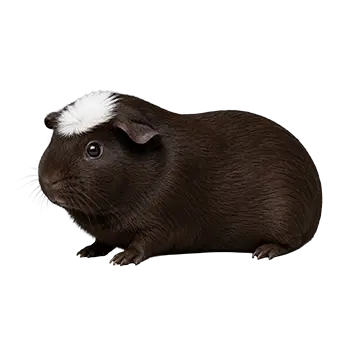
Two-way audio is a feature found on many pet cameras that allows you to speak to your guinea pig through the camera's built-in speaker. This feature is best used sparingly with guinea pigs. While some cavies respond positively to their owner's voice coming from a familiar location, others find the disembodied sound startling. If your White Crested guinea pig reacts to the speaker with freezing, fleeing, or alarm vocalizations, disable the two-way audio and use the camera strictly for visual monitoring.

Motion-triggered recording and cloud storage features can create a video archive of your guinea pig's daily activities. Reviewing these recordings can help you identify behavioral changes over time, such as a guinea pig that gradually stops visiting the water bottle, begins sitting hunched in a corner, or shows increasing aggression toward a cage mate. These subtle shifts often precede overt illness symptoms by days or weeks, making early detection through video review a genuinely useful diagnostic tool.

Smart Feeders & Water Systems

Automated feeding technology for small animals has improved considerably in recent years, though it is important to understand both the capabilities and limitations of these systems in the context of guinea pig care. Smart feeders cannot replace the daily fresh vegetable preparation and unlimited hay access that guinea pigs require, but they can help regulate pellet portions, maintain feeding schedules during long workdays, and provide data on consumption patterns.

Timed pellet dispensers are the most practical automated feeding device for guinea pig owners. These units hold a reservoir of pellets and release a predetermined portion at scheduled times, ensuring that your White Crested guinea pig receives its daily pellet ration even if your schedule is unpredictable. The most useful models allow multiple small dispensing events per day rather than a single large dump, which more closely mimics natural grazing patterns and prevents one guinea pig from monopolizing the entire portion.

Automated water systems range from simple gravity-fed reservoirs that extend the time between refills to more sophisticated units with filtration and flow monitoring. Large-capacity water bottles or gravity-fed waterers are useful for owners who travel overnight or work long shifts, as they ensure water availability beyond the capacity of a standard bottle. However, these systems still require regular cleaning and monitoring — a clogged nozzle on an automated system is just as dangerous as one on a manual bottle, with the added risk that the owner may assume the system is functioning when it is not.

The data logging capabilities of smart feeders provide insights that manual feeding cannot. Some units track how frequently and how much your guinea pig eats at each dispensing event, sending summaries to your phone. A sudden drop in pellet consumption can signal dental problems, illness, or stress, and having precise consumption data makes these changes visible far earlier than visual estimation alone. This information is also valuable to share with your veterinarian during wellness checks, providing an objective record of dietary habits over weeks or months.

Scales & Health Tracking

A digital kitchen scale is arguably the single most important piece of health monitoring technology for guinea pig owners, and it requires no connectivity, no app, and no subscription fee. Regular weighing is the most reliable early indicator of health problems in guinea pigs because weight loss frequently precedes visible symptoms by days or even weeks. A healthy adult White Crested guinea pig typically weighs between 700 and 1200 grams, and a loss of more than fifty grams in a week, or a consistent downward trend across several weeks, warrants veterinary attention.

Weighing your guinea pig weekly, at the same time of day, on the same scale, produces the most useful data. A simple digital kitchen scale with a capacity of at least five kilograms and a resolution of one gram is perfectly adequate. Place a small container or bowl on the scale, tare it to zero, and gently place the guinea pig inside. Most White Crested guinea pigs tolerate weighing sessions well, especially if they associate the scale with a small treat offered afterward.

Recording weights in a dedicated log — whether a notebook, a spreadsheet, or a pet health tracking app — transforms individual data points into a meaningful trend line. A single weight reading in isolation tells you very little, but a chart showing gradual decline over three weeks tells a clear story. Several smartphone apps designed for small animal health tracking allow you to log weights, medications, veterinary visits, and behavioral observations in one place, creating a comprehensive health record that travels with you to appointments.

Beyond weight, some owners track additional metrics such as daily hay consumption, water intake, and activity level. While these measurements are more subjective and harder to quantify precisely, noting them alongside weight data can help paint a fuller picture of your guinea pig's overall health trajectory. A guinea pig that is losing weight while also drinking less water and spending more time in hides is communicating a different situation than one that is losing weight but otherwise behaving normally.

Climate Control Technology

While basic environmental monitors tell you what conditions are, climate control technology lets you act on that information automatically. For guinea pig owners in regions with hot summers, cold winters, or widely fluctuating indoor temperatures, automated climate management can be the difference between a comfortable enclosure and a dangerous one.

Smart plugs connected to fans, space heaters, or portable air conditioning units allow you to create temperature-triggered automation using simple smartphone apps. By pairing a smart plug with a compatible environmental sensor, you can configure rules such as turning on a fan when the cage-area temperature exceeds seventy-five degrees or activating a ceramic space heater when the temperature drops below sixty-five. This level of automation is particularly valuable for owners who leave guinea pigs at home during work hours and cannot manually adjust the environment in response to changing conditions.

Humidifiers and dehumidifiers equipped with built-in hygrometers offer a more targeted solution for moisture management. These units cycle on and off automatically to maintain humidity within a set range, requiring minimal owner intervention beyond periodic water reservoir refilling or drainage. For guinea pig rooms that tend toward dryness in winter due to forced-air heating, an evaporative humidifier running at a low setting can prevent the respiratory dryness that contributes to upper respiratory infections.

Air purifiers with HEPA filtration serve a dual purpose in guinea pig environments. They capture airborne hay dust, bedding particles, and dander that contribute to respiratory irritation in both guinea pigs and their owners, while also reducing ambient odor between cage cleanings. An air purifier positioned near the cage, but not aimed directly at it to avoid creating a draft, can meaningfully improve air quality in the immediate enclosure area. Models with quiet operation modes are preferred, as guinea pigs have sensitive hearing and continuous loud fan noise can be a source of chronic stress.

Veterinary Telehealth

Telehealth services for small animal veterinary care have expanded significantly, offering guinea pig owners a way to consult with exotic animal specialists without the stress and logistics of an in-person visit. While telehealth cannot replace hands-on veterinary examinations, it fills an important gap for owners who need guidance on whether a symptom warrants an emergency visit, how to provide supportive care at home, or how to manage chronic conditions between regular checkups.

The most common use case for guinea pig telehealth is triage — determining the urgency of a developing situation. A guinea pig that is sneezing occasionally, producing slightly softer droppings than usual, or showing a minor change in behavior may or may not need immediate veterinary attention. A telehealth consultation can help you assess the situation, often through a combination of video observation and guided questions, and provide a recommendation ranging from watchful waiting to immediate emergency care. This guidance is especially valuable during evening and weekend hours when exotic animal veterinary offices are typically closed.

Video quality matters in telehealth consultations. The veterinarian needs to see your guinea pig clearly enough to assess posture, breathing rate, coat condition, eye clarity, and movement patterns. A well-lit environment, a stable camera angle, and a quiet background free from competing audio all contribute to a more productive consultation. Having your pet camera footage available to share can also be valuable, as it shows the veterinarian your guinea pig's behavior in its natural environment rather than the stressed state it may adopt when being handled for the camera.

Telehealth works best as a complement to, not a replacement for, a relationship with a local exotic animal veterinarian. Establishing care with a vet who has hands-on experience with guinea pigs before a crisis occurs ensures that when you do need in-person treatment, the veterinarian already has baseline data on your guinea pig's health history. Telehealth consultations with your regular vet for follow-up appointments, medication adjustments, and progress checks can reduce the number of in-person visits without compromising the quality of ongoing care.

Always consult a qualified professional before making any health-related decisions. This content is provided for informational reference only and should not replace professional guidance specific to your animal.