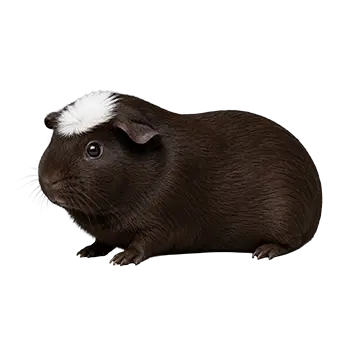

White Crested guinea pigs are active, social animals that need significantly more space than many first-time owners expect. The absolute minimum cage size for a single guinea pig is seven and a half square feet of unbroken floor space, but because White Crested cavies should always be kept with at least one companion, the practical starting point is ten and a half square feet for a pair. These are minimums, not ideals. Guinea pigs that have more room to move exhibit less stress-related behavior, maintain healthier weights, and develop stronger social bonds with their cage mates.
Floor space is far more important than vertical height for guinea pigs. Unlike rats or ferrets, cavies are ground-dwelling animals that do not climb. Multi-level cages with ramps can add enrichment, but the ramps must be wide, gently sloped, and covered with a non-slip surface to prevent falls and foot injuries. A spacious single-level enclosure will almost always serve a guinea pig better than a tall, narrow cage with multiple platforms.
When planning cage placement in your home, consider airflow, temperature, noise, and proximity to household activity. Guinea pigs are sensitive to drafts, direct sunlight, and temperature extremes. The ideal ambient temperature range is sixty-five to seventy-five degrees Fahrenheit. Rooms that receive direct afternoon sun or sit near heating vents can become dangerously warm. Conversely, basements and garages often drop below comfortable temperatures, especially overnight during cooler months.
Traffic patterns matter too. Guinea pigs are prey animals that startle easily, so positioning the cage in a high-traffic hallway or directly beside a television or speaker system can produce chronic stress. A living room corner or a dedicated room where the guinea pigs can observe household activity at a comfortable distance strikes the right balance between socialization and security.