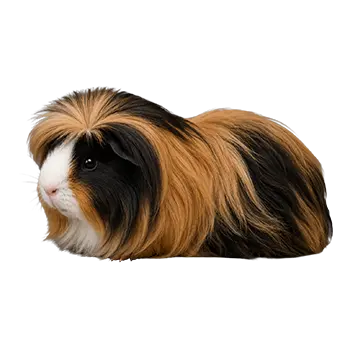

Play Style & Curiosity

Coronet guinea pigs are gentle, curious animals whose play style leans more toward investigation and foraging than high-energy athletics. Unlike hamsters or rats, guinea pigs do not typically use wheels or climb extensively, and their enrichment should reflect their ground-level, exploratory nature. Coronets tend to be slightly more laid-back than some shorter-haired breeds, but they are far from sedentary and benefit enormously from a stimulating environment.

Observing your Coronet's individual preferences is the best way to choose effective toys. Some guinea pigs are enthusiastic paper crinklers, others gravitate toward anything they can push around with their nose, and many are most animated during feeding-related activities. The characteristic popcorning behavior, where a guinea pig leaps and twists in the air, is a reliable indicator that the animal is happy and engaged with its surroundings.

Enrichment is not optional for guinea pigs kept in captivity. Without adequate mental stimulation, guinea pigs can develop boredom-related behaviors such as bar chewing, excessive barbering of their own or a cage mate's fur, and lethargy. For Coronets, whose long coats already require significant grooming attention, barbering is especially concerning because it can create patches that take months to regrow and may indicate underlying stress that needs to be addressed.

Foraging & Food-Based Toys

Foraging enrichment taps into guinea pigs' natural behavior of searching for food across a wide area, and it is consistently one of the most engaging forms of stimulation for cavies. Scattering hay across the enclosure rather than piling it in a single rack encourages movement and exploration. Stuffing hay into toilet paper tubes, paper bags, or willow balls transforms a routine meal into an interactive puzzle that keeps a Coronet busy for extended periods.

Vegetable skewers and hanging treat holders allow you to present fresh food in ways that require the guinea pig to work for each bite. Threading pieces of bell pepper, cucumber, and leafy greens onto a stainless steel skewer or suspending them from a cage-safe clip adds a layer of physical and cognitive challenge to mealtimes. These devices are inexpensive, easy to clean, and can be repositioned regularly to maintain novelty.

Snuffle mats designed for small animals hide treats within layers of fabric strips, encouraging the guinea pig to root around with its nose to find each morsel. For Coronets, choose mats with shorter, wider fabric strips rather than long thin ones that could wrap around or tangle in the flowing coat. After each use, shake the mat out thoroughly and wash it periodically to prevent food residue from accumulating.

Rotating foraging setups every few days prevents habituation and keeps the guinea pig mentally engaged. A simple rotation might include a hay-stuffed paper bag on Monday, scattered herbs in the bedding on Wednesday, and a vegetable skewer on Friday. The goal is to make each day slightly different from the last, mimicking the variability that wild cavies would encounter while grazing across diverse terrain.

Chew Toys & Dental Health

Guinea pig teeth grow continuously throughout their lives, and appropriate chew toys play a supporting role alongside hay in maintaining proper dental wear. Untreated wood chews made from apple, willow, birch, or pear branches are safe and appealing options that most guinea pigs will gnaw on regularly. Avoid wood from cherry, cedar, pine with bark, or any treated or painted lumber, as these can contain toxic compounds.

Woven grass and hay-based chew toys serve double duty as both a dental aid and a source of dietary fiber. Braided timothy hay rings, grass mats, and seagrass twists are widely available and provide a satisfying texture that guinea pigs find hard to resist. These items are fully edible and can be left in the enclosure until they are consumed or become soiled, at which point they should be replaced.

Mineral chews and salt licks are commonly sold for small animals but are generally unnecessary for guinea pigs receiving a balanced diet. Excess mineral intake can contribute to urinary problems, including bladder stones, which are a serious and painful condition in cavies. If you choose to offer a mineral chew, monitor consumption carefully and consult with a veterinarian about whether supplementation is appropriate for your specific animal.

Replace chew toys regularly as they wear down, splinter, or accumulate grime. A chew toy that has been gnawed to a small fragment can become a choking hazard, and damp wood toys may harbor mold or bacteria. Keeping a supply of fresh chew options on hand and rotating them into the cage weekly ensures your Coronet always has something safe and interesting to work on.

Tunnels & Exploration Toys

Tunnels are among the most universally loved toys for guinea pigs, satisfying their instinct to travel through covered pathways that provide overhead protection from perceived predators. Fabric tunnels, rigid plastic tubes, and flexible corrugated tunnels are all popular options. For Coronets, wider-diameter tunnels with smooth interior surfaces are best, as narrow or rough-textured tunnels can mat and tangle the long coat during transit.

Bridges and ramps made from natural wood or smooth plastic give guinea pigs low-level climbing opportunities that stay within their comfort zone. These accessories create varied terrain within the enclosure and can be used to connect different areas or provide elevated vantage points. Ensure that all climbing surfaces have adequate traction and that the height is low enough to prevent injury from falls, as guinea pigs lack the agility and spatial awareness of more acrobatic rodents.

Cardboard boxes with entry holes cut into the sides make excellent temporary exploration toys that can be recycled after a few days of use. Guinea pigs enjoy running in and out of boxes, rearranging them by pushing against the walls, and chewing the edges. Use plain, unprinted cardboard without tape, staples, or adhesive residue. The disposable nature of cardboard toys means you can introduce new configurations frequently without any financial investment.

Playpens and floor time outside the cage provide a change of scenery that is extremely beneficial for guinea pig well-being. A guinea-pig-proofed room or a portable exercise pen set up on a towel or fleece blanket allows supervised exploration in a larger space. Floor time is also an excellent opportunity for socialization and bonding, as many Coronets become more comfortable being handled when they associate lap time with the excitement of out-of-cage adventures.

Social & Companion Enrichment

The single most important form of enrichment for any guinea pig is the company of another guinea pig. Cavies are herd animals with sophisticated social communication that includes a wide vocabulary of vocalizations, scent marking, and body language. A lone guinea pig, no matter how many toys are provided, cannot fully replace the interaction that comes from living with a compatible companion. If keeping multiple guinea pigs is not possible, the owner must invest significantly more time in daily interaction to compensate.

Interactive play sessions with the owner can be deeply rewarding for Coronets, which tend to be among the more people-oriented guinea pig breeds. Hand-feeding treats, gentle petting during lap time, and talking to your guinea pig in a calm, consistent voice all strengthen the human-animal bond. Many Coronets learn to recognize their owner's voice and will vocalize excitedly in response, particularly when they associate the sound with feeding time or floor time.

Mirrors are sometimes recommended as enrichment for solitary guinea pigs, but their effectiveness is debatable and they are not a substitute for a live companion. Some guinea pigs are intrigued by their reflection and may interact with it briefly, while others show no interest or become stressed by the perceived presence of an unfamiliar animal. If you choose to try a mirror, use a shatter-proof version and observe your guinea pig's reaction carefully before leaving it in the enclosure permanently.

Audio enrichment, such as quiet background music or nature sounds, can have a calming effect on guinea pigs during times when the household is empty. Studies on environmental enrichment for captive animals suggest that low-volume classical or ambient music may reduce stress behaviors. Avoid sudden loud sounds, heavy bass, or placing speakers directly against the cage, as guinea pigs have sensitive hearing and can be easily startled.

DIY & Budget Options

Many of the most effective guinea pig toys cost nothing at all and can be assembled from household materials in minutes. Paper lunch bags filled with hay and crumpled loosely make excellent foraging toys that guinea pigs will push around, climb into, and shred with obvious enthusiasm. Toilet paper and paper towel rolls can be stuffed with hay or cut into rings and linked together to create chew chains. Always use plain, unbleached paper products without ink, glue, or fragrance.

A simple fleece forest can be made by cutting strips of anti-pill fleece and attaching them to a dowel or zip-tied grid section suspended low over one area of the enclosure. Guinea pigs enjoy walking through the hanging strips, which provide a tactile sensory experience and a sense of partial concealment. For Coronets, use wider strips and ensure they are cut cleanly so threads do not wrap around or tangle in the guinea pig's coat.

Rearranging the furniture within the cage is a zero-cost enrichment strategy that is surprisingly effective. Moving hideouts, hay racks, and tunnels to new positions every week or two gives the guinea pig a fresh environment to explore and map. Guinea pigs are creatures of habit, so changes should be moderate rather than drastic to avoid causing anxiety. Swapping the positions of two familiar items is often enough to spark renewed curiosity.

Creating an obstacle course during floor time using books, boxes, and rolled towels as barriers encourages physical activity and problem-solving. Scatter small treats along the course to motivate exploration. These sessions do not need to be elaborate or time-consuming; even fifteen minutes of guided exploration in a novel setup provides meaningful mental and physical exercise for a Coronet guinea pig.

Always consult a qualified professional before making any health-related decisions. This content is provided for informational reference only and should not replace professional guidance specific to your animal.