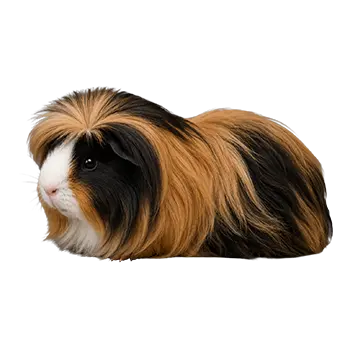

Coronet guinea pigs need spacious enclosures that allow for comfortable movement, exercise, and the separation of living zones for eating, sleeping, and eliminating. The minimum recommended floor space for a single guinea pig is seven and a half square feet, but Coronets benefit from even more room because their long coats drag along the floor and pick up debris more readily in cramped quarters. A larger cage reduces coat contamination and gives the animal more clean ground to move across.
Because guinea pigs are social animals that should ideally be kept in pairs or small groups, space requirements scale accordingly. Two guinea pigs need at least ten and a half square feet of floor space, and each additional animal requires roughly three to four more square feet. Overcrowding leads to stress, territorial aggression, and unsanitary conditions that are particularly problematic for long-haired breeds susceptible to skin infections and matting.
Floor space matters far more than vertical height for guinea pigs, which are ground-dwelling animals that do not climb. Multi-level cages with ramps can supplement floor area but should not be counted as a substitute for adequate ground-level space. Ramps must have gentle inclines and solid flooring with side rails, as guinea pigs are not agile climbers and can injure themselves on steep or wire-surfaced ramps.
When planning placement within your home, choose a location away from direct sunlight, heating vents, and drafty windows. Guinea pigs are sensitive to temperature extremes and do best in environments kept between sixty-five and seventy-five degrees Fahrenheit. The enclosure should be in a room where the family spends time, since social interaction is important for guinea pig well-being, but not in a space with constant loud noise or high foot traffic that could cause chronic stress.