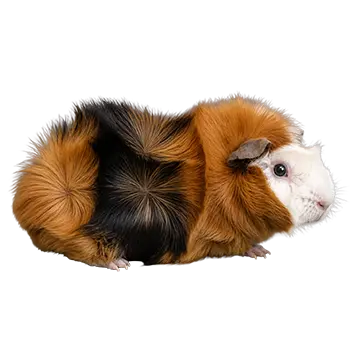

The Abyssinian's distinctive rosette coat requires more grooming attention than smooth-coated breeds, though it is still far less demanding than the long coats of Peruvians or Silkies. The rough, whorled hair pattern can trap bedding particles, hay fragments, and debris more readily than a flat coat, making regular brushing a practical necessity rather than a cosmetic luxury.
A soft-bristle brush or a small rubber grooming mitt is the ideal primary tool for an Abyssinian. Stiff slicker brushes designed for dogs or cats are too aggressive for guinea pig skin and can cause irritation or micro-abrasions. Brush gently in the direction of each rosette's natural growth pattern — fighting against the whorls will be uncomfortable for the guinea pig and ineffective for removing debris. Most Abyssinians tolerate brushing well once they are accustomed to it, and many come to enjoy it as a bonding activity.
Nail trimmers are an essential grooming accessory that every guinea pig owner must have on hand. Guinea pig nails grow continuously and need trimming every three to four weeks. Small animal nail clippers with a scissor-style action provide the most control. A styptic powder or cornstarch should always be nearby in case you accidentally cut the quick — a mistake that is almost inevitable at some point and causes brief bleeding that, while alarming, is easily managed.
Bathing should be infrequent and only done when genuinely necessary — perhaps two or three times per year unless the guinea pig has a specific skin condition that requires more frequent washing. When you do bathe, use a shallow basin of lukewarm water and a gentle shampoo formulated for small animals. Dry the guinea pig thoroughly afterward, as a damp coat can lead to chilling and respiratory issues. The Abyssinian's textured coat takes longer to dry than a smooth coat, so have extra towels ready and consider a low-heat hair dryer held at a safe distance.