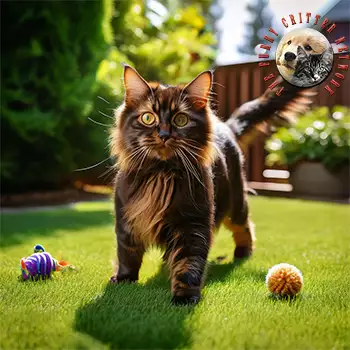

Grooming Tools

The York Chocolate's semi-long, silky coat is one of the breed's defining features, and maintaining it requires a deliberate grooming toolkit rather than a single all-purpose brush. Unlike the dense double coats found on breeds like the Persian or Maine Coon, the York Chocolate's coat is single-layered with a fine, flowing texture that is less prone to severe matting but still tangles around the armpits, behind the ears, and along the hindquarters if neglected. A stainless-steel wide-tooth comb is the most essential tool, effective at detecting and gently working through small tangles before they tighten into mats.

A slicker brush with fine, angled pins is the second core tool. Used after combing, the slicker removes loose undercoat and distributes natural oils along the hair shaft, which is what gives the York Chocolate's coat its characteristic sheen. Brushing should follow the direction of hair growth and use light pressure — the pins on a slicker brush can scratch the skin if pressed too firmly. For the areas around the face and ears where the coat is shorter and more sensitive, a soft-bristle brush or rubber grooming mitt provides a gentler alternative.

Nail clippers or grinders are a grooming essential that extends beyond coat care. York Chocolates that use scratching posts regularly may wear their front claws down naturally, but the rear claws and the dewclaws receive far less mechanical wear and will need trimming every two to three weeks. Guillotine-style clippers work well for most cats, though scissor-style clippers offer more precision for owners who are less experienced. A styptic powder or pen should always be on hand in case a nail is trimmed too short and the quick is nicked.

Ear cleaning supplies round out the grooming kit. The York Chocolate's moderately sized ears with tufted interiors can accumulate wax and debris, particularly in humid environments. A veterinarian-approved ear cleaning solution and cotton balls or gauze pads are sufficient for routine maintenance. Cotton swabs should never be inserted into the ear canal, as they risk pushing debris deeper or damaging the delicate structures of the inner ear. A weekly visual inspection and cleaning as needed keeps the ears healthy without over-intervention.

Collars, Harnesses & Identification

Even for strictly indoor cats, a collar with identification is a basic safety measure. Doors get left open, screens tear, and curious York Chocolates are more likely than many breeds to investigate an escape opportunity. A breakaway collar — designed to release under pressure if the cat becomes snagged — is the only safe collar type for cats. Standard buckle collars pose a strangulation risk if the cat catches the collar on furniture, a fence, or a branch.

Identification options include traditional engraved tags, slide-on ID plates that lie flat against the collar to reduce snagging, and microchip technology. A microchip implanted between the shoulder blades provides permanent identification that cannot be lost or removed, but it requires a scanner to read and does not provide visual identification to a person who finds the cat. The most effective identification strategy combines a microchip with a visible tag that includes the owner's phone number, creating redundancy that maximizes the chances of a lost cat being returned.

Harnesses open the possibility of supervised outdoor excursions on a leash, which many York Chocolates enjoy given their curious and social temperament. The harness must fit correctly — snug enough that the cat cannot back out of it, but loose enough to allow normal breathing and movement. An H-style or figure-eight harness distributes pressure across the chest rather than the throat, which is critical for a cat that may suddenly lunge or pull. A vest-style harness offers even broader pressure distribution and is often more comfortable for extended walks.

Leash training should begin indoors in a familiar environment before venturing outside. Let the cat wear the harness for short periods inside the house, rewarding calm behavior with treats. Once the cat is comfortable with the harness, attach a lightweight leash and allow the cat to walk freely indoors, dragging the leash behind it. Only after the cat shows no stress with the harness and leash combination should outdoor sessions begin, starting in a quiet, enclosed area and gradually expanding the range as the cat's confidence grows.

Carriers & Travel Gear

A carrier is not optional equipment — it is a safety device required for veterinary visits, emergencies, and any form of travel. For a York Chocolate weighing up to 16 pounds, the carrier must be spacious enough for the cat to stand, turn around, and lie down comfortably. Hard-shell carriers with a top-loading option are generally preferred by veterinarians because they allow the cat to be examined while remaining in the bottom half of the carrier, reducing stress during clinical visits.

Carrier acclimation is one of the most impactful things an owner can do to reduce travel-related anxiety. Most cats associate the carrier exclusively with stressful events because it only appears when a vet visit is imminent. Leaving the carrier out in the home as a permanent piece of furniture — with the door open, a comfortable pad inside, and occasional treats placed in it — transforms the carrier from a threat into a familiar resting spot. York Chocolates that sleep in their carriers voluntarily will enter them with dramatically less resistance when travel is required.

For car travel beyond short veterinary trips, additional accessories improve safety and comfort. A seatbelt strap that secures the carrier to the vehicle's seat belt anchor prevents the carrier from sliding or becoming a projectile during sudden stops. A carrier cover or towel draped over the top reduces visual stimulation that can heighten anxiety during the drive. Familiar-scented bedding from the cat's primary sleeping area placed inside the carrier provides olfactory comfort in an otherwise unfamiliar environment.

Air travel introduces a more complex set of requirements. Most airlines that permit in-cabin pet travel have specific carrier dimension limits, typically requiring the carrier to fit beneath the seat in front of the passenger. Soft-sided carriers with mesh ventilation panels are generally required for cabin travel and are more adaptable to the under-seat space constraint than rigid carriers. Checking airline-specific pet policies well in advance of booking is essential, as regulations regarding breed restrictions, health certificate requirements, and carrier specifications vary significantly between carriers and between domestic and international routes.

Feeding Accessories

The bowl a York Chocolate eats from affects both eating behavior and long-term health more than most owners realize. Shallow, wide bowls are strongly preferred over deep, narrow ones. Cats have sensitive whiskers that can become overstimulated when they repeatedly press against the sides of a deep bowl during eating — a phenomenon informally called whisker fatigue. Persistent whisker contact with bowl walls can cause discomfort and reluctance to eat, which is sometimes misinterpreted as food pickiness.

Material matters. Stainless steel and ceramic are the two best options for cat food bowls. Stainless steel is non-porous, dishwasher safe, and resistant to harboring bacteria. Ceramic offers similar hygiene benefits and adds weight that prevents the bowl from sliding across the floor during enthusiastic eating. Plastic bowls should be avoided — they scratch easily, and the microscopic grooves harbor bacteria that can contribute to feline chin acne, a condition to which some York Chocolates are susceptible.

Water delivery is equally important. Many cats prefer running water to standing water in a bowl, and water fountains designed for cats address this preference while also encouraging increased fluid intake. A fountain with a ceramic or stainless steel basin, a replaceable charcoal filter, and a quiet submersible pump provides fresh, filtered water continuously. The sound and movement of flowing water attract the cat's attention and promote drinking, which is especially beneficial for breeds like the York Chocolate that may not voluntarily drink enough from a static bowl.

Elevated feeding stations raise the food and water bowls to a height that allows the cat to eat in a more natural head-and-neck position. For larger cats like the York Chocolate, eating from bowls on the floor requires sustained neck flexion that can contribute to swallowing air and subsequent vomiting, particularly in cats that eat quickly. A raised platform or purpose-built elevated feeder brings the bowl to chest height, promoting a more comfortable posture and reducing the speed of ingestion.

Scratching Solutions

Scratching is a non-negotiable feline behavior that serves multiple functions: it conditions the claws by removing dead outer sheaths, stretches the muscles of the shoulders and forelegs, and deposits scent markers from glands in the paw pads. Attempting to eliminate scratching through punishment or declawing is both ineffective and harmful. The correct approach is to provide appropriate scratching surfaces that meet the cat's instinctive preferences and redirect the behavior away from furniture.

Most York Chocolates show a preference for either vertical or horizontal scratching surfaces, and some use both. Vertical scratching posts must be tall enough for the cat to stretch its full body length while reaching upward — at least 32 inches for this breed — and stable enough to resist tipping when the cat puts its full weight against the surface. A post that wobbles or falls over during use will be abandoned in favor of the sofa, which is essentially a heavy, stable vertical surface that does not move.

Surface material is a matter of individual preference, but sisal rope and sisal fabric are the most universally accepted textures among domestic cats. Sisal provides the right amount of resistance for effective claw conditioning and produces a satisfying shredding sensation that carpet-covered posts do not replicate. Corrugated cardboard scratchers are also popular, particularly in horizontal or angled configurations. They are inexpensive enough to be replaced regularly as they wear down and can be enhanced with catnip or silvervine to increase their appeal.

Strategic placement of scratching surfaces is at least as important as selecting the right product. Cats naturally scratch upon waking, so placing a scratcher near the cat's primary sleeping area captures this habitual behavior immediately. Scratching also serves a territorial marking function, so surfaces near doorways, room entrances, and along common travel paths within the home receive more use than those tucked into corners. If a York Chocolate is already scratching a particular piece of furniture, placing an appropriate scratcher directly adjacent to that item and gradually moving it to a preferred location is more effective than simply adding scratchers in random spots.

Comfort & Calming Products

York Chocolates are generally confident and adaptable, but situational stressors — veterinary visits, household moves, new family members, or changes in routine — can produce anxiety-related behaviors including hiding, over-grooming, appetite loss, and inappropriate elimination. Calming products are designed to mitigate these responses and should be viewed as temporary support tools rather than permanent behavioral solutions.

Synthetic pheromone diffusers are among the most evidence-supported calming products available. These plug-in devices release a synthetic analog of the feline facial pheromone that cats deposit when they rub their cheeks against objects, a behavior associated with feelings of security and familiarity. Placing a diffuser in the room where the cat spends the most time can reduce stress-related behaviors during transitional periods. The diffuser should be plugged into an open outlet, not behind furniture where airflow is restricted, and the refill cartridge typically lasts about 30 days.

Calming collars and sprays offer portable alternatives to plug-in diffusers. Pheromone-infused collars provide continuous exposure as the cat moves through the home, which can be more practical in multi-room environments or during travel. Calming sprays can be applied directly to bedding, carrier interiors, or specific areas where the cat shows stress. These products are not sedatives and do not alter the cat's alertness or behavior beyond reducing the physiological stress response.

Weighted blankets and anxiety wraps designed for cats apply gentle, sustained pressure that can have a calming effect similar to swaddling in human infants. These products work on the principle of deep pressure stimulation, which activates the parasympathetic nervous system and promotes relaxation. Not every cat responds to pressure-based calming, and the product should be introduced gradually to ensure the cat does not feel trapped or restrained. For York Chocolates that do respond positively, a compression wrap can be a valuable tool during thunderstorms, fireworks, or other acute stressor events.

Seasonal & Weather Accessories

While York Chocolates are primarily indoor cats, seasonal changes in temperature, humidity, and daylight affect their comfort and behavior even within a climate-controlled home. During summer months, cooling mats — gel-filled pads that absorb body heat — provide a welcome temperature-regulation option. These mats activate through pressure and do not require refrigeration or electricity, making them a simple, passive way to offer the cat a cool resting surface during hot weather. Placing a cooling mat in the cat's preferred sleeping area gives it the option to use the mat when it feels warm without forcing it to change its routine.

Winter brings the opposite challenge. York Chocolates have a single-layer coat without the dense undercoat that provides insulation for breeds developed in cold climates. In homes where temperatures drop at night or in rooms with poor insulation, the cat may seek heat sources that are not always safe — radiators, stovetops, or electronics. Providing a designated heated bed or self-warming pad that reflects body heat gives the cat a safe, comfortable warm spot. Self-warming pads use a layer of reflective material inside a padded bed to retain the cat's own body heat without any electrical components, eliminating fire and shock risks.

Humidity fluctuations can affect the York Chocolate's skin and coat condition. Dry winter air in heated homes can lead to static electricity buildup in the semi-long coat, dry skin, and increased dander production. A room humidifier set to maintain relative humidity between 40% and 60% benefits both the cat and the human occupants of the home. Conversely, excessively humid conditions during summer can promote fungal skin infections and ear problems, so monitoring humidity and using dehumidification when necessary protects the cat's health.

For York Chocolates that enjoy supervised outdoor time via a catio or leash walks, weather-specific gear extends the usable season. A lightweight, breathable cat vest can provide sun protection for cats with lighter lavender coats that may be more susceptible to UV exposure. Reflective harness attachments or LED collar lights improve visibility during dusk and dawn walks when lighting conditions make a dark-coated cat difficult for motorists and cyclists to see. Paw wax applied before winter walks protects paw pads from ice-melt chemicals and cold pavement, though most cats require a gradual desensitization process before they accept the application.

Always consult a qualified professional before making any health-related decisions. This content is provided for informational reference only and should not replace professional guidance specific to your animal.