
Play Style & Preferences

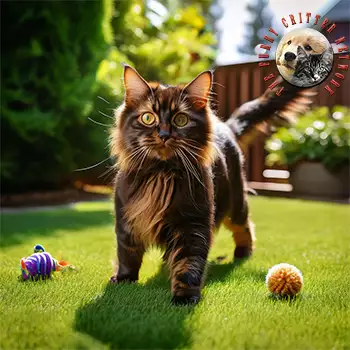
Understanding the York Chocolate's natural play style is essential to selecting toys that will actually get used rather than ignored after the first day. This breed is a hunter at heart, with a strong prey drive that manifests in stalking, pouncing, and batting behaviors. Unlike some breeds that prefer solitary play, York Chocolates are highly social players that seek interaction with their owners during play sessions. A toy that facilitates shared play between cat and human will almost always outperform one that relies entirely on the cat's self-motivation.

The breed's intelligence adds a cognitive dimension to play that goes beyond simple physical chase. York Chocolates tend to lose interest in toys that offer no variability or challenge. A mouse toy that moves in the same predictable pattern will engage the cat for a few sessions before it is dismissed as solved. Toys that offer unpredictable movement, hidden rewards, or escalating difficulty levels hold this breed's attention far longer because they continuously stimulate the problem-solving instincts that define the York Chocolate's mental character.

Play intensity varies with age and individual temperament, but most York Chocolates maintain a playful disposition well into their senior years. Kittens and young adults tend toward high-energy, acrobatic play — leaping, twisting mid-air, and sprinting at full speed. Older cats often shift toward more calculated, stalking-focused play that requires less explosive movement but still satisfies the hunting instinct. Adjusting the toy selection as the cat ages keeps play relevant and physically appropriate throughout its life.

Timing also influences play quality. Cats are crepuscular, meaning their peak activity periods occur at dawn and dusk. Scheduling play sessions during these natural energy peaks results in more enthusiastic engagement and more effective energy expenditure. A 15-minute interactive play session before the evening meal mimics the natural hunt-catch-eat cycle and can significantly reduce nighttime restlessness, which is a common complaint among owners of active breeds.

Interactive Toys

Interactive toys that require human participation are the cornerstone of enrichment for York Chocolates. Wand toys — consisting of a rod, string, and attached lure — are the gold standard for interactive cat play. They allow the owner to simulate the erratic movement patterns of prey animals, triggering the full predatory sequence of stare, stalk, crouch, pounce, and capture. The best wand toys use feather, fur, or crinkle attachments that provide tactile and auditory feedback when the cat makes contact.

The technique behind using a wand toy matters as much as the toy itself. Moving the lure away from the cat rather than toward it engages the chase instinct more effectively. Varying the speed — slow, creeping movements interspersed with sudden darts — mimics the behavior of real prey and keeps the cat locked in. Allowing the cat to catch the lure periodically is critical; a play session where the cat never succeeds is frustrating rather than enriching. The ideal ratio is roughly one successful capture for every three to four chase sequences.

Laser pointers are popular but come with a significant caveat for a breed as intelligent as the York Chocolate. The inability to ever physically catch the light dot can lead to frustration and obsessive behavior in some individuals. If a laser pointer is used, it should always end with the dot landing on a physical toy or treat that the cat can catch and "kill" to provide closure to the hunting sequence. Some behaviorists recommend avoiding laser pointers entirely for breeds with strong prey drives and substituting them with light-up ball toys that the cat can physically capture.

Motorized and battery-operated interactive toys fill a gap when the owner is unavailable for hands-on play. Robotic mice, fluttering butterfly toys, and track-mounted spinning balls can provide solo entertainment for a York Chocolate between interactive sessions. These work best as supplements rather than replacements for human-directed play. The breed's social nature means that even the most sophisticated automated toy cannot fully substitute for the engagement of shared play with a trusted person.

Puzzle & Enrichment Toys

Puzzle toys transform passive downtime into cognitive exercise, and they are particularly well-suited to the York Chocolate's inquisitive temperament. Food-dispensing puzzles — where the cat must manipulate sliding doors, lift covers, or paw through openings to access hidden treats — engage problem-solving skills and slow down eating simultaneously. For a breed that is both food-motivated and mentally sharp, these toys can provide 20 to 30 minutes of focused engagement per session.

Difficulty progression keeps puzzle toys effective over time. Most puzzle toy lines offer beginner, intermediate, and advanced models. Starting a York Chocolate on the easiest level and advancing as the cat masters each stage prevents the frustration that comes from a puzzle that is too difficult and the boredom that comes from one that is too simple. Many owners maintain a rotating collection of three to four puzzles at different difficulty levels, swapping them in and out on a weekly basis to sustain novelty.

Snuffle mats — fabric mats with deep pockets, folds, and strips where dry food or treats are hidden — offer a lower-tech but equally effective form of foraging enrichment. The cat uses its nose and paws to root through the fabric and locate hidden food, simulating the scavenging behavior that would occupy a significant portion of a wild cat's day. Snuffle mats are particularly useful for York Chocolates that eat too quickly, as the search-and-retrieve process naturally slows food consumption.

DIY puzzle options can be as effective as commercial products. A muffin tin with treats placed in individual cups and covered with tennis balls creates a simple foraging challenge. Cardboard boxes with holes cut in the sides and toys or treats placed inside give the cat a destruction-based puzzle that satisfies both mental and physical drives. The York Chocolate's willingness to engage with novel objects makes this breed especially responsive to homemade enrichment setups that can be assembled from household materials at no cost.

Chase & Hunting Toys

Chase toys tap directly into the York Chocolate's predatory wiring and provide the explosive physical exercise that keeps this breed lean and muscularly toned. Spring-loaded mice that launch unpredictably, crinkle balls that skitter across hard floors, and feathered toys on elastic strings all trigger the pursuit reflex. The most effective chase toys are lightweight enough to move with realistic speed and direction changes when batted by the cat, sustaining the illusion of live prey.

Kicker toys — elongated plush toys designed for the cat to grab with its front paws and rake with its hind claws — satisfy the capture-and-kill phase of the hunting sequence that chase alone does not complete. York Chocolates often develop strong attachments to specific kicker toys and will carry them around the house, wrestle with them, and use them as comfort objects. Kicker toys stuffed with catnip or silvervine tend to elicit the most vigorous response, though individual sensitivity to these attractants varies.

Track toys — enclosed circular or figure-eight tracks with a ball that rolls inside — provide self-directed chase stimulation. The ball is visible and paw-accessible through openings in the track but cannot be removed, which means the cat can bat it into motion and chase it indefinitely without losing the toy under furniture. Higher-quality track toys use multiple tiers or illuminated balls to add visual interest. While they are not a substitute for interactive play, track toys give the York Chocolate a reliable outlet for solo chase behavior between human-directed sessions.

Fluttering and flying toys that mimic bird or insect movement are among the most stimulating options for this breed. Battery-operated toys with rotating feathers or wings that lift and drop unpredictably trigger leaping and aerial pouncing. These toys are best used under supervision because the moving parts are often fragile, and a York Chocolate that catches and chews the attachment can ingest small feathers or plastic components. Replacing worn attachments promptly and storing these toys out of reach between sessions extends their lifespan and protects the cat.

Climbing & Exercise Toys

Climbing is one of the York Chocolate's primary forms of exercise, and products that facilitate vertical movement serve both physical fitness and environmental enrichment goals. Wall-mounted climbing systems — comprising shelves, steps, bridges, and platforms attached directly to walls — turn unused vertical space into a functional feline gymnasium. These systems allow the cat to traverse an entire room at height, moving from shelf to shelf above the heads of the humans below.

Cat wheels, also called exercise wheels or treadmills, have gained popularity as a solution for indoor exercise. These large-diameter wheels allow the cat to run at full speed in a sustained fashion, providing cardiovascular exercise that no other indoor product can replicate. York Chocolates, with their athletic build and willingness to learn trained behaviors, are often good candidates for wheel running. Training typically involves luring the cat onto the wheel with treats and gradually building comfort with the motion, a process that may take days to weeks depending on the individual.

Cat tunnels — collapsible fabric or crinkle-material tubes — offer a different kind of physical engagement. Cats instinctively enjoy running through enclosed spaces, and a tunnel connected to a play area or positioned along a common travel route gets consistent use. Pop-up tunnels with multiple exits and internal crinkle layers are especially effective because the sound and texture feedback rewards the cat for entering and moving through the tunnel. Connecting two or more tunnels or linking them to a cat tree creates a more complex course.

Agility equipment adapted for cats is a niche but growing product category. Hurdles, weave poles, and hoop jumps can be set up indoors and used during interactive play sessions to build coordination, confidence, and physical fitness. York Chocolates respond well to clicker training, and teaching an agility sequence combines cognitive enrichment with physical exercise in a structured format. This type of activity is demanding for the owner as well, requiring consistent training sessions, but the bond-building benefits and the visible improvement in the cat's skills make it rewarding for both parties.

Catnip, Silvervine & Attractants

Catnip is the most widely known feline attractant, and it can significantly enhance the appeal of toys for York Chocolates that are genetically responsive to it. The active compound in catnip, nepetalactone, triggers a euphoric response in approximately 60–70% of cats when inhaled. The response typically involves rolling, rubbing, purring, and heightened playfulness lasting 5 to 15 minutes, followed by a refractory period of roughly 30 minutes to two hours during which the cat is unresponsive to further exposure.

Silvervine, derived from the Actinidia polygama plant native to East Asia, affects a broader percentage of cats than catnip and produces a more intense response in many individuals. Research has shown that approximately 80% of cats respond to silvervine, including a significant portion that show no reaction to catnip. For York Chocolate owners whose cats are catnip-indifferent, silvervine is the most reliable alternative. It is available in powder, stick, and spray forms and can be applied to existing toys to refresh their appeal.

Valerian root is a third attractant that operates through a different mechanism than catnip or silvervine. The active compounds in valerian — particularly actinidine — produce a stimulating effect in many cats. Valerian has a strong, pungent odor that some humans find unpleasant, which limits its use in shared living spaces. However, for cats that respond to it, valerian-infused toys can provide a powerful play motivator. Storing valerian toys in sealed containers between uses prevents the scent from permeating the home.

Regardless of which attractant a York Chocolate prefers, the key to maintaining its effectiveness is controlled exposure. Leaving catnip or silvervine toys out continuously leads to habituation, where the cat becomes desensitized and stops responding. Rotating attractant-enhanced toys into the play rotation every few days and storing them in sealed bags or containers between uses preserves the novelty response. Refreshing dried catnip toys with a few drops of catnip spray or a sprinkle of fresh dried herb can restore their potency when the original fill begins to lose its scent.

Toy Safety & Rotation

Toy safety is a non-negotiable consideration, and the York Chocolate's enthusiastic play style increases the risk of toy-related injuries or ingestion hazards. Small detachable parts — button eyes on plush toys, tiny bells, or thin ribbons — can be chewed off and swallowed, creating a choking hazard or intestinal obstruction. Inspecting toys regularly for loose components, frayed strings, and exposed internal stuffing is a basic maintenance task that should become part of the weekly routine.

String and ribbon toys deserve particular caution. Linear foreign bodies — strings, yarn, elastic bands, and tinsel — are among the most dangerous items a cat can ingest. If one end of a string becomes anchored in the digestive tract while peristalsis continues to pull the rest through, the string can saw through intestinal walls, creating a life-threatening surgical emergency. Wand toys and string-based toys should be stored out of reach when not in active use, and the cat should never be left unsupervised with any toy that includes string or elastic cord.

Toy rotation is a strategic approach to maintaining engagement without constantly purchasing new products. The principle is simple: rather than making all toys available simultaneously, keep a selection of five to seven toys in active rotation and store the rest. Every three to five days, swap a few toys from the active set with stored ones. The reintroduced toys are perceived as novel, reigniting interest that would otherwise fade from overexposure. This approach is especially effective for York Chocolates, whose intelligence means they habituate to predictable stimuli faster than less cognitively engaged breeds.

Retiring damaged toys promptly prevents the accumulation of hazards. A plush mouse with exposed stuffing, a wand toy with a fraying string, or a ball with a cracked shell should be discarded and replaced rather than repaired with tape or glue that may itself become an ingestion risk. Building a baseline inventory of durable, well-constructed toys and replacing items as they wear out ensures that the cat always has access to safe, engaging play options without the owner needing to conduct a full safety audit before each play session.

Always consult a qualified professional before making any health-related decisions. This content is provided for informational reference only and should not replace professional guidance specific to your animal.