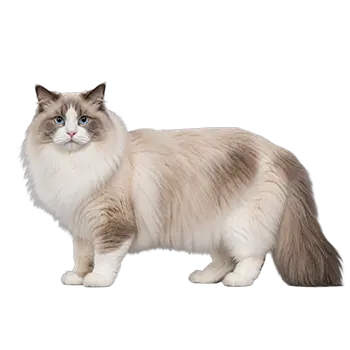

Play Style & Drive

Ragamuffins are not the most high-energy cats, but they are more playful and engaged than their calm demeanor might suggest. They tend toward gentle, curious play rather than intense predatory bursts, and many retain a kitten-like willingness to interact well into adulthood. Understanding this play style helps you select toys that match their temperament rather than frustrate them with overly demanding activities.

This breed often enjoys social play more than solitary hunting games. Ragamuffins are known to follow their owners from room to room and will happily participate in interactive play sessions that involve human participation. Toys that create a shared experience — wand toys, laser pointers used alongside conversation, or tossed objects — tend to get more sustained attention than toys left out for independent use.

Despite their relaxed nature, Ragamuffins still need regular play to maintain a healthy weight and prevent boredom-related behavior issues. Two to three dedicated play sessions of ten to fifteen minutes each day is a good baseline. These sessions do not need to be vigorous — even gentle batting at a dangling toy or slow-paced puzzle solving counts as meaningful engagement.

Pay attention to what captures your individual cat's interest. Some Ragamuffins are drawn to feathered toys, others prefer crinkly textures, and some are most motivated by treat-dispensing puzzles. Rotating toys in and out of availability every few days keeps the novelty factor high and prevents habituation.

Interactive & Puzzle Toys

Puzzle toys are an excellent fit for Ragamuffins because they engage the brain without requiring explosive physical activity. Treat-dispensing balls, sliding tile puzzles, and multi-chamber foraging boards all encourage the cat to work for a reward, which provides mental stimulation and slows down eating for cats prone to gulping food.

Start with simple puzzles and increase complexity gradually. A basic treat ball with a single opening is a good entry point. Once your Ragamuffin masters it, move to puzzle boards with multiple compartments, sliding covers, or stacking elements. Frustration tolerance varies between individual cats, so watch for signs of disengagement and dial back difficulty if needed.

Interactive toys that respond to the cat's actions — rolling balls that change direction on impact, wobble toys that right themselves after being batted, or motion-activated toys that chirp or flutter — can keep a Ragamuffin entertained during periods when you are busy. These work best as supplements to hands-on play rather than replacements for it.

Food puzzles can also be integrated into meal times as a form of daily enrichment. Instead of placing kibble in a bowl, scatter it across a puzzle mat or load it into a foraging toy. This turns a routine activity into a stimulating challenge and can help manage portion control for cats that tend to overeat.

Wand Toys & Teasers

Wand toys are arguably the most effective play tool for Ragamuffins because they combine physical movement with the social interaction this breed craves. A simple rod with a feather, ribbon, or small plush attachment at the end allows you to simulate prey movement in ways that trigger your cat's natural hunting instincts, even in a low-key predator like the Ragamuffin.

Vary the movement pattern to keep things interesting. Drag the lure slowly along the ground, then lift it in short hops. Let it rest and twitch, then pull it behind a piece of furniture and out the other side. Mimicking the unpredictable movement of real prey is far more engaging than repetitive back-and-forth sweeps.

Quality matters with wand toys because a Ragamuffin's weight and grip can snap flimsy rods or pull apart cheap attachments. Look for wands with flexible fiberglass or reinforced plastic shafts and securely fastened lure components. Replaceable attachment heads are practical since the lure end wears out faster than the wand itself.

Always store wand toys out of reach when not in use. Unsupervised play with string, ribbon, or elastic attachments poses a serious ingestion hazard. Swallowed string can cause life-threatening intestinal blockages. Keep these toys in a drawer or closet and bring them out only for supervised sessions.

Catnip & Sensory Toys

Most Ragamuffins respond well to catnip, though sensitivity is genetic and roughly thirty to fifty percent of all cats show no reaction. If your cat does respond, catnip-infused toys can provide bursts of excited play followed by a pleasant calm-down period. Loose dried catnip can also be sprinkled on scratching posts or bedding to encourage use of those surfaces.

Silvervine and valerian root are alternative attractants that may appeal to cats that are indifferent to catnip. Silvervine in particular has been shown to elicit a response in a higher percentage of cats than catnip alone. Toys stuffed with a blend of multiple attractants give you the best chance of finding something your Ragamuffin enjoys.

Crinkle toys, which make a crinkling sound when touched, appeal to the Ragamuffin's curiosity-driven play style. The sound mimics the rustling of small animals in leaves or paper, and many cats find it irresistible. Crinkle balls, crinkle tunnels, and plush toys with internal crinkle material are all widely available.

Texture variety also provides sensory enrichment. Offer toys made from different materials — felt, fleece, sisal, rubber, and feather — so your cat can explore different tactile sensations. Some Ragamuffins develop strong preferences for certain textures, and knowing your cat's favorites helps you select toys they will actually use rather than ignore.

Comfort & Companion Toys

Ragamuffins are notably affectionate and can form attachments to soft plush toys that serve as comfort objects. Some cats will carry a favorite plush around the house, knead on it, or sleep curled around it. Providing a few well-made plush toys can satisfy this nurturing instinct and offer comfort during times when their owner is away.

Choose plush toys that are specifically designed for cats rather than repurposing children's stuffed animals. Cat-specific plush toys are made without small parts like button eyes or sewn-on accessories that could be chewed off and swallowed. Reinforced seams and durable fabrics withstand the kneading and bunny-kicking that many cats subject their favorites to.

Kickable toys — elongated plush shapes roughly the size of the cat's body — are designed for the hind-leg kicking behavior cats exhibit during play. This behavior mimics a predatory grapple and provides good exercise for the core and hind limbs. Many Ragamuffins enjoy wrapping around a kick toy and giving it a thorough workout.

Washability is essential for any comfort toy that sees heavy use. Look for toys that can survive machine washing without falling apart, as plush toys accumulate saliva, fur, and oils over time. Having two or three favorites in rotation allows you to wash one while the others remain available.

DIY & Budget Options

Some of the most engaging cat toys cost nothing at all. A crumpled ball of paper, a cardboard box with holes cut in the sides, or a paper grocery bag with the handles removed can provide extended entertainment for a curious Ragamuffin. These simple items appeal to a cat's love of exploration and novel textures without any investment.

Cardboard boxes deserve special mention because they serve multiple purposes — hiding spots, scratching surfaces, play objects, and sleep retreats. Cut entry and exit holes in different sides, stack multiple boxes together, or place a box on its side with a blanket draped over part of the opening to create an instant fort. Replace boxes as they wear down, which also resets the novelty factor.

DIY puzzle feeders can be made from items you already have. A muffin tin with kibble placed in the cups and tennis balls set on top creates a foraging challenge. A cardboard tube from a paper towel roll with the ends partially folded closed and a few treats inside becomes a roll-and-retrieve toy. An egg carton with treats placed in the compartments works as a simple dig-and-find puzzle.

While DIY toys are a great supplement, always supervise play with improvised items and discard anything that becomes small enough to swallow or develops sharp edges from chewing. Avoid using aluminum foil, rubber bands, hair ties, or plastic bags as toys — these common household items pose choking or intestinal blockage risks. Safety should guide every DIY toy decision.

Always consult a qualified professional before making any health-related decisions. This content is provided for informational reference only and should not replace professional guidance specific to your animal.