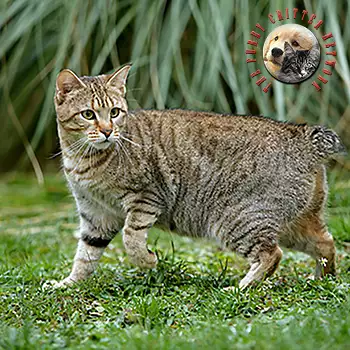

Play Style & Drive

The Pixie-Bob's play style reflects its reputation as one of the most dog-like cat breeds. These cats frequently engage in fetch, follow their owners from room to room, and respond to interactive play with an enthusiasm that outlasts many other breeds. Their moderate-to-high energy level means daily play sessions are not optional enrichment but a genuine need — a bored Pixie-Bob channels its intelligence into behaviors that owners find far less charming than a game of chase.

Prey drive in Pixie-Bobs tends to be strong and well-developed. They are natural stalkers and pouncers, and their play mimics the full predatory sequence: detect, stalk, chase, pounce, and capture. Effective toys activate this entire chain rather than skipping to the end. A toy that simply sits on the floor offers nothing to detect or stalk and will be ignored in favor of household items that move unpredictably — rubber bands, pen caps, or the owner's ankles.

Social play is another hallmark of the breed. Pixie-Bobs often prefer interactive toys wielded by a human over solo play objects, which makes wand toys and laser pointers particularly effective. This social orientation means that leaving a Pixie-Bob alone for long stretches with only passive toys leads to understimulation. If your schedule limits interactive play time, investing in automated and puzzle-based enrichment becomes essential to bridge the gap.

Age and individual temperament modify play preferences over time. Kittens and young adults display explosive energy in short bursts, favoring fast-moving toys and vigorous chasing. Mature Pixie-Bobs may shift toward problem-solving enrichment — puzzle feeders, treat-dispensing toys, and activities that reward patience over speed. Observing what engages your specific cat at each life stage ensures the toy collection remains relevant rather than gathering dust.

Interactive & Puzzle Toys

Puzzle feeders represent some of the most valuable enrichment tools for Pixie-Bobs because they combine food motivation with problem-solving — two areas where this breed excels. Basic designs require the cat to paw kibble out of openings or roll a ball to dispense treats, while advanced versions involve sliding panels, stacking components, or sequential steps. Start with simpler puzzles and increase difficulty as your cat masters each level to maintain engagement without causing frustration.

Wand toys remain the gold standard for interactive play between cats and their owners. A flexible wand with an attached feather, ribbon, or fabric lure allows you to simulate realistic prey movement — darting, pausing, fluttering, and hiding behind furniture. The Pixie-Bob's intense focus during wand play sessions provides excellent physical exercise and strengthens the bond between cat and owner. Vary the prey behavior rather than just dragging the lure in circles — real prey changes direction, freezes, and attempts to escape.

Electronic interactive toys that move unpredictably across floors or under fabric covers can substitute for human-directed play when you are unavailable. The best electronic toys incorporate random movement patterns rather than repetitive circuits, because cats quickly learn and lose interest in predictable sequences. Battery life and noise level are practical considerations — a toy that dies mid-session or sounds like a power drill will see limited use regardless of how appealing its movement pattern might be.

Training itself functions as enrichment for Pixie-Bobs. Their responsiveness to positive reinforcement means you can teach tricks, commands, and even agility courses using treats and clicker training. This form of mental exercise tires a Pixie-Bob more effectively than physical play alone and channels their intelligence into structured activities that deepen communication between cat and owner.

Chew Toys & Durability

While cats are not typically aggressive chewers in the way dogs are, Pixie-Bobs can be surprisingly hard on toys. Their strong jaws and persistent play style mean that flimsy toys disintegrate quickly, creating both a waste of money and a potential ingestion hazard. Look for toys constructed with reinforced stitching, double-layered fabric, or solid rubber or silicone construction that withstands vigorous biting and bunny-kicking.

Catnip-filled toys motivate chewing behavior in the majority of cats that respond to nepetalactone, the active compound in catnip. Approximately thirty percent of cats show no response to catnip due to genetics, so test your Pixie-Bob's sensitivity before investing heavily. For non-responders, silvervine and valerian root offer alternative attractants that stimulate play in many catnip-indifferent cats. Toys infused with these alternatives have become widely available and are worth trying.

Dental health chew toys designed specifically for cats can support oral hygiene between veterinary cleanings. These products typically feature textured surfaces or mesh materials that help remove soft plaque through the mechanical action of chewing. They are not a substitute for professional dental care but can slow tartar accumulation when used regularly. Ensure any dental chew toy is appropriately sized — too small and it becomes a choking hazard, too large and the cat cannot grip it effectively.

Safety inspection should become routine for any chew toy in the household. Check toys weekly for loose threads, torn fabric, exposed stuffing, or detached small parts like plastic eyes or bells. Pixie-Bobs that ingest foreign material risk gastrointestinal obstruction, which is a veterinary emergency. Replace damaged toys promptly rather than hoping the cat will lose interest — a partially destroyed toy is often more appealing than an intact one because the exposed stuffing or dangling threads trigger prey instincts.

Fetch & Active Play Toys

Fetch is not exclusively a dog activity, and Pixie-Bobs are among the cat breeds most likely to retrieve thrown objects voluntarily. Small, lightweight balls, crinkle balls, and soft mice make excellent fetch toys because they are easy for the cat to carry in its mouth. Some Pixie-Bobs develop strong preferences for specific fetch objects and will ignore substitutes, so pay attention to which items your cat reliably brings back and keep extras on hand.

Kicker toys — elongated plush toys sized for a cat to grab with front paws and rake with hind legs — provide an outlet for the bunny-kick behavior that is part of the feline predatory repertoire. Pixie-Bobs engage in vigorous kicking sessions that provide excellent core exercise. The best kicker toys are stuffed firmly enough to resist compression and long enough that the cat can wrestle them with full extension. Catnip or silvervine infusion increases engagement for responsive cats.

Ball tracks and circuit toys offer sustained solo entertainment. These enclosed tracks contain balls that the cat bats around a circular or serpentine channel, providing visual and tactile stimulation. Multi-level versions add complexity. While no mechanical toy replaces interactive play entirely, ball tracks give Pixie-Bobs something to engage with during periods when human attention is unavailable, and many cats return to them repeatedly throughout the day.

Tunnel systems tap into the Pixie-Bob's love of exploration and ambush play. Collapsible fabric tunnels with multiple entrances and peek holes create miniature obstacle courses that cats run through, hide in, and use as ambush points during play sessions. Connecting multiple tunnels or adding crinkle material inside increases sensory appeal. For multi-cat households, tunnels often facilitate chase games between cats, providing mutual exercise and social enrichment.

Comfort & Companion Toys

Not all play is high-energy, and Pixie-Bobs benefit from comfort objects as well. Soft plush toys that a cat kneads, grooms, or sleeps alongside serve an emotional regulation function, particularly for cats that spend time alone. Kittens separated from littermates early may be especially attached to comfort toys, carrying them around and vocalizing at them in a behavior that persists into adulthood for some individuals.

Heated toys or microwavable warming inserts appeal to cats seeking warmth and comfort. These products simulate the body heat of a companion animal and can reduce anxiety in cats that experience separation distress. For Pixie-Bobs — a breed that bonds deeply with its household — a warm, soft toy in a quiet resting area can ease transitions during schedule changes, moves, or periods of owner absence.

Calming products infused with synthetic pheromones offer another layer of emotional support for anxious Pixie-Bobs. While these are not toys in the traditional sense, pheromone-infused plush companions combine comfort object function with stress-reduction technology. Their effectiveness varies by individual, but many owners report noticeable calming effects, particularly during environmental changes like home renovations, new pet introductions, or holiday disruptions.

The Pixie-Bob's social nature means that for some individuals, no toy truly substitutes for a living companion. If your Pixie-Bob shows persistent signs of loneliness despite ample toy provision and human interaction, a second cat may provide the most effective enrichment of all. This decision should be weighed carefully against household capacity and the specific cat's temperament, but for sociable Pixie-Bobs, a well-matched companion often transforms their daily experience in ways that objects cannot.

DIY & Budget Options

Some of the most engaging cat toys cost nothing at all. Cardboard boxes remain universally beloved by cats, and Pixie-Bobs are no exception. Cut entry and exit holes in various sizes, stack boxes into forts, or simply leave an open box on the floor and watch your Pixie-Bob claim it within minutes. The appeal is partly the novelty — rotate new boxes in and remove old ones to maintain interest. Paper grocery bags with handles removed also provide crinkly exploration opportunities at zero cost.

Paper balls, wadded aluminum foil, and wine corks make excellent fetch toys for Pixie-Bobs that retrieve. These items are lightweight, easy for a cat to carry, and produce satisfying sounds when batted across hard floors. Supervise play with aluminum foil to ensure pieces are not bitten off and swallowed, and discard any item that begins to deteriorate. The disposable nature of these toys is actually an advantage — there is no investment lost when a paper ball disappears under the refrigerator.

DIY puzzle feeders can be constructed from household items with minimal effort. A muffin tin with kibble in some cups and tennis balls covering all of them creates an instant foraging challenge. Toilet paper tubes with ends folded shut and holes punched in the sides become treat dispensers. A shallow box filled with crumpled paper and scattered treats forces the cat to forage through the texture to find food. These homemade enrichment tools are effective, free, and easily replaced when they wear out.

Rotation is the most powerful and most overlooked enrichment strategy. Cats habituate to toys left permanently accessible — the novelty wears off and engagement drops to zero. Store two-thirds of your cat's toy collection out of sight and rotate groups every few days. Each reintroduction triggers renewed interest, effectively multiplying your toy investment by three. Combined with a few minutes of daily interactive play, a rotation system keeps even the most intelligent Pixie-Bob engaged without requiring a constantly expanding toy budget.

Always consult a qualified professional before making any health-related decisions. This content is provided for informational reference only and should not replace professional guidance specific to your animal.