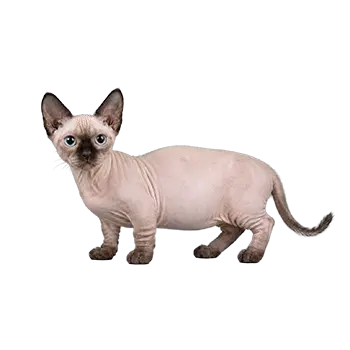

Play Style & Drive

Minskins are high-energy, intelligent cats that approach play with enthusiasm and persistence. Despite their small size, they have a strong prey drive and will stalk, pounce, and chase with the intensity of a much larger cat. Understanding this play style is the first step toward selecting toys that actually hold their attention rather than collecting dust under the couch.

Their intelligence sets them apart from breeds that are satisfied by simple batting and chasing. Minskins want to solve problems, manipulate objects, and interact with their environment in ways that challenge them mentally as well as physically. A toy that's too simple — a plain ball on a flat floor, for example — may entertain for a few minutes before being abandoned. Toys that move unpredictably, dispense rewards, or require multi-step interaction hold their focus much longer.

Social play is equally important. Minskins bond deeply with their humans and often prefer interactive play sessions over solo toys. Wand toys, laser pointers, and fetch games all tap into their desire for shared activity. Plan for at least two dedicated play sessions per day, each lasting fifteen to twenty minutes, to keep your Minskin's energy channeled constructively.

Pay attention to how your individual cat plays. Some Minskins are aerial hunters who leap and swat at elevated targets, while others are ground stalkers who prefer to chase toys along the floor. Stocking toys that match your cat's natural hunting posture increases engagement and gives the cat a more satisfying outlet for its instincts.

Interactive & Puzzle Toys

Puzzle feeders are among the most valuable enrichment tools for a Minskin. These toys require the cat to manipulate sliders, flip covers, or work treats through channels, turning mealtime into a cognitive workout. Start with beginner-level puzzles and progress to more complex designs as your cat masters each stage — Minskins learn quickly, and a puzzle that's too easy won't hold their interest for long.

Treat-dispensing balls and wobble toys combine physical activity with food reward, encouraging your cat to bat, roll, and chase the toy to earn each piece of kibble. These are particularly useful for Minskins that eat too quickly, as they enforce a slower, more deliberate feeding pace. Choose designs that are easy to clean, since food residue left inside the toy can attract bacteria or mold.

Multi-level puzzle boxes with holes, ramps, and hidden compartments appeal to the Minskin's problem-solving instincts. Place a small toy or treat inside and watch the cat work through its options until it retrieves the reward. Rotate the contents regularly to maintain novelty — a puzzle with the same treat in the same spot every day loses its challenge value quickly.

Electronic interactive toys that move autonomously — robotic mice, fluttering butterfly devices, and motion-activated laser patterns — can supplement human play sessions when you're away or busy. These work best as part of a rotation rather than a permanent fixture, since even the best automated toy can become predictable. Pair electronic options with manual play to give your Minskin the variety it craves.

Chew Toys & Durability

Cats are not aggressive chewers in the way dogs are, but Minskins do enjoy gnawing on textured toys, especially during play. Dental chew toys designed for cats can serve double duty as entertainment and oral health support. Look for products made from non-toxic rubber, compressed catnip, or woven natural fibers that hold up to moderate chewing without shedding fragments.

Avoid toys with small detachable parts — button eyes, plastic bells, glued-on feathers, or thin ribbons — that a determined Minskin could chew free and swallow. Ingested foreign objects can cause intestinal blockages, which are serious emergencies in any cat but particularly dangerous in a small breed with narrow intestines. Inspect toys regularly and retire anything that shows signs of structural breakdown.

Catnip-stuffed toys are perennially popular, and most Minskins respond enthusiastically to catnip. The response is genetic, so if your cat seems indifferent, try silver vine or valerian root as alternatives — many cats that don't react to catnip will go wild for these substitutes. Refillable catnip toys let you swap in fresh herb when the scent fades, extending the toy's useful life.

Silver vine sticks and dried natural chews offer a different texture experience. These tend to be harder and more satisfying for cats that enjoy prolonged gnawing sessions. Supervise initial use to make sure your cat doesn't bite off large splinters, and discard the stick once it's been chewed down to a small, swallowable size.

Chase & Hunting Toys

Wand toys are the gold standard for interactive play with a Minskin. A flexible rod with a feathered, furred, or ribbon attachment at the end mimics the movement of prey and triggers a full hunting sequence — stalk, crouch, pounce, and capture. Vary your movements between slow, creeping drags along the floor and quick aerial flicks to keep the cat engaged and challenged.

Laser pointers provide intense cardio exercise and mental focus. Minskins will chase the dot with impressive speed and agility, which makes laser play an efficient way to burn off excess energy in a short session. Always end a laser session by landing the dot on a physical toy or treat that the cat can catch — the inability to ever capture the "prey" can cause frustration if every session ends without a tangible reward.

Spring-loaded toys that launch small balls or mice across the room appeal to the Minskin's chase instinct. Track-and-ball toys with enclosed circuits are a related option that works well for solo play, giving the cat something to bat and chase without supervision. Look for designs with multiple levels or branching tracks to add complexity.

Fetch is an underappreciated activity for cats, but many Minskins take to it naturally. Small, lightweight toys — crinkle balls, soft foam mice, or even crumpled paper — work best. Toss the toy a short distance and wait; if your Minskin brings it back, you've discovered a self-reinforcing game that provides both exercise and bonding. Not every cat will fetch, but Minskins are among the breeds most likely to oblige.

Comfort & Companion Toys

Minskins form strong attachments, and comfort toys can serve as transitional objects that ease separation anxiety during work hours or travel. Plush toys sized appropriately for a small cat — something they can wrap their paws around and knead — often become favorites. Some Minskins will carry a preferred plush toy from room to room, sleep with it, and groom it as if it were a companion.

Heated plush toys designed for pets combine comfort with warmth, which is particularly appealing to a semi-hairless cat. Microwavable inserts or low-wattage USB-powered warming elements bring the toy to a soothing temperature that mimics the body heat of another animal. These are especially useful for single-cat households where the Minskin doesn't have a feline companion to curl up against.

Kickable toys — elongated, pillow-shaped toys stuffed with catnip or crinkle material — let cats engage their hind-leg bunny-kick instinct. Minskins enjoy this type of wrestling play, and a kicker toy gives them an appropriate target for the behavior. Choose one with a durable outer fabric, since the bunny kick puts significant stress on seams and stitching.

Rotate comfort toys every week or two rather than leaving them all out permanently. A toy that reappears after a brief absence feels novel again, and the rotation prevents any single toy from becoming so saturated with scent that the cat loses interest. Keep two or three in a sealed bag with fresh catnip between rotations to refresh their appeal.

DIY & Budget Options

Some of the most engaging toys for a Minskin cost nothing at all. A crumpled ball of paper, a cardboard box with holes cut into the sides, or a paper bag with the handles removed can provide extended entertainment. Minskins are curious and creative players, and they often invent their own games with simple household items that a more aloof breed would ignore entirely.

Cardboard boxes deserve special mention. Cut entrance and exit holes at various heights, stack two or three boxes together with connecting passages, and you've built a fort that your Minskin will patrol, ambush from, and sleep in for weeks. Replace the boxes when they get worn — the novelty of a fresh structure resets the play value completely.

DIY puzzle feeders are easy to construct from materials you already have. A muffin tin with kibble in the cups, covered by tennis balls or small toys the cat must remove, creates a functional puzzle at zero cost. Toilet paper tubes with folded ends and treats inside become foraging toys. An egg carton with holes enlarged just enough for a paw to reach through offers a different challenge. Supervise these to ensure your cat doesn't ingest cardboard.

Ice cubes with a treat frozen inside provide both enrichment and hydration on warm days. The cat bats the cube around the floor, licking as it melts, and eventually retrieves the treat. Use a shallow tray or tile floor to contain the water, and choose treats small enough to freeze safely without posing a choking risk. This is a particularly good option for Minskins in warmer climates or during summer months.

Always consult a qualified professional before making any health-related decisions. This content is provided for informational reference only and should not replace professional guidance specific to your animal.