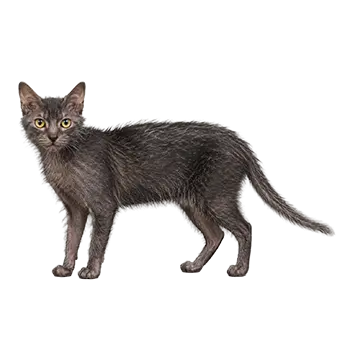

Play Style & Drive

The Lykoi is often compared to a dog in its play behavior — intensely focused, relentless in pursuit, and deeply engaged during interactive sessions. Their prey drive is among the highest of domestic cat breeds, and they approach play with a seriousness that goes well beyond casual batting at a dangling string. Understanding this drive is essential to selecting toys that actually satisfy the Lykoi rather than simply occupying them for a few seconds before being abandoned.

Lykoi play tends to follow a full predatory sequence: stalk, chase, pounce, and capture. Toys that allow them to complete this cycle provide the deepest satisfaction and the most effective energy release. A toy that only allows chasing without a capture moment — like a laser pointer used without a physical follow-up toy — can leave a Lykoi frustrated rather than fulfilled. Pairing a laser session with a physical toy tossed at the end gives the cat the capture payoff its instincts demand.

Their intelligence means they also lose interest quickly in toys that don't present a challenge. A simple stationary ball will hold a Lykoi's attention for minutes at most, while a puzzle feeder that requires manipulation and problem-solving can engage them for extended sessions. Rotating toys regularly — keeping some in a drawer and cycling them out every few days — helps maintain novelty without constantly buying new products.

Play sessions should be treated as a daily necessity rather than an occasional treat. Two to three interactive play sessions of 15 to 20 minutes each are recommended for adult Lykoi, with additional self-directed play opportunities available throughout the day. Under-stimulated Lykoi may channel their energy into counter surfing, opening cabinets, or ambushing housemates — behaviors that are more effectively prevented through enrichment than corrected after the fact.

Interactive & Puzzle Toys

Interactive toys that require human participation are the gold standard for Lykoi enrichment. Wand toys with feathered or fur-like attachments trigger the full predatory sequence and allow you to control the movement pattern — mimicking the erratic flight of a bird or the darting escape of a rodent. The quality of the wand matters: look for flexible rods that create realistic, unpredictable motion rather than stiff sticks that produce mechanical, repetitive arcs.

Puzzle feeders rank alongside wand toys in importance for this breed. Lykoi are intelligent enough to work through multi-step food puzzles and visibly enjoy the process. Start with simpler designs — sliding panels or treat balls that dispense kibble when rolled — and gradually introduce more complex puzzles as the cat masters each level. Some puzzle feeder systems offer adjustable difficulty settings, which are ideal for keeping pace with a Lykoi's learning curve without requiring entirely new products.

Electronic interactive toys that move autonomously — spinning feathers, oscillating mice, or random-pattern laser units — serve as excellent supplements to human-directed play but should not replace it entirely. The Lykoi's desire for social interaction means that solitary electronic toys work best as between-session entertainment rather than primary engagement. The best electronic toys are those with unpredictable movement patterns and automatic shut-off timers that prevent the cat from habituating to a single motion cycle.

Training games also fall under interactive enrichment and are particularly well-suited to Lykoi. This breed responds readily to clicker training and can learn complex tricks, obstacle courses, and even fetch. Training sessions double as mental stimulation and bonding opportunities, and many Lykoi owners find that a few minutes of trick training is as tiring for the cat as a full physical play session.

Chew Toys & Durability

While cats are not chewers in the same way dogs are, Lykoi do exhibit more oral play behavior than many breeds. They often carry toys in their mouths, wrestle with them using teeth and paws simultaneously, and can be rough on flimsy construction. Toys intended for a Lykoi should be durable enough to withstand grabbing, biting, and bunny-kicking without coming apart and releasing small components that could be swallowed.

Kicker toys — elongated plush toys designed for the cat to grab with its front paws and kick with its hind legs — are particularly popular with Lykoi. Look for versions with reinforced stitching and densely packed filling. Some kicker toys include crinkle material or catnip pouches inside, which adds sensory variety to the wrestling experience. Avoid toys with glued-on eyes, plastic noses, or small ribbon attachments that can be chewed off and ingested.

Dental health toys designed for cats, such as textured rubber chews infused with catnip or silvervine, can provide appropriate chewing outlets while promoting gum stimulation. These are not essential for every Lykoi but can be beneficial for cats that show a persistent interest in chewing on household items like cords, cardboard, or fabric. Providing an approved chewing target is more effective than attempting to eliminate the behavior entirely.

Inspect all toys regularly for signs of wear. A toy that was safe when new can become a hazard once stitching loosens, filling becomes exposed, or small parts begin to detach. Establishing a weekly toy inspection routine and removing damaged items promptly helps prevent accidental ingestion and the potential for gastrointestinal obstruction.

Chase & Active Play Toys

Chase toys tap directly into the Lykoi's powerful hunting instincts and provide essential cardiovascular exercise. Ball tracks — enclosed circular or figure-eight tracks with a ball that the cat can bat but not remove — are a reliable self-directed chase toy that most Lykoi find irresistible. Multi-level track systems add complexity and keep the cat engaged longer than single-tier designs. The ball's movement simulates escaping prey, triggering repeated stalking and swatting behavior.

Spring-mounted toys that attach to a base and bounce erratically when struck provide another form of active play that requires minimal human involvement. These work best when placed in areas the cat frequents, such as near feeding stations or along common patrol routes. The unpredictable rebound motion keeps the Lykoi re-engaging with the toy rather than losing interest after a single interaction.

Fetch is genuinely achievable with many Lykoi, which sets them apart from most cat breeds. Lightweight foam balls, crinkle balls, and small plush mice are all suitable fetch toys. Start by tossing the toy a short distance and rewarding the cat with a treat or praise when it brings the toy back or even carries it partway. Many Lykoi develop this behavior naturally without formal training, simply because their retrieval instinct is strong enough to drive the complete fetch cycle on its own.

Outdoor play in a secure catio or enclosed yard can incorporate chase toys at a larger scale. Feather lures attached to long fishing-rod-style wands allow you to create wide, sweeping movement patterns that encourage full-speed sprinting and acrobatic leaping. These high-energy sessions are particularly valuable for indoor Lykoi who may not get enough sustained cardio from room-scale play alone.

Comfort & Companion Toys

Despite their wild appearance and intense play style, Lykoi cats have a deeply affectionate side and often form attachments to specific comfort objects. Soft plush toys that are small enough to carry and cuddle serve as companion items that many Lykoi will groom, sleep with, and carry from room to room. These toys satisfy a nurturing instinct and provide security, particularly when the cat's human companions are away.

Catnip and silvervine toys occupy a unique space between play toy and comfort item. Most Lykoi respond strongly to catnip, displaying the characteristic rolling, rubbing, and euphoric behavior that the herb induces. Silvervine tends to produce a similar but slightly more intense response and is effective in cats that show no reaction to catnip. Stuffed toys filled with high-quality dried catnip or silvervine sticks offer a dual-purpose item that can serve as both an active play target and a post-play comfort object.

Heated plush toys designed for pets can be especially appealing to Lykoi given their sensitivity to cold. These typically use a microwavable insert that provides gentle warmth for several hours. A warm plush companion in the cat's preferred sleeping spot can reduce stress and improve sleep quality, particularly during colder months or in air-conditioned environments where the Lykoi might otherwise struggle to stay warm.

When selecting comfort toys, material safety is paramount. Choose toys made from non-toxic, pet-safe fabrics without small decorative elements. The toy should be machine washable, since Lykoi will rub their skin oils on favored items, requiring regular cleaning. Having two identical comfort toys allows you to rotate them through the wash without depriving the cat of its preferred companion.

DIY & Budget Options

Some of the most effective Lykoi enrichment tools cost nothing at all. A crumpled ball of aluminum foil slides unpredictably across hard floors and produces an enticing crinkling sound that triggers pursuit behavior. Paper bags — with handles removed for safety — become instant caves for hiding, pouncing from ambush, and crinkling exploration. Cardboard boxes of various sizes can be arranged into tunnels, forts, and multi-level exploration zones that rival commercial cat furniture in entertainment value.

DIY puzzle feeders are straightforward to create and can be customized to your Lykoi's skill level. A muffin tin with kibble placed in a few cups and tennis balls covering all the openings creates a simple but effective foraging challenge. Toilet paper tubes with the ends folded shut and kibble inside become disposable treat puzzles. Egg cartons with treats hidden in various compartments offer a similar challenge. As the cat masters each design, increase the complexity by adding obstacles or requiring multiple steps to access the food.

Homemade wand toys using a wooden dowel, string, and fabric scraps or feathers provide interactive play at minimal cost. Ensure that any string or ribbon is used only during supervised play and stored out of reach afterward, as ingested string can cause serious intestinal complications. Old t-shirts cut into strips and braided together make durable kicker toys that carry the owner's scent — an added comfort bonus for a breed that bonds closely with its people.

Rotation is the most powerful budget strategy available. Rather than buying new toys constantly, divide existing toys into three or four groups and rotate them weekly. A toy that has been out of circulation for two weeks feels novel again to the cat, effectively multiplying your toy inventory without additional spending. Store inactive toys in a sealed container with a pinch of dried catnip to refresh their appeal before the next rotation.

Always consult a qualified professional before making any health-related decisions. This content is provided for informational reference only and should not replace professional guidance specific to your animal.