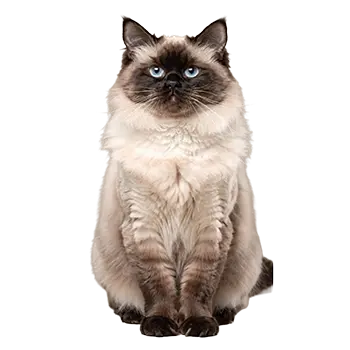

The Himalayan is a breed defined by its long, dense coat and its calm, low-activity disposition. Both of these traits have direct implications for diet. Unlike high-energy breeds that burn through calories with constant climbing and sprinting, Himalayans tend to spend much of their day lounging and observing. Their caloric requirements are correspondingly modest, and overfeeding is one of the most common nutritional mistakes owners make with this breed.
Protein remains the cornerstone of any feline diet, and the Himalayan is no exception. A diet built around high-quality animal protein supports lean muscle maintenance even in a cat that prefers the windowsill to the cat tree. Protein sources should be named and specific — chicken, turkey, duck, or fish — rather than ambiguous ingredient categories. On a dry-matter basis, protein content of 38% or higher is a reasonable target for most adult Himalayans.
The Himalayan's hallmark coat — a thick, silky double layer that rivals any longhaired breed — is nutritionally expensive to maintain. Omega-3 and omega-6 fatty acids are essential for keeping the coat lustrous and the skin underneath healthy. Deficiencies in these fatty acids often show up first as a dull, brittle coat or flaky skin, problems that are especially visible and problematic in a breed whose entire aesthetic depends on coat quality.
Hydration deserves particular attention with Himalayans. As brachycephalic cats with shortened airways and nasal passages, they can be prone to panting in warm environments, which increases fluid loss. Their flat facial structure also makes drinking from standard water bowls less efficient. Ensuring adequate moisture through diet — either via wet food or water supplementation — supports kidney health and helps prevent the urinary tract issues that this breed can be predisposed to.