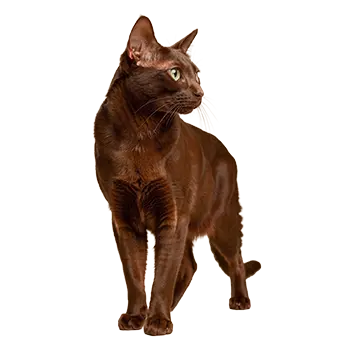

Play Style & Drive

The Havana Brown is one of the more hands-on, interactive breeds in the cat world. These cats are known for using their paws to investigate objects, bat at dangling items, and even reach out to touch their owners for attention. This tactile curiosity, combined with a moderate-to-high energy level, means the Havana Brown requires regular play sessions to stay mentally balanced and physically fit. A bored Havana Brown will find its own entertainment, often at the expense of household items.

Unlike some breeds that prefer solitary play, Havana Browns strongly favor interactive sessions with their human companions. They will chase a wand toy with intensity, stalk a dragged string across the floor with genuine hunting focus, and return to their owner repeatedly to initiate play. This social play preference makes them excellent candidates for structured daily play sessions — ideally two or more sessions of 10 to 15 minutes each.

Their hunting sequence follows the classic feline pattern of stalk, chase, pounce, and capture, but Havana Browns tend to emphasize the pouncing and grabbing phases. They enjoy catching things with their front paws and will often hold objects between their paws to examine them. Toys that can be caught, carried, and manipulated appeal more to this breed than toys that simply roll away out of reach.

Age affects play style but does not eliminate the need for enrichment. Havana Brown kittens play with explosive, chaotic energy. Adults settle into more focused, strategic play. Senior Havana Browns remain more playful than many other breeds at the same age, though sessions may be shorter and less aerobic. Adjusting toy selection and play intensity to match your cat's current energy level keeps enrichment effective throughout life.

Interactive & Puzzle Toys

Puzzle feeders are among the most valuable enrichment tools for the intelligent, food-motivated Havana Brown. These devices require the cat to manipulate sliders, lift covers, or paw kibble through openings to access food rewards. Starting with simple designs — a basic ball that dispenses treats as it rolls — and gradually increasing complexity keeps the cat challenged without causing frustration. Most Havana Browns take to puzzle feeders quickly and show visible satisfaction when they solve a new configuration.

Wand toys and fishing-rod-style toys are the gold standard for interactive play with this breed. The combination of unpredictable movement, human involvement, and the opportunity to pounce and grab aligns perfectly with the Havana Brown's play preferences. Vary the movement pattern during each session — sometimes mimicking a bird fluttering overhead, other times imitating a mouse scurrying along the baseboard — to engage different hunting instincts and prevent predictability.

Track-and-ball toys provide independent entertainment when you are unable to participate in active play. These circular tracks contain balls that the cat bats around the channel, and many designs include a scratching pad in the center. While no substitute for interactive play, they give your Havana Brown a physical outlet during times when the household is occupied. Look for designs with multiple levels or configurable track layouts to extend their novelty.

Rotation is essential for maintaining toy engagement. Cats habituate to familiar toys and lose interest, but a toy stored away for two weeks often feels new again when reintroduced. Keep five or six toys in active rotation and swap two or three of them every week. This simple management strategy costs nothing extra but dramatically extends the useful life of your toy collection.

Chew Toys & Durability

While cats are not typically aggressive chewers in the way dogs are, Havana Browns do enjoy gnawing on certain textures as part of their play and oral stimulation. Silvervine sticks, dried matatabi fruit, and compressed catnip toys provide safe chewing surfaces that also deliver a mild euphoric response in most cats. Not all cats respond to catnip — sensitivity is genetic — but silvervine tends to elicit a response in a broader percentage of the feline population.

Durability is an important consideration given the Havana Brown's tendency to pick up, carry, and bat toys with force. Plush toys with reinforced stitching and double-layered fabric last significantly longer than bargain alternatives. Check toys regularly for loose eyes, torn seams, or exposed stuffing, as ingested fabric and small parts pose choking and intestinal obstruction risks. Discard any toy that shows signs of structural failure.

Kicker toys — elongated, pillow-shaped toys designed for cats to grab with their front paws and kick with their hind legs — are particularly well-suited to the Havana Brown's grappling play style. Filled with catnip or silvervine and constructed from durable canvas or heavy cotton, these toys absorb the bunny-kick behavior that might otherwise be directed at arms, feet, or furniture cushions.

Avoid toys with small detachable components such as glued-on googly eyes, ribbon whiskers, or bell attachments that can be chewed free. Feathered toys should only be used during supervised play sessions and stored afterward. Feathers, string, and elastic cords are among the most common cat toy components implicated in veterinary emergencies involving foreign body ingestion.

Chase & Motion Toys

Laser pointers are a polarizing but effective chase toy for Havana Browns when used correctly. The key to responsible laser play is always ending the session by directing the dot onto a physical toy or treat that the cat can catch and possess. The hunting sequence requires a capture phase for psychological satisfaction — endless chasing without a catch can lead to frustration and obsessive behavior in some cats. Used properly, laser sessions provide intense aerobic exercise in a minimal amount of time.

Automated motion toys — battery-operated mice, erratically moving balls, and under-cover spinning wand devices — engage the Havana Brown's prey drive without requiring constant human participation. These toys work best as supplements to interactive play rather than replacements. Look for models with automatic shut-off timers and variable speed settings, as consistent, predictable movement quickly becomes boring to an intelligent cat.

Crinkle balls and lightweight foam balls are simple but surprisingly effective chase toys for Havana Browns. The sound of a crinkle ball skittering across a hard floor triggers an immediate pursuit response, and the low weight allows the cat to bat the toy at full speed without risk of injury. Keep a supply of these inexpensive toys available — they tend to end up under furniture regularly, and having extras on hand means play is never interrupted by a missing ball.

Flutter toys that mimic insect or bird movement through vibration or erratic bouncing capitalize on the Havana Brown's keen visual tracking ability. These cats are exceptional at following fast-moving objects, and toys that change direction unpredictably hold their attention far longer than those with linear trajectories. Combine different motion patterns within a single play session to keep your cat fully engaged.

Comfort & Companion Toys

Despite their confident, outgoing nature, Havana Browns often develop attachments to specific comfort objects. A soft plush toy left in a sleeping area can become a security item that the cat kneads, grooms, and sleeps alongside. This behavior is completely normal and should be encouraged rather than discouraged — comfort objects reduce anxiety during stressful events such as veterinary visits, household moves, or changes in routine.

Heated plush toys designed for pets provide warmth and a simulated companion presence that many cats find soothing. These are particularly valuable for single-cat households where the Havana Brown spends extended periods alone. Models that include a heartbeat simulator add another dimension of comfort, mimicking the sensation of sleeping alongside another animal.

Catnip-infused plush toys serve a dual purpose: comfort during rest and stimulation during play. A Havana Brown may carry a catnip toy to its bed for quiet kneading, then bat the same toy across the room during an energetic play burst minutes later. Choose plush toys with refillable catnip pouches so you can refresh the scent as it fades — most catnip loses potency within a few weeks of exposure to air.

For Havana Browns that experience separation anxiety — a not-uncommon trait in this people-oriented breed — leaving a worn article of clothing near their resting area provides familiar scent comfort in the owner's absence. While not a toy in the traditional sense, scent-based comfort strategies complement physical comfort objects and can meaningfully reduce stress behaviors such as excessive vocalization, overgrooming, or inappropriate elimination during periods of solitude.

DIY & Budget Options

Some of the most engaging toys for Havana Browns cost nothing at all. A crumpled ball of paper, a cardboard box, or a paper grocery bag with the handles removed can provide extended entertainment. Cardboard boxes in particular tap into the feline instinct to seek enclosed spaces, and cutting entry holes at various heights transforms a simple box into an interactive fort. Replace boxes as they become flattened or soiled — the novelty of a fresh box is part of the appeal.

DIY puzzle feeders can be constructed from household items with minimal effort. An empty egg carton with kibble placed in the cups, a muffin tin with tennis balls covering the wells, or a plastic bottle with holes cut large enough for treats to fall out all function as effective food puzzles. These homemade versions allow you to experiment with difficulty levels before investing in commercial puzzle feeders, and they provide variety that keeps your Havana Brown's problem-solving skills sharp.

Toilet paper tubes and paper towel cores make excellent treat-dispensing toys. Fold one end closed, drop in a few pieces of kibble, and fold the other end shut. Your Havana Brown will bat, chew, and tear the tube apart to access the food inside. This combines foraging behavior, physical manipulation, and the satisfying destruction that many cats enjoy. Supervise initially to ensure your cat does not ingest cardboard pieces.

Rotating free and inexpensive enrichment options alongside commercial toys creates a varied, stimulating environment without straining your budget. The most important factor in feline enrichment is novelty and engagement, not price. A Havana Brown that receives creative, varied stimulation from simple materials will be happier and better adjusted than one surrounded by expensive toys that never change.

Always consult a qualified professional before making any health-related decisions. This content is provided for informational reference only and should not replace professional guidance specific to your animal.