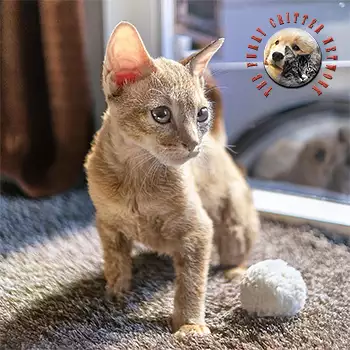

Play Needs of the Breed

The German Rex is an intelligent, curious breed with a sustained interest in play that extends well beyond kittenhood. Unlike some breeds that become increasingly sedentary with age, the German Rex typically maintains a playful disposition into its senior years, making enrichment a lifelong consideration rather than a phase to outgrow. Understanding the nature of this breed's play drive is essential to selecting toys that will hold its attention and provide genuine stimulation.

This breed's intelligence is its most distinctive behavioral trait from an enrichment perspective. German Rex cats are problem-solvers that engage most deeply with toys and activities that present a challenge. Simple batting toys may entertain briefly, but the German Rex will lose interest quickly if there is no puzzle to work through or variable outcome to anticipate. Toys that require manipulation, strategy, or sustained attention tend to provide the most lasting engagement.

The German Rex's play style tends to be more investigative than purely athletic. While these cats enjoy chasing and pouncing, they are equally drawn to toys they can manipulate with their paws, bat under furniture and retrieve, or work at until a reward is released. This makes the breed an excellent candidate for puzzle toys and food-dispensing devices, which combine physical activity with cognitive effort.

Social play is another important dimension. The German Rex bonds closely with its human family and often seeks interactive play sessions over solitary activity. A cat that has access to an elaborate collection of solo toys but rarely engages in wand-toy or fetch sessions with its owner may still exhibit signs of under-stimulation. Balancing interactive and independent play opportunities ensures that both the social and cognitive needs of this breed are met.

Interactive Toys

Interactive toys — those that require human participation — are the backbone of a German Rex enrichment program. Wand toys with feathered, furred, or ribbon attachments activate the hunting sequence that cats are hardwired to perform: stalk, chase, pounce, and capture. The German Rex responds enthusiastically to wand play and will often initiate sessions by bringing the toy to its owner or sitting expectantly near the location where the wand is stored.

The quality of a wand toy matters more than most owners realize. A wand with a stiff, unresponsive attachment moves in predictable patterns that quickly become boring. Look for wand toys with flexible wire or string attachments that allow the lure to flutter, dart, and change direction unpredictably. Feathered attachments that mimic bird movement are particularly effective with the German Rex, as the breed tends to have a strong aerial prey drive and will leap impressively to intercept a well-maneuvered lure.

Fetch is a behavior that many German Rex cats develop naturally or can be taught with minimal effort. Small, lightweight toys such as crinkle balls, soft pom-poms, or foam balls work best for feline fetch because they are easy to carry in the mouth and travel a satisfying distance when thrown. If your German Rex shows any inclination to retrieve a tossed toy, reinforcing the behavior with praise or a small treat can establish a reliable fetch routine that provides exercise and bonding simultaneously.

Laser pointers are popular interactive toys but should be used thoughtfully. The German Rex's intelligence means it may become frustrated by the inability to ever catch the light dot, which can lead to obsessive behavior in some individuals. If you use a laser pointer, always end the session by directing the dot onto a physical toy or treat that the cat can capture, providing the satisfaction of a successful hunt conclusion. This prevents the behavioral frustration that can arise from repeated pursuit without reward.

Puzzle & Food Toys

Puzzle feeders and food-dispensing toys are arguably the most valuable enrichment category for the German Rex. This breed's cognitive abilities mean it can master simple puzzle toys within minutes, so selecting products with adjustable difficulty levels is important for sustained engagement. Entry-level puzzles with large openings and obvious solutions serve as a good introduction but should be replaced or upgraded as the cat becomes proficient.

Stationary puzzle boards with sliding covers, rotating discs, and hidden compartments challenge the cat to use different paw movements and problem-solving strategies to access hidden treats. The German Rex's dexterous paws and willingness to persist through trial and error make it particularly adept at this type of enrichment. Multi-stage puzzles that require the cat to complete one action before another becomes available provide the deepest engagement and can occupy an intelligent cat for extended periods.

Rolling food-dispensing balls and wobble toys combine physical activity with cognitive challenge. The cat must push, bat, or manipulate the toy to cause kibble or treats to fall out of calibrated openings. These are excellent for providing stimulation when the owner is not available for interactive play. For the German Rex, choose models where the opening size or difficulty can be adjusted, so the toy does not become trivially easy after a few uses.

Timing the use of puzzle feeders can amplify their benefit. Using a food puzzle for one of the cat's daily meals transforms a routine feeding event into an enrichment activity that can occupy the cat for 15 to 30 minutes. This is particularly valuable for German Rex cats that are left alone during the workday, as it provides structured mental engagement during a period that might otherwise be spent sleeping or developing boredom-related behaviors. Rotating between three or four different puzzle toys prevents habituation and maintains novelty.

Solo & Independent Toys

While the German Rex prefers interactive play, there are inevitably periods when the cat must entertain itself. Stocking the environment with well-chosen solo toys ensures the cat has options during these times. The key is variety — both in toy type and in the sensory experience each toy provides. A mix of crinkle toys, spring toys, small plush kickers, and trackball circuits covers a range of play behaviors from batting and chasing to kicking and wrestling.

Trackball toys — enclosed circuits with a ball that the cat can bat but not remove — are consistently popular with the German Rex. The ball's movement is unpredictable enough to sustain interest, and the enclosed design means the toy does not end up under the couch after two swats. Multi-level track circuits with multiple balls add complexity and tend to hold attention longer than single-track designs. Some models incorporate a scratching surface or a central toy attachment, adding functional value.

Catnip and silver vine toys provide chemical enrichment that can transform an ordinary plush toy into a compelling solo activity. Approximately 60 to 70 percent of cats respond to catnip, and those that do will roll, rub, and wrestle with catnip-infused toys with notable enthusiasm. Silver vine affects a broader percentage of cats and may produce a response in individuals that are indifferent to catnip. Stuffing a fabric toy with fresh dried catnip or silver vine sticks periodically refreshes its potency, as the volatile compounds that trigger the response degrade over time.

Toy rotation is a simple but effective strategy for maintaining novelty. Rather than leaving all toys out simultaneously, keep a selection of five or six toys available for a week, then swap them out for a different set. Toys that have been out of rotation for a few weeks regain their novelty value when reintroduced. This approach requires no additional purchases — just a drawer or bin where the off-rotation toys are stored. The German Rex's keen memory means it may need slightly longer rotation intervals than less attentive breeds to perceive a rotated toy as genuinely new.

Scratching & Clawing Toys

Scratching is a fundamental feline behavior that serves multiple purposes: claw maintenance, muscle stretching, territory marking, and stress relief. For the German Rex, providing appropriate scratching outlets is essential both for the cat's well-being and for the protection of household furniture. A cat that lacks adequate scratching options will find its own, and upholstered furniture, carpet, and door frames are common casualties.

Scratching posts should be tall enough for the cat to stretch its full body length while scratching. For an adult German Rex, this means a vertical post of at least 30 to 32 inches. The post must be stable and solidly based — a post that tips or wobbles when the cat leans into it will be abandoned in favor of something that does not move, such as the side of a couch. Sisal rope is the most popular wrapping material and provides the resistance and texture that most cats prefer. Sisal fabric is a durable alternative that some cats favor for its flat surface.

Horizontal and angled scratching surfaces complement vertical posts by accommodating different scratching postures. Corrugated cardboard scratchers are inexpensive, widely available, and surprisingly popular with many cats. The German Rex often enjoys the combination of scratching and lounging that a large cardboard scratcher provides. These products do produce cardboard debris and wear out relatively quickly, but their low cost makes frequent replacement practical.

Placement of scratching surfaces should be strategic. Cats often scratch upon waking from a nap, so placing a scratcher near the cat's primary sleeping area is logical. Scratching also serves as a territorial marking behavior, so scratchers near entryways, in social areas of the home, and next to any furniture the cat has previously targeted are all sensible locations. Having at least two or three scratching surfaces distributed throughout the home ensures the cat always has a nearby appropriate option, regardless of where it is at the time the urge strikes.

Some scratching products incorporate additional features — dangling toys, catnip pouches, or tunnel elements — that increase their appeal and provide compound enrichment. For the German Rex, a scratcher with an integrated toy component can serve double duty as both a claw maintenance station and an independent play item, which is particularly useful in smaller living spaces where every piece of cat furniture needs to earn its footprint.

DIY & Household Enrichment

Not all enrichment requires a trip to the pet store. Many effective toys and activities for the German Rex can be assembled from common household items. A paper bag with the handles removed becomes a crinkly tunnel that most cats will explore, hide in, and pounce out of with evident delight. Cardboard boxes of various sizes can be combined into forts, stacked into climbing structures, or simply left open on the floor as temporary hiding spots.

Empty toilet paper and paper towel tubes serve as surprisingly effective puzzle toys when the ends are folded shut with a few treats sealed inside. The German Rex's willingness to manipulate objects with its paws makes these simple puzzles engaging without any modification beyond folding the cardboard. For a slightly more advanced version, cutting small holes in the side of a tube and sealing both ends creates a rolling dispenser that the cat must bat across the floor to release its contents.

Ice cubes made from low-sodium chicken broth provide a sensory enrichment experience that combines scent, taste, and an unpredictable sliding surface. Placing one or two broth cubes on a plate or shallow tray gives the German Rex something to bat, lick, and investigate as the cube slowly melts. This activity is best offered on an easily cleaned surface, as it does create a small mess, but most cats find the sliding, melting object genuinely fascinating.

Window enrichment is free and endlessly variable. A securely mounted window perch overlooking a bird feeder transforms a standard window into a live nature channel that can occupy a German Rex for hours. If outdoor bird activity is limited, a tablet or laptop playing nature videos designed for cats — featuring close-up footage of birds, fish, or insects — can serve as a temporary substitute. While screen-based entertainment should not replace physical play, it can provide valuable visual stimulation during periods when the owner is occupied.

Safety & Maintenance

Toy safety is a non-negotiable consideration, and the German Rex's inquisitive nature demands extra vigilance. String, ribbon, yarn, and elastic cord are among the most dangerous toy components. If ingested, linear foreign bodies can cause life-threatening intestinal obstructions or perforations that require emergency surgery. Wand toys with string or ribbon attachments should always be stored out of reach after play sessions and never left unattended with the cat.

Small detachable components — plastic eyes on plush toys, bells inside rattle balls, feather attachments — present choking and ingestion hazards. Inspect toys regularly for signs of wear and discard any toy that is coming apart, losing stuffing, or shedding small pieces. The German Rex's tendency to investigate objects thoroughly with its mouth means that a toy in the early stages of disintegration is a hazard rather than a fading amusement. Replacing worn toys promptly is a small cost relative to the veterinary bill for foreign body removal.

Hygiene maintenance extends the useful life of toys and prevents them from becoming vectors for bacteria or mold. Fabric and plush toys should be washed in hot water on a regular schedule — monthly for toys in heavy rotation, more frequently if the toy is used with wet food or treats. Hard plastic and rubber toys can be wiped down with a pet-safe disinfectant or washed with mild soap and water. Cardboard scratchers and disposable toys should be replaced when they become soiled or structurally compromised rather than cleaned.

Battery-operated and electronic toys require special attention. Ensure that battery compartments are securely fastened and cannot be opened by a determined cat. Lithium button batteries are particularly dangerous if swallowed, as they can cause severe chemical burns to the esophagus or stomach within hours. If an electronic toy's battery cover becomes loose or the seal is compromised, remove the toy from use immediately. Charging cables for USB-powered toys should be disconnected and stored when not actively charging, as chewing on an energized cable can cause electrical burns or shock.

Always consult a qualified professional before making any health-related decisions. This content is provided for informational reference only and should not replace professional guidance specific to your animal.