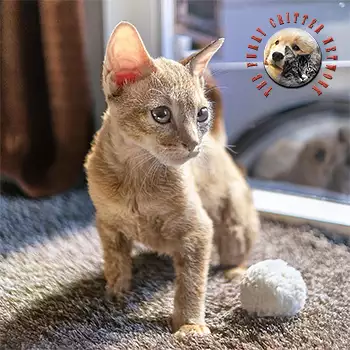

Tech Considerations for the Breed

The German Rex's combination of intelligence, curiosity, and social dependence on its owners makes it a breed that can benefit substantially from well-chosen technology products. This is a cat that notices when its routine changes, seeks interaction actively, and can become anxious or bored when left alone for extended periods. Tech products that address monitoring, feeding automation, and remote interaction are not luxuries for this breed — they are practical tools that can meaningfully improve the cat's quality of life during the hours its owner is away.

However, the German Rex's intelligence also makes it a more challenging user of technology than less inquisitive breeds. Devices with accessible buttons, dangling cords, or lightweight components that can be knocked over may become targets of investigation rather than functioning tools. When selecting any tech product for a German Rex household, durability, cord management, and secure mounting should be evaluated alongside the device's primary features. A camera that the cat topples from a shelf on day one is a paperweight, not a monitoring tool.

The breed's temperature sensitivity adds another dimension to tech selection. Smart thermostats and climate monitoring devices are more relevant for the German Rex than for most domestic cats, since this breed's thin coat makes it genuinely vulnerable to temperature swings that a fully coated cat would barely notice. Products that allow remote climate adjustment or that alert the owner to unusual temperature drops in the home can provide peace of mind, particularly during transitional seasons when heating and cooling systems may cycle unpredictably.

Privacy and data security are worth considering when introducing internet-connected devices into any home. Pet cameras, smart feeders, and app-controlled toys all transmit data over home networks, and some devices have had well-documented security vulnerabilities. Choose products from established manufacturers with a track record of issuing firmware updates and maintaining secure server infrastructure. Enable two-factor authentication on any associated app accounts, and keep device firmware current to minimize exposure to known vulnerabilities.

Smart Feeders & Water Devices

Automated feeders are among the most practical tech purchases for a German Rex owner. A programmable feeder that dispenses measured portions at set times ensures the cat receives consistent meals even when the owner's schedule is irregular. For the German Rex, which benefits from structured feeding routines, an automated feeder maintains the predictability that supports healthy appetite regulation and digestive function. Most quality smart feeders allow programming of multiple meals per day with individual portion sizes, which is useful for cats on calorie-controlled diets.

Microchip-activated feeders serve a specific and valuable purpose in multi-cat households. These feeders open only when the designated cat's microchip or RFID collar tag is detected, preventing food theft by other pets. For a German Rex on a breed-specific or therapeutic diet, a microchip feeder ensures that the correct cat eats the correct food without requiring the owner to physically supervise every meal. The sealed lid also keeps wet food fresher between servings, which is particularly important in warm environments where pate and shredded formulas can dry out or spoil within hours.

Smart water fountains with app connectivity represent an evolution of the standard pet fountain. These devices track daily water consumption and send alerts to the owner's phone if the cat's drinking drops below a configurable threshold. For the German Rex, whose skin and coat health depend on adequate hydration, this monitoring capability provides an early warning system for potential dehydration or urinary issues. Some models also track filter status and water level, sending reminders when maintenance is due.

When evaluating any smart feeding or water device, prioritize ease of cleaning over feature count. A feeder with an impressive app interface but a hopper that is difficult to disassemble and wash will eventually develop mold or bacterial growth in hard-to-reach corners. Look for devices with dishwasher-safe components, smooth internal surfaces without seams where food residue can accumulate, and a disassembly process that does not require tools. The most advanced feeder on the market is worthless if it cannot be kept hygienically clean with reasonable effort.

Pet Cameras & Remote Interaction

Pet cameras have moved well beyond simple security camera repurposing and now offer features specifically designed for cat monitoring and interaction. For the German Rex — a breed prone to separation-related anxiety — a camera with two-way audio allows the owner to speak to the cat remotely, which can have a genuine calming effect. Some cats respond visibly to their owner's voice through a speaker, orienting toward the device, vocalizing in response, or settling down after a period of restless pacing.

Treat-dispensing cameras combine monitoring with interactive engagement. The owner can observe the cat through the camera and trigger a treat launch at any time, turning a passive monitoring session into a mini play event. The German Rex's intelligence and food motivation make it a particularly responsive user of treat cameras. Over time, many cats learn to associate the camera with treats and will sit near it or even vocalize at it to solicit attention, which provides the owner with confirmation that the cat is active and engaged.

Camera placement and mounting deserve careful thought in a German Rex household. Mount the camera at a height and angle that captures the cat's primary activity areas — the living room, the area near the cat tree, and the feeding station are common choices. Ensure the camera is securely mounted so that the cat cannot knock it down, and route the power cable through a cord protector or along the wall where it is inaccessible. The German Rex's inclination to investigate novel objects means an unprotected cable is likely to be chewed or pulled.

Night vision capability is a valuable feature, as cats are crepuscular animals most active during dawn and dusk. A camera with infrared night vision allows the owner to check on the cat during low-light periods without relying on leaving lights on. Motion-activated recording is another useful feature that creates a log of the cat's activity throughout the day. Reviewing these recordings can reveal behavioral patterns, activity levels, and any signs of distress or illness that might not be apparent during the owner's waking hours at home.

GPS Trackers & Location Devices

While the German Rex is primarily an indoor breed, GPS and Bluetooth tracking devices provide an important safety net against accidental escape. A cat that slips through an open door or an unsecured window screen may find itself outdoors in an unfamiliar environment, and the German Rex's thin coat and social temperament make it poorly equipped for extended outdoor survival. A tracking device attached to the cat's collar or harness can mean the difference between a quick recovery and a prolonged, anxious search.

GPS trackers use cellular networks to provide real-time location data with accuracy within a few meters. These devices require a subscription plan for cellular service and must be charged periodically, typically every few days to two weeks depending on the model and tracking frequency. The advantage of GPS is range — the cat can be tracked from anywhere with cellular coverage, not just within the home. For a German Rex that escapes and travels several blocks before being noticed, GPS tracking is the only technology that can provide its location.

Bluetooth trackers offer a lighter, battery-efficient alternative but with significantly limited range — typically 30 to 100 feet for direct detection. Their utility for an escaped cat depends on the crowd-sourced network of other users with the same tracking app. In densely populated urban areas, this network can be extensive enough to locate a lost pet that passes near other users' phones. In suburban or rural settings, the network may be too sparse to be reliable. Bluetooth trackers are best suited as a complement to GPS rather than a replacement.

Geofencing is a feature available on most GPS trackers that sends an alert to the owner's phone when the cat leaves a defined boundary — typically the home property. For a German Rex owner, setting a tight geofence around the house ensures immediate notification if the cat makes it outside. The speed of the alert is critical; a cat that has been outside for five minutes is far easier to locate and retrieve than one that has been roaming for several hours. Some trackers also maintain a location history, which can help identify the cat's direction of travel if it is not recovered immediately.

Health Monitoring Technology

Health monitoring technology for cats has advanced considerably and now includes products that can detect early signs of illness before clinical symptoms become apparent to the owner. Smart litter boxes represent one of the most practical health monitoring tools available. These devices weigh the cat each time it enters and track litter box visit frequency, duration, and in some models the weight of deposits. Changes in any of these metrics can signal emerging health issues — increased urination frequency may indicate early kidney disease or diabetes, while decreased visits could suggest a urinary obstruction or constipation.

Weight tracking is particularly valuable for the German Rex because this breed's lean build means that even modest weight changes represent a significant percentage of total body mass. A one-pound loss in a nine-pound cat is more than ten percent of its body weight — a change that would warrant veterinary attention but might not be visually obvious under the curly coat. A smart scale or smart litter box that logs daily weights and presents trend data over weeks and months makes subtle changes visible long before they would be noticed through casual observation or periodic veterinary visits.

Activity monitors designed for cats attach to the collar and track movement, rest periods, and activity intensity throughout the day. For the German Rex, which is a moderately active breed, a baseline activity profile established over the first few weeks of use provides a reference against which future changes can be measured. A sudden or gradual decline in activity can indicate pain, illness, or depression, while a spike in nighttime activity might suggest hyperthyroidism or anxiety. These monitors do not diagnose conditions, but they provide objective data that helps the owner and veterinarian make more informed decisions.

Some newer health monitoring platforms integrate data from multiple devices — the smart litter box, the activity monitor, and the smart feeder — into a single dashboard that presents a holistic view of the cat's daily habits. Pattern detection algorithms can flag anomalies that might be missed when each data stream is viewed in isolation. For example, a slight decrease in food intake combined with reduced activity and increased litter box visits might individually fall within normal variation but together could suggest an emerging urinary or gastrointestinal issue. The value of these integrated platforms scales with consistent use over time, as the system builds a more accurate baseline with each passing month.

Automated Play & Entertainment Devices

Automated play devices fill a specific niche in the German Rex enrichment toolkit: they provide stimulation during periods when the owner is unavailable for interactive play. These are not replacements for hands-on play sessions — the social component of interactive play is irreplaceable for this people-oriented breed — but they can reduce boredom and prevent the behavioral issues that arise from prolonged inactivity.

Automated laser toys that project a randomly moving dot on the floor or wall can engage a German Rex for extended periods. The unpredictable movement pattern activates the cat's prey drive, and the German Rex's willingness to chase and pounce makes it a responsive user of these devices. Models with adjustable speed settings and randomized patterns are preferable to those with fixed, repetitive paths, which the cat will quickly learn and lose interest in. As with manual laser pointers, it is beneficial to pair the automated laser with a physical toy placed near the end point of the laser's cycle so the cat has something tangible to capture.

Robotic mice and rolling ball toys that move autonomously across the floor offer a more tactile form of automated play. The German Rex is likely to engage with these toys actively, batting, chasing, and attempting to catch them. Higher-quality robotic toys feature obstacle detection that prevents them from getting stuck under furniture, which is a common failure point with cheaper models. A robotic toy that wedges itself under a bookcase within five minutes provides neither entertainment nor value. Choose models with low profiles that are too large to fit under most furniture gaps.

App-controlled toys allow the owner to initiate play sessions remotely through a smartphone interface. Some products combine a camera with a moving laser or a retractable feather wand, allowing the owner to watch the cat play in real time while controlling the toy's movement. For the German Rex owner who works long hours, this type of device bridges the gap between the cat's social play needs and the reality of an absent handler. Scheduling one or two remote play sessions during the workday, combined with interactive play sessions during the evening, can provide a well-rounded enrichment program that keeps the German Rex mentally and physically engaged.

Timer-controlled toys that activate at preset intervals throughout the day can provide unpredictable stimulation without requiring the owner to manually initiate each session. A toy that suddenly springs to life in the middle of a quiet afternoon adds an element of surprise that the German Rex finds engaging. Randomized activation schedules are more effective than fixed schedules, as the cat cannot predict when the next play opportunity will occur. Ensure any timer-activated toy is positioned securely and cannot be displaced or damaged during the cat's interaction.

Smart Home Integration

Integrating pet-specific technology with broader smart home systems can streamline cat care and provide a more responsive living environment for the German Rex. Smart thermostats are perhaps the most impactful integration point for this breed. Programming the thermostat to maintain a minimum temperature of 68 degrees Fahrenheit when the house is occupied and no lower than 65 degrees when the owner is away prevents the temperature drops that can cause discomfort for a thinly coated breed. Remote temperature adjustment through a smartphone app allows the owner to respond to weather changes in real time.

Smart plugs can automate the operation of heated cat beds, timed feeders, and automated toys that do not have built-in scheduling capabilities. Plugging a heated bed into a smart plug that activates during the evening and early morning hours provides warmth during the coolest parts of the day without running the heating element continuously. Similarly, a smart plug connected to an automated toy can trigger play sessions on a customized schedule that aligns with the cat's natural activity peaks.

Voice-activated assistants can be configured with routines that serve the cat indirectly. A morning routine that adjusts the thermostat, turns on a cat fountain, and activates a pet camera provides a consistent start to the day. An evening routine that dims lights gradually, turns off automated toys, and lowers the thermostat to a comfortable sleep temperature supports the cat's natural circadian rhythm. While the cat does not interact with the voice assistant directly, the environmental consistency these routines create benefits a breed that thrives on predictability.

Smart lighting deserves consideration for the German Rex household. Cats are crepuscular and do not require full illumination to navigate, but sudden darkness when the owner leaves and turns off all the lights can contribute to anxiety in a bonded, people-dependent breed. Smart lights programmed to dim gradually rather than switching off abruptly, or to maintain a low ambient glow in the cat's primary living area, can ease transitions. Motion-activated night lights in hallways and near the litter box area ensure the cat can navigate safely without the owner needing to leave lights on throughout the home.

Always consult a qualified professional before making any health-related decisions. This content is provided for informational reference only and should not replace professional guidance specific to your animal.