
Grooming Tools

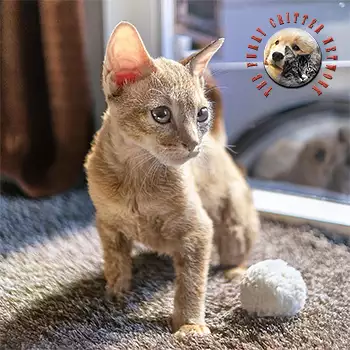
The German Rex's curly coat requires a different grooming approach than that of a standard short-haired cat. The absence of guard hairs means the coat is composed entirely of soft, fine undercoat that curls and waves rather than lying flat. Aggressive brushing with stiff bristle brushes or wire slickers can straighten the curls, damage the delicate hair shafts, and irritate the skin beneath. The goal of grooming a German Rex is gentle maintenance, not the thorough de-shedding that denser-coated breeds require.

A soft rubber grooming mitt or a fine-toothed silicone brush is the ideal primary grooming tool for this breed. These tools collect loose hair through gentle friction without pulling on the coat or flattening the curl pattern. Stroking the coat with a grooming mitt also distributes the natural skin oils that give the German Rex's fur its characteristic sheen. Most German Rex cats enjoy the sensation of being groomed with a soft mitt, which makes the process a bonding experience rather than a chore.

A fine-toothed metal comb with rounded tips can be used occasionally to check for tangles or debris, particularly around the ears, belly, and the backs of the legs where the coat may be slightly longer or denser. Run the comb through the coat gently and in the direction of hair growth. If you encounter any resistance, stop and work through the area with your fingers before continuing. The German Rex's coat rarely mats in the way that long-haired breeds do, but small tangles can develop in areas of friction if left unattended.

Bathing is occasionally necessary for the German Rex, more so than for most short-haired breeds. Because the coat lacks the guard hairs that normally wick oils away from the skin, the German Rex can develop an oily or greasy feel to its coat if natural sebum accumulates. A gentle cat-specific shampoo used every few weeks to monthly keeps the coat clean and the curls defined. After bathing, pat the coat dry with a soft towel rather than rubbing, which can frizz and disrupt the wave pattern. Avoid using a high-heat blow dryer, as the fine coat and exposed skin are sensitive to heat. A low-heat or cool setting, held at a distance, is acceptable if the cat tolerates it.

Carriers & Travel Gear

A well-chosen carrier is an essential piece of equipment for any cat owner, and the German Rex's specific characteristics influence what makes a good choice. This breed tends to be more relaxed about handling and confinement than many cats, which makes carrier training somewhat easier, but the carrier itself still needs to meet certain criteria for safety and comfort. Hard-sided carriers with secure latches and adequate ventilation are the safest option for car travel, as they protect the cat in the event of sudden stops or collisions.

Size matters for carrier comfort. The carrier should be large enough for the cat to stand, turn around, and lie down comfortably, but not so large that the cat slides around during transit. For an adult German Rex weighing between six and eleven pounds, a medium-sized carrier with interior dimensions of roughly 18 to 20 inches long, 11 to 12 inches wide, and 11 to 12 inches tall is appropriate. A carrier that is too spacious can increase anxiety, as cats generally feel more secure in a snug, enclosed space.

Because the German Rex is sensitive to temperature, the carrier should be lined with a soft fleece blanket or pad during cold weather travel. In warm weather, a lightweight breathable liner prevents the cat from overheating. Placing a familiar item — a piece of worn clothing or a small towel from the cat's bed — inside the carrier provides olfactory comfort and reduces travel-related stress. Carriers with top-loading access in addition to a front door offer a significant advantage, as many cats that resist being pushed headfirst into a front-loading carrier will tolerate being lowered in from above.

For owners who travel frequently or take their German Rex on longer trips, a collapsible soft-sided carrier can serve as a secondary option for air travel cabin use, provided it meets the airline's dimensional requirements. However, soft-sided carriers should not replace a hard-sided carrier for regular car travel, as they offer significantly less crash protection. Regardless of carrier type, never transport a cat loose in a vehicle. Even the calmest German Rex can become a projectile in a sudden stop, and a loose cat near the driver's feet creates an immediate safety hazard.

Collars, Harnesses & Identification

Even indoor-only German Rex cats benefit from wearing identification, as escape through an open door or window is always a possibility. A breakaway collar — one designed to release under pressure if the cat becomes snagged — is the safest collar type for any cat. The collar should be fitted snugly enough that it cannot slip over the head but loosely enough to allow two fingers to slide between the collar and the neck. For the German Rex, whose skin is more exposed due to its thin coat, a collar with a soft, rolled, or padded edge prevents the chafing and hair loss that flat nylon collars can cause at the contact points.

A tag with the cat's name, the owner's phone number, and the word "indoor cat" provides immediate identification to anyone who finds a lost cat. Tags should be small and flat to avoid excessive dangling that could catch on objects or annoy the cat. Slide-on tag pouches that attach directly to the collar and lie flat are a good alternative to traditional hanging tags for cats that dislike the jingling sensation.

Microchipping is the most reliable form of permanent identification and should be considered a baseline requirement regardless of whether the cat wears a collar. A microchip is a passive transponder about the size of a grain of rice, implanted under the skin between the shoulder blades. It requires no battery and lasts the lifetime of the cat. The microchip must be registered with current contact information in the associated database to be useful — an unregistered chip is effectively meaningless. Verify your registration annually and update it immediately after any move or phone number change.

Harness training is a viable option for German Rex owners who want to offer supervised outdoor access. The breed's calm temperament and people-oriented nature make it a better harness candidate than many cats. An H-style harness or a vest-style harness with adjustable straps provides the most secure fit and distributes pressure across the chest rather than the neck. Because the German Rex's coat is thin, a harness with padded or fabric-lined contact surfaces prevents rubbing. Introduce the harness indoors over several sessions before attempting outdoor excursions, allowing the cat to wear it for increasing periods while associating it with treats and positive attention.

Feeding & Water Accessories

The design of food and water dishes can affect both the German Rex's willingness to eat and drink and the overall hygiene of its feeding area. Shallow, wide bowls are generally preferred by cats over deep, narrow ones because they prevent whisker fatigue — the sensory overstimulation that occurs when a cat's whiskers press against the sides of a bowl during eating. While the German Rex's whiskers are sometimes shorter or less prominent than those of other breeds, a wide bowl remains the most comfortable option.

Material choice matters for both durability and health. Stainless steel and ceramic bowls are the best options. Stainless steel is virtually indestructible, dishwasher-safe, and does not harbor bacteria in scratches or cracks the way plastic can. Ceramic bowls offer similar hygiene advantages and come in a wider variety of designs, though they can chip if dropped. Plastic bowls should be avoided entirely, as they scratch easily, creating grooves where bacteria proliferate, and some cats develop chin acne from prolonged contact with plastic surfaces.

Water fountains are a worthwhile investment for the German Rex. Cats evolved as desert predators with a naturally low thirst drive, and many cats are reluctant to drink from a static bowl. Circulating water fountains encourage increased water intake by providing movement and aeration that many cats find more appealing than still water. For the German Rex, whose skin and coat health benefit from adequate hydration, a fountain can contribute meaningfully to overall well-being. Choose a fountain made from stainless steel or ceramic rather than plastic, and clean it thoroughly on a weekly schedule to prevent biofilm buildup in the pump and reservoir.

Elevated feeding stations raise the food and water dishes to a more comfortable height, reducing neck strain during meals. For the German Rex, an elevated station also keeps the feeding area slightly warmer, since heat rises and floor-level bowls sit in the coldest air layer of the room. A raised platform of four to six inches is appropriate for most adult cats. Some elevated feeders include a built-in mat or tray that catches spills and crumbs, which simplifies cleaning and protects the floor surface beneath.

Clothing & Wearable Warmth

The question of clothing for cats is often met with skepticism, but for the German Rex, lightweight garments can serve a genuine functional purpose. The breed's lack of guard hairs and thin undercoat means it loses body heat more readily than fully coated cats, and in homes where the ambient temperature drops below the cat's comfort range — particularly during winter or in air-conditioned environments — a lightweight cat sweater or vest can provide meaningful warmth.

Fit is the most critical factor in selecting cat clothing. A garment that is too tight restricts movement and causes stress, while one that is too loose can catch on objects or shift into positions that impede the cat's legs or vision. Look for stretchy, form-fitting designs made from soft, breathable fabrics such as cotton jersey or thin fleece. The garment should cover the torso without extending so far down the legs that it interferes with walking or jumping. Closures should be simple — a hook-and-loop fastener along the belly or a step-in design — and should not include small buttons or snaps that could be chewed off and swallowed.

Not every German Rex will tolerate clothing, and forcing a garment onto an unwilling cat causes more stress than the cold it is meant to prevent. Introduction should be gradual. Start by draping a lightweight fabric over the cat's back for short periods, rewarding calm acceptance with treats. Progress to a properly fitted garment worn for a few minutes at a time, gradually extending the duration as the cat demonstrates comfort. Many German Rex cats, given their people-oriented and adaptable temperaments, accept clothing surprisingly well once the initial novelty wears off.

Clothing should never be worn continuously or unsupervised. Prolonged wear can cause skin irritation at friction points and prevent the cat from grooming itself properly. Garments should be removed during active play sessions and overnight. Wash cat clothing regularly, as the fabric absorbs skin oils and dander that can cause odor and skin issues if allowed to accumulate. Having two or three garments in rotation ensures that a clean option is always available while others are being laundered.

Nail Care & Dental Products

Regular nail trimming is a straightforward but essential aspect of German Rex care. Indoor cats do not wear down their claws naturally the way outdoor cats do, and overgrown nails can curve into the paw pads, causing pain and infection. Trimming every two to three weeks keeps the nails at a comfortable length. A pair of sharp, scissor-style or guillotine-style cat nail clippers is the standard tool. Dull clippers crush rather than cut the nail, which is painful and can cause splitting.

The German Rex's cooperative temperament generally makes nail trimming less of an ordeal than it is with many breeds, but desensitization during kittenhood is still important. Handling the cat's paws regularly, pressing gently to extend each claw, and offering treats during and after trimming sessions builds a positive association with the process. If the cat remains resistant despite gradual conditioning, a two-person approach — one to hold and comfort, one to clip — is usually effective. Scratch-reducing nail caps that glue onto the claws are an alternative for cats that will not tolerate clipping, though they require periodic replacement as the nails grow.

Dental health is an often-neglected area of feline care that has significant implications for overall health. Periodontal disease is one of the most common health conditions in adult cats and can lead to chronic pain, tooth loss, and systemic infections affecting the heart, kidneys, and liver. Daily tooth brushing with a cat-specific enzymatic toothpaste is the gold standard for at-home dental care. A small, soft-bristled finger brush or a child-sized toothbrush works well for most cats. Never use human toothpaste, which contains fluoride and foaming agents that are toxic to cats.

Dental treats, water additives, and dental diets can supplement brushing but should not replace it entirely. Dental treats designed to reduce tartar accumulation through mechanical abrasion can provide modest benefit when used regularly. Water additives containing chlorhexidine or zinc compounds may help reduce bacterial load in the mouth but have limited evidence supporting significant plaque reduction on their own. The most effective at-home dental program combines regular brushing with annual professional dental cleanings performed by a veterinarian under anesthesia, which allows for thorough scaling, polishing, and assessment of each tooth.

Cleaning & Odor Control

Maintaining a clean environment is important for any cat household, and the German Rex's coat characteristics create a few specific considerations. Although this breed sheds less than most cats, the fine curly hairs it does shed can cling stubbornly to upholstery, clothing, and bedding. A lint roller remains the most efficient tool for removing cat hair from clothing and soft furnishings. For larger surfaces, a dampened rubber glove dragged across fabric is surprisingly effective at gathering fine hairs into removable clumps.

Vacuuming on a regular schedule — two to three times per week in areas the cat frequents most — keeps hair and dander accumulation under control. A vacuum with a HEPA filter is advantageous for households where allergies are a concern, as it captures the fine dander particles that the German Rex produces. While no cat breed is truly hypoallergenic, the German Rex's reduced shedding and altered coat structure may produce fewer airborne allergens than a heavily shedding breed, though individual sensitivity varies widely.

Enzymatic cleaners are essential for dealing with accidents outside the litter box, whether from a new kitten still learning or an older cat with a medical issue. Standard household cleaners may mask the odor to human noses but leave behind molecular traces that the cat can still detect, which can encourage repeat marking in the same spot. Enzymatic formulas break down the uric acid crystals in cat urine completely, eliminating the scent signal that draws the cat back. Apply these cleaners liberally, allow them to soak according to the product instructions, and blot rather than scrub to avoid spreading the stain.

Air purifiers with activated carbon filters can help manage general household pet odor and improve air quality. Place the purifier in the room where the litter box is located or in the main living area where the cat spends most of its time. Avoid using scented candles, plug-in air fresheners, or essential oil diffusers as odor control methods in a cat household. Many essential oils — including tea tree, eucalyptus, peppermint, and citrus oils — are toxic to cats through inhalation or skin contact, and even products marketed as pet-safe should be used with caution in enclosed spaces.

Always consult a qualified professional before making any health-related decisions. This content is provided for informational reference only and should not replace professional guidance specific to your animal.