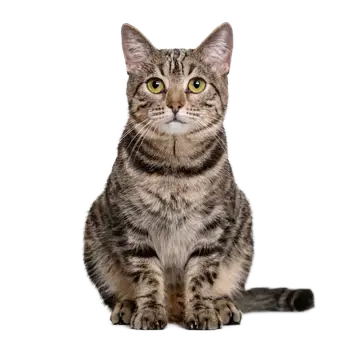

Play Drive & Enrichment Needs

The European Shorthair descends from generations of cats that earned their keep as mousers and barn hunters across the European continent, and that predatory heritage is very much alive in the modern indoor companion. These cats possess a well-rounded prey drive that encompasses stalking, chasing, pouncing, and the satisfying grab-and-kick sequence that mimics subduing captured prey. A toy selection that fails to engage this full behavioral chain leaves the cat understimulated, no matter how many objects are scattered across the floor.

Play is not optional enrichment for this breed — it is a fundamental behavioral need. An under-stimulated European Shorthair often develops displacement behaviors including excessive grooming, nocturnal hyperactivity, or redirected aggression toward housemates or ankles. These issues are frequently misdiagnosed as personality problems when they are actually symptoms of an environment that does not provide adequate outlets for hardwired hunting behavior. Two dedicated interactive play sessions of 15 to 20 minutes each day is a reasonable baseline for most adult European Shorthairs.

Age and individual personality influence play preferences significantly. Kittens and young adults tend toward explosive, high-speed play with a focus on chasing and aerial acrobatics. Mature adults often shift toward a more methodical stalking style, preferring toys that move unpredictably at ground level over fast-flying aerial targets. Senior cats may have reduced stamina but typically retain their interest in play if the intensity is adjusted downward — shorter sessions with slower-moving targets keep older cats engaged without overexertion.

The timing of play sessions can also be optimized. Cats are crepuscular, meaning their natural activity peaks occur at dawn and dusk. Scheduling interactive play during these windows aligns with the cat's biological rhythm and produces more enthusiastic engagement. An evening play session followed by a meal mimics the natural hunt-catch-eat-groom-sleep cycle and can significantly reduce nighttime restlessness, a common complaint among owners of indoor cats.

Interactive Toys

Interactive toys that require human participation deliver the highest-quality play experience for the European Shorthair because they replicate the unpredictable movement patterns of live prey in a way that no automated or static toy can match. Wand toys — a rod with a string and an attachment at the end — are the gold standard of interactive cat play. The operator controls the speed, direction, and rhythm of the lure, creating the erratic, lifelike movements that trigger a cat's full predatory sequence from alert to stalk to chase to capture.

Lure attachments should be varied and rotated to prevent habituation. Feathered attachments mimic birds and elicit leaping, swatting behavior. Fur or fabric mice on a string trigger ground-level stalking and pouncing. Ribbon or snake-like attachments produce slithering movements that appeal to a different set of predatory instincts. Maintaining a rotation of three or four different lure types and swapping them out between sessions keeps each play period feeling novel to the cat.

Technique matters as much as equipment. The most effective wand play mimics how prey actually behaves — moving away from the cat rather than toward it, pausing behind furniture to create ambush opportunities, and occasionally allowing the cat to catch and "kill" the target. A toy that the cat can never catch is frustrating rather than enriching, and repeated failure erodes the cat's motivation to engage. Ending each session with a successful capture followed by a small food reward completes the hunt cycle and provides psychological satisfaction.

Laser pointers are popular but should be used with caution and never as the sole form of interactive play. The problem with lasers is that the cat can never physically capture the target, which can create frustration and obsessive behavior in some individuals. If you use a laser pointer, always finish the session by directing the dot onto a physical toy or treat that the cat can catch and possess. This gives the hunting sequence a tangible conclusion and prevents the psychological dead-end of an endlessly uncatchable prey item.

Solo Play Options

No owner can provide interactive play around the clock, and the European Shorthair needs access to toys that provide self-directed entertainment during the hours when it is alone or when its human companions are occupied. The best solo toys exploit the cat's natural curiosity and prey drive without requiring another participant to operate them. Spring-mounted toys that wobble and bounce when batted, crinkle balls that produce sound with each touch, and lightweight toy mice that skitter across hard floors with minimal force are all effective options.

Track toys — circular or figure-eight channels with a ball trapped inside — can sustain interest for extended periods because the ball's movement is perpetual and unpredictable within the track, mimicking the erratic motion of escaping prey. The European Shorthair's problem-solving nature means it will often experiment with different approaches to the track, batting from various angles and speeds, which extends the engagement period beyond what a simpler toy might achieve.

Kick toys — elongated, soft toys roughly the size of a rabbit — appeal to the grab-and-bunny-kick instinct that is part of the natural prey-subduing sequence. Many cats develop a strong attachment to a particular kick toy and will carry it around the house, wrestle with it, and use it as a comfort object during rest. Filling kick toys with catnip or silvervine enhances their appeal significantly. Not all cats respond to catnip — sensitivity is genetically determined and affects roughly 50–70% of the feline population — but silvervine tends to elicit a response in a larger percentage of cats, including some that are catnip-indifferent.

Ball toys come in a bewildering range of materials and designs, but the most engaging options for European Shorthairs are those that produce unpredictable movement or sound. Lightweight foam balls that bounce erratically, jingle balls that provide auditory feedback, and textured balls that roll unevenly across surfaces all outperform perfectly round, silent balls that the cat can predict after one or two interactions. Placing a few small toys inside an open paper bag or cardboard box creates an instant DIY play station that combines tactile, auditory, and spatial elements.

Puzzle Feeders & Mental Stimulation

Puzzle feeders transform a routine meal or treat into a cognitive challenge, and the European Shorthair's intelligence makes it an excellent candidate for this form of enrichment. At their simplest, puzzle feeders are containers that require the cat to manipulate an object — pushing, pawing, sliding, or lifting — to access food inside. At their most complex, they present multi-step problems that demand observation, experimentation, and memory. For a breed with the mental capacity of the European Shorthair, puzzle feeders are one of the most effective tools for preventing boredom-related behavioral issues.

Starting with an easy puzzle and progressing to more difficult designs is important for building confidence and preventing frustration. A muffin tin with kibble placed in the cups and tennis balls set on top is one of the simplest introductory puzzles — the cat learns that pawing the ball aside reveals food, and the concept transfers to more sophisticated commercial products. Progressing too quickly to advanced puzzles can cause the cat to disengage entirely, interpreting the challenge as unsolvable rather than rewarding.

Commercial puzzle feeders range from basic sliders and spinners to elaborate multi-chamber devices with adjustable difficulty settings. Products that allow you to increase complexity as the cat masters each level offer the best long-term value, since a puzzle the cat has solved stops providing cognitive stimulation. Some of the most effective designs incorporate multiple challenge types — sliding doors, rotating discs, and hidden compartments — within a single unit, requiring the cat to switch strategies as it works through different sections.

Foraging mats — textured mats with pockets, folds, and loops that hide kibble — simulate the experience of searching through grass or debris for hidden food and engage the cat's sense of smell alongside its dexterity. These mats are particularly useful for cats that eat too quickly, as the time required to extract each piece of food from the mat naturally slows consumption. For European Shorthairs on a calorie-controlled diet, puzzle feeders and foraging mats also make a smaller food portion feel psychologically larger by extending the time and effort involved in consuming it.

DIY & Budget-Friendly Options

Some of the most engaging cat toys cost nothing at all, and the European Shorthair is a breed that often derives as much satisfaction from a well-placed cardboard box as from an expensive electronic gadget. The appeal of everyday objects lies in their novelty and the cat's opportunity to explore them on its own terms. A paper grocery bag laid on its side becomes a crinkly tunnel to investigate. A wadded-up ball of aluminum foil skitters across hard floors with an unpredictable trajectory that triggers the chase instinct. An empty toilet paper roll with the ends folded shut and a few pieces of kibble inside becomes a disposable puzzle feeder.

Cardboard boxes deserve special mention because they are arguably the single most versatile cat enrichment item in existence. A plain box serves as a hiding spot, a sleeping den, a ambush position, and a chew toy depending on the cat's mood. Cutting entry and exit holes in different positions and connecting multiple boxes with short tunnels creates an exploration complex that most cats find irresistible. Rotating boxes regularly — replacing worn ones and rearranging the configuration — maintains novelty without any ongoing expense.

DIY wand toys can be constructed from a wooden dowel, a length of cotton string, and an attachment made from scrap fabric, feathers, or felt. The critical safety consideration with homemade wand toys is that string should never be left accessible to the cat unsupervised. Cats can ingest linear foreign bodies such as string, ribbon, or yarn, which can cause life-threatening intestinal obstruction or perforation. All string-based toys — commercial or homemade — should be stored out of reach after each play session.

Rotating toys in and out of circulation is the simplest way to maintain novelty without constant purchasing. Put half of your cat's toys away in a sealed container for two to three weeks, then swap them with the toys currently in use. The returning toys will smell and feel unfamiliar enough to trigger renewed interest, effectively doubling the functional lifespan of your toy collection. Adding a pinch of dried catnip or silvervine to the storage container enhances the effect by infusing the toys with an appealing scent during their time away.

Toy Rotation & Engagement Strategies

Even the most well-designed toy loses its appeal when it becomes a permanent fixture of the environment. Cats are hardwired to respond to novelty — a new object in the territory triggers investigation and interaction in a way that a familiar object simply cannot replicate. Strategic toy rotation leverages this principle to maintain high engagement without an ever-expanding toy collection. The goal is not to own dozens of toys but to manage a moderate collection so that each toy feels fresh when it reappears.

A practical rotation system divides the toy inventory into three or four groups and cycles one group into active use every week or two. The remaining groups go into sealed bags or containers, ideally with a small amount of catnip or silvervine to refresh their scent. When a new group comes out, the previous group goes into storage. Over time, you will notice which individual toys retain their appeal across multiple cycles and which ones the cat ignores consistently — the persistent favorites stay in rotation while the duds can be retired or donated.

Placement affects engagement as much as novelty does. Dropping a toy in the middle of an open floor sends a very different signal than placing it partially hidden behind a chair leg, under the edge of a blanket, or inside a paper bag. The partially concealed toy triggers the cat's investigative instincts and replicates the experience of discovering prey in the environment. Moving toys to different locations between sessions — a ball in the bathroom one day, under the dining table the next — creates the impression of a dynamic, changing environment that rewards exploration.

Combining toy types within a single play session creates a richer experience than repetitive use of a single toy. Starting with a wand toy to build energy and excitement, transitioning to a ground-level chase toy for sustained running and pouncing, and finishing with a kick toy for the capture-and-wrestle phase mirrors the full predatory sequence. This layered approach satisfies different aspects of the hunting instinct within a single session and tends to produce a more deeply satisfied, relaxed cat at the end than any single toy used in isolation.

Safety Considerations

Toy safety is a non-negotiable responsibility that requires ongoing vigilance rather than a one-time assessment at the point of purchase. The European Shorthair is a robust, physically capable cat that can disassemble poorly constructed toys with surprising speed, and any small parts liberated from a toy become potential choking hazards or gastrointestinal foreign bodies. Regularly inspecting toys for loose components, fraying seams, and detaching parts — and immediately discarding anything compromised — is the most effective preventive measure.

Linear foreign bodies represent the single greatest toy-related danger to cats. String, yarn, ribbon, tinsel, elastic cord, and rubber bands can all be ingested, and once swallowed, they can anchor at the base of the tongue or at a bend in the intestine while peristalsis continues to pull the free end deeper into the digestive tract. This sawing action can perforate the intestinal wall and cause peritonitis, which is life-threatening without emergency surgical intervention. All string-type toys must be used exclusively under direct supervision and stored securely afterward.

Small, hard objects such as button eyes on toy mice, jingle bells inside ball toys, and decorative beads or sequins can be chewed free and swallowed. When purchasing toys, favor those with embroidered or screen-printed features rather than glued-on or sew-on parts. If a toy contains a small bell, test whether it is securely enclosed within the toy body or whether the cat could conceivably extract it with persistent chewing. When in doubt, remove the bell before giving the toy to the cat.

Catnip and silvervine are safe for the vast majority of cats, but individual reactions vary. Most cats experience a brief period of euphoric rolling, rubbing, and playfulness lasting 5 to 15 minutes, followed by a refractory period during which they are unresponsive to further exposure. A small percentage of cats become overstimulated or mildly aggressive under the influence of catnip, and these individuals are better served by silvervine or valerian root, which tend to produce a mellower response. Introduce any new attractant in small quantities and observe the cat's behavior before offering it routinely. If a cat consistently reacts with aggression or excessive agitation, discontinue use of that particular attractant.

Always consult a qualified professional before making any health-related decisions. This content is provided for informational reference only and should not replace professional guidance specific to your animal.