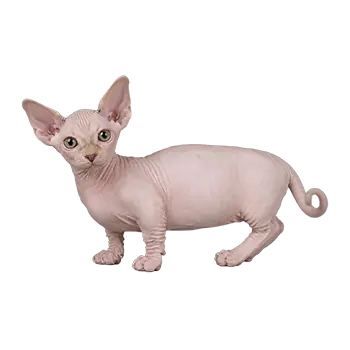

Play Style & Drive

The Dwelf is one of the most playful and energetic cat breeds you will encounter. Despite their small size and short legs, these cats are remarkably agile, quick, and persistent in their pursuit of play. They retain a kitten-like enthusiasm well into adulthood, and most Dwelf owners report that their cats actively seek out play sessions multiple times a day. Understanding this high play drive is essential for selecting toys that will hold their attention and provide adequate stimulation.

This breed is highly intelligent and becomes bored quickly with static or repetitive toys. A Dwelf will lose interest in a toy that does not challenge it mentally or physically within a few days. Rotating toys on a regular basis, keeping some hidden and reintroducing them after a week or two, helps maintain novelty and engagement. Think of your toy collection as a rotating library rather than a permanent display.

Social play is central to the Dwelf's personality. These cats prefer interactive play with their humans over solitary amusement. Wand toys, chase games, and any activity that involves a partner will always outperform a toy left on the floor. If you work long hours, pairing your Dwelf with a compatible feline companion can help meet its social play needs during the day.

Because the Dwelf is hairless, keep in mind that rough-textured toys can irritate their skin during intense play sessions. Smooth, soft, or fabric-covered toys are generally better tolerated than coarse or heavily textured options. Watch for any signs of skin redness or irritation after play and adjust your toy selection accordingly.

Interactive & Puzzle Toys

Interactive toys that require the Dwelf to think, manipulate, and problem-solve are among the most valuable enrichment tools you can provide. Puzzle feeders that dispense treats or kibble when the cat solves a mechanism tap into the breed's natural hunting instincts and intelligence. Start with simple slider puzzles and progress to more complex multi-step feeders as your cat masters each level. The goal is to challenge without frustrating, adjusting difficulty to keep the cat engaged.

Track-and-ball toys, where a ball circulates inside an enclosed track, can provide extended independent entertainment for a Dwelf. These toys satisfy the prey-chasing instinct and allow the cat to bat, swipe, and stalk without supervision. Look for versions with multiple levels or interchangeable track configurations to extend the toy's lifespan before boredom sets in.

Electronic interactive toys that move unpredictably, emit sounds, or flash lights can captivate a Dwelf's attention for longer than simple mechanical toys. Motion-activated toys that respond to the cat's approach are especially effective because they create a two-way interaction. However, electronic toys should supplement, not replace, hands-on interactive play with their owner. No automated toy can fully replicate the social bonding that occurs during a shared play session.

Food-dispensing balls and wobble toys serve double duty by combining physical activity with mental stimulation and slowing down fast eaters. Fill them with a portion of your Dwelf's daily kibble allowance and let the cat work for its food. This mimics natural foraging behavior and provides enrichment during times when you are unavailable for interactive play.

Wand Toys & Chase Play

Wand toys are the single most effective play tool for a Dwelf. The combination of an erratically moving lure on the end of a flexible rod perfectly mimics prey behavior and triggers the full hunting sequence: stalk, chase, pounce, and capture. A dedicated daily wand play session of 15 to 20 minutes provides both physical exercise and mental engagement, and it strengthens the bond between cat and owner.

The lure attachment matters. Feathered lures, fabric streamers, and small plush attachments each provoke different hunting responses. Feather lures tend to trigger aerial leaps and batting, while ground-dragged fabric lures encourage stalking and pouncing. Having several interchangeable lure attachments allows you to vary the play experience and discover which movements most excite your particular Dwelf.

Technique is as important as equipment. Move the lure away from the cat, not toward it, to simulate fleeing prey. Vary the speed and pattern, alternating between quick darting movements and slow, teasing pauses. Let your Dwelf catch the lure regularly to prevent frustration and provide the satisfaction of a successful hunt. Ending each session with a catch followed by a small treat mimics the natural hunt-catch-eat cycle and leaves the cat feeling fulfilled.

Always store wand toys out of reach when not in active use. Unsupervised play with wand toys poses a risk of entanglement or ingestion of string and feather components. This is especially important for the Dwelf, whose curiosity and persistence can lead it to chew through strings or disassemble lure attachments if given unsupervised access.

Scratching & Climbing Toys

Scratching is a natural and necessary behavior for all cats, including the Dwelf. It helps maintain claw health, stretches muscles, and provides a territorial marking outlet. Provide at least two scratching surfaces in different locations and orientations. Vertical scratching posts and horizontal scratching pads appeal to different preferences, and most cats will use both. Observe your Dwelf's scratching posture to determine which orientation it prefers and position the primary scratcher accordingly.

Material selection for scratching surfaces should consider the Dwelf's hairless skin. Sisal fabric and sisal rope are the most popular and effective scratching materials, and they are generally fine for a cat's paws and claws. However, if your Dwelf rubs its body against the scratcher while using it, a rough sisal surface could irritate bare skin. Cardboard scratchers offer a softer alternative that is gentler on exposed skin and are inexpensive enough to replace frequently as they wear down.

Climbing toys that incorporate scratching surfaces, platforms, and hiding spots provide a comprehensive enrichment station. Multi-level cat trees with sisal posts, plush platforms, and enclosed cubbies serve as a combined play, scratch, climb, and rest center. For the Dwelf, choose structures with padded or carpeted resting surfaces and stable bases that can withstand enthusiastic use without wobbling.

Wall-mounted climbing shelves and catwalks create elevated play paths that take advantage of vertical space without occupying floor area. Arrange shelves in a staircase pattern to allow the short-legged Dwelf to move between levels comfortably. Spacing the steps closer together than you would for a longer-legged breed ensures safe, confident climbing and prevents falls.

Comfort & Companion Toys

The Dwelf's strong social attachment means it can experience loneliness and anxiety when left alone. Comfort toys, particularly soft plush toys that the cat can curl up with, wrestle, and carry around, can provide a sense of companionship during solo periods. Some cats develop strong attachments to specific plush toys and will bring them to their sleeping spots or groom them. Providing a few different sizes and textures lets your Dwelf choose its favorites.

Catnip-infused toys can add an extra layer of engagement for Dwelf cats that are sensitive to catnip. Roughly 60 to 70 percent of cats respond to catnip with increased playfulness, rolling, and rubbing. If your Dwelf is among the responders, catnip toys can transform a quiet afternoon into an active play session. Silvervine and valerian root are alternatives that affect some cats that do not respond to catnip, so they are worth trying if catnip elicits no reaction.

Kicker toys, elongated plush toys designed for the cat to grab with its front paws and kick with its hind legs, satisfy the bunny-kick instinct that is part of the natural prey-capture sequence. These toys provide a physical outlet for pent-up energy and are especially popular with high-energy breeds like the Dwelf. Choose kicker toys with reinforced stitching, as the combination of clawing and kicking can destroy flimsy construction quickly.

Heat-retaining comfort toys or microwavable warming pads designed for pets can be particularly soothing for a hairless cat. These products provide gentle warmth that mimics the body heat of a companion animal and can reduce stress and promote relaxation during naps. Ensure any warming product is designed for pet use, has an appropriate temperature limit, and is covered with a soft, washable sleeve to protect the Dwelf's bare skin from direct contact with the heating element.

DIY & Budget Options

Not every enrichment tool needs to come from a pet store. The Dwelf's curiosity and intelligence make it responsive to simple, homemade toys that cost little or nothing. A crinkled ball of paper, a cardboard box with holes cut for peeking and pouncing, or a paper bag with the handles removed can provide surprisingly long entertainment sessions. The key is novelty. A new box from a delivery is an instant playground that will captivate your Dwelf until the next one arrives.

DIY puzzle feeders can be constructed from common household items. A muffin tin with treats placed in the cups and covered with lightweight balls creates a simple foraging challenge. A toilet paper roll with the ends folded shut and small holes cut in the sides becomes a treat-dispensing roller. An egg carton with kibble scattered in the compartments forces the cat to use its paws to extract each piece. These projects take minutes to assemble and provide the same cognitive stimulation as commercial puzzle feeders.

Rotation is the most cost-effective enrichment strategy available. Rather than buying new toys constantly, divide your existing collection into three or four groups and rotate them weekly. Toys that have been hidden for a week or two regain their novelty when reintroduced, effectively multiplying the value of your existing inventory. Store out-of-rotation toys in a sealed bag with a pinch of catnip or silvervine to refresh their appeal.

Training sessions function as free, highly effective enrichment. The Dwelf is one of the more trainable cat breeds and can learn to sit, high-five, spin, and come when called using basic positive reinforcement techniques. Short training sessions of five to ten minutes provide intense mental stimulation, reinforce the bond between cat and owner, and channel the breed's intelligence into structured activity. Use small, high-value treats as rewards and keep sessions upbeat and pressure-free.

Always consult a qualified professional before making any health-related decisions. This content is provided for informational reference only and should not replace professional guidance specific to your animal.