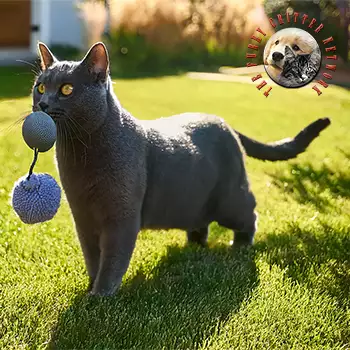

The Chartreux is often described as a quiet athlete — not showy or hyperactive, but surprisingly agile, quick, and engaged when something captures their interest. Their play style reflects their hunting heritage, favoring deliberate stalking, patient observation, and explosive pouncing over the frantic, scattershot chasing seen in more high-strung breeds. Understanding this play style is essential for selecting toys that actually get used rather than ignored after the first five minutes.
This breed tends to be most active during the transition hours of early morning and evening, mirroring the crepuscular hunting patterns of their wild ancestors. Play sessions scheduled during these natural activity windows will draw out the most enthusiastic engagement. During midday, the Chartreux is more likely to prefer low-key independent play or simply observing the household from a favorite perch.
Intelligence is a defining trait of the Chartreux, and their play preferences reflect this. Toys that present a problem to solve — hidden treats to extract, moving targets that change direction unpredictably, objects that respond to the cat's actions — hold their attention far longer than passive toys that simply sit on the floor. A Chartreux that seems disinterested in play is often simply bored by toys that do not challenge them.
Despite their calm demeanor, the Chartreux benefits from regular active play to maintain healthy weight and muscle tone. Two dedicated play sessions of fifteen to twenty minutes each, supplemented by access to self-directed enrichment throughout the day, provides a solid baseline for physical and mental health. Cats that receive insufficient play stimulation are more likely to develop behavioral issues including furniture scratching, overeating, and nighttime restlessness.