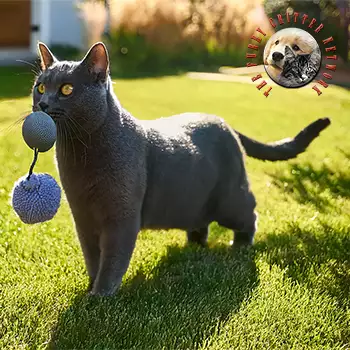

Choosing a collar for the Chartreux starts with safety. Breakaway collars — designed to release under pressure if the collar snags on a branch, fence, or piece of furniture — are the only type recommended for cats. Standard buckle collars that do not release can cause strangulation, and this risk exists even for indoor-only cats who may catch their collar on drawer handles, heating registers, or cat tree components. Select a breakaway collar that releases reliably under approximately eight to twelve pounds of force.
The Chartreux's dense, woolly coat means that collar fit requires extra attention. A collar that feels appropriately snug when first fastened may become too tight as the coat compresses beneath it, or too loose once the cat moves and the fur shifts. The standard two-finger rule — you should be able to slide two fingers comfortably between the collar and the cat's neck — remains the best guide, but check the fit periodically, especially after seasonal coat changes when the undercoat thickens or sheds.
Harness training opens up the possibility of supervised outdoor walks, and the Chartreux's calm temperament makes them better candidates for leash walking than many cat breeds. Vest-style harnesses that distribute pressure across the chest and shoulders are far preferable to collar-based leashing, which puts dangerous pressure on the trachea if the cat lunges or resists. An H-style or figure-eight harness can also work, but vest designs are generally harder for the cat to wriggle out of, which is critical for outdoor safety.
Introduce the harness indoors over a period of days or weeks before attempting an outdoor excursion. Let the cat wear it for short periods inside, rewarding calm behavior with treats. Once the cat moves normally in the harness without freezing, flopping, or trying to back out, attach a lightweight leash and practice indoor walking before graduating to a quiet outdoor area. Patience during this process pays dividends in long-term walking enjoyment.